As a master mechanic, I’ve seen spark plugs last 30,000 miles and others go past 120,000 with no issues. The truth? Manufacturer intervals are a starting point—but real-world performance depends on materials, engine design, and how you drive. This guide cuts through theory and gives you actionable steps to diagnose, inspect, and replace spark plugs the right way—saving you time, money, and preventing costly damage.
How Often Should You Replace Spark Plugs?
The replacement interval depends primarily on the electrode material. Always check your owner’s manual first, but here are the practical ranges I see across thousands of repairs:
| Plug Type | Typical Interval (Miles) | Cost Range (Set) | Repair vs Replace Advice |
|---|---|---|---|
| Copper | 30,000–50,000 | $20–$50 | Replace on schedule. Not cost-effective to inspect/reuse. |
| Platinum (Single/Double) | 60,000–100,000 | $40–$100 | Inspect at 60k; replace by 100k even if they look okay. |
| Iridium | 100,000–120,000 | $60–$160 | Inspect at 100k. Replace if gap is off or carbon buildup is visible. |
In my shop, we always inspect iridium plugs at 100,000 miles—even if the manual says 120k. Carbon buildup in direct-injection engines often causes misfires before electrode wear is visible.
How to Check Spark Plug Condition (Step-by-Step)
Don’t wait for a check engine light. Proactive inspection prevents catalytic converter damage and coil failure. Here’s how to check plugs correctly:
1. Remove and Inspect Each Plug
Use a 5/8″ spark plug socket with a rubber insert. Clean the plug well with compressed air before removal to avoid dropping debris into the cylinder.
2. Evaluate These Three Areas
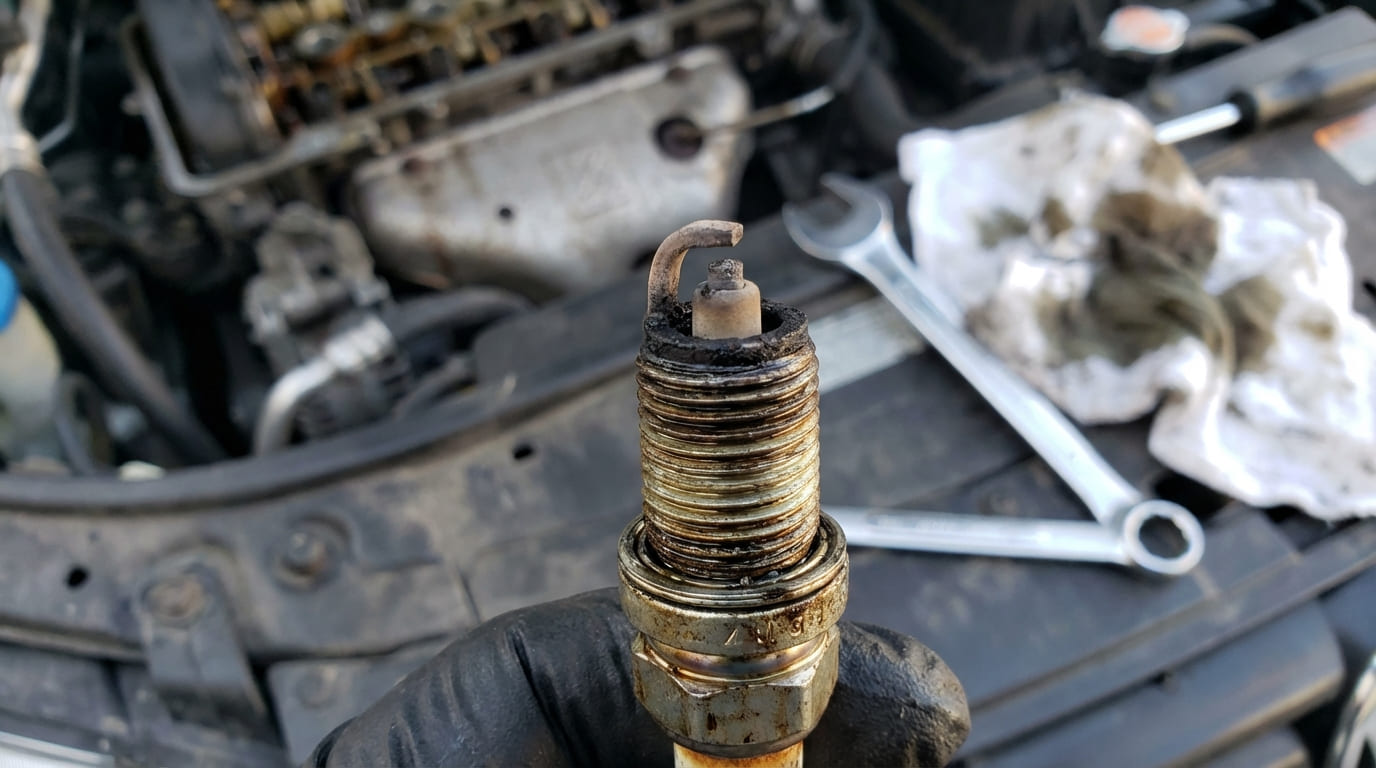
- Center electrode wear: Sharp tip = good. Rounded or “mushroomed” edge = time to replace.
- Insulator tip: Black soot = carbon fouling. Wet black = oil fouling. White or blistered = overheating.
- Gap: Use a wire feeler gauge. Compare to factory spec (usually 0.028″–0.044″). Increase of 0.008″ or more means replacement.
Always measure gap at multiple points. Electrodes wear unevenly—especially in high-mileage engines. A flat feeler gauge can miss this.
When to Replace vs. Inspect
Follow these rules based on mileage and symptoms:
- Under 60,000 miles: Only replace if misfires, rough idle, or poor fuel economy appear.
- 60,000–100,000 miles: Inspect plugs if you have symptoms or are doing other engine work.
- Over 100,000 miles: Replace iridium/platinum plugs even if they look okay—preventive maintenance saves money long-term.
Real-World Factors That Shorten Plug Life
These conditions demand earlier replacement—regardless of mileage:
Driving Habits and Engine Design
- Short trips: Less than 10 miles regularly leads to carbon buildup. Inspect every 30k.
- Turbocharged engines: Higher heat and pressure. I replace plugs at 75k max, even with iridium.
- Direct injection: No fuel wash over intake valves. Carbon builds up on plug insulators—common cause of flashover misfires.
- Performance tuning: Lean air/fuel ratios increase spark plug stress. Inspect every 25k.
Fuel and Ignition System Issues
- Low-octane fuel: Increases risk of pre-ignition and plug damage.
- Failing coils: Overvoltage can erode electrodes faster. Replace coils and plugs together on high-mileage engines.
- Dirty fuel injectors: Cause rich mixtures and carbon fouling. Clean before blaming plugs.
I once diagnosed a P0301 misfire on a Honda that had just gotten copper plugs. The fix? OEM iridium plugs and a cracked coil boot. Copper masked the coil issue by requiring less voltage. Moral: never assume the plug is the problem—even if it’s the wrong type.
What Happens If You Wait Too Long?
Ignoring spark plug service leads to expensive secondary damage:
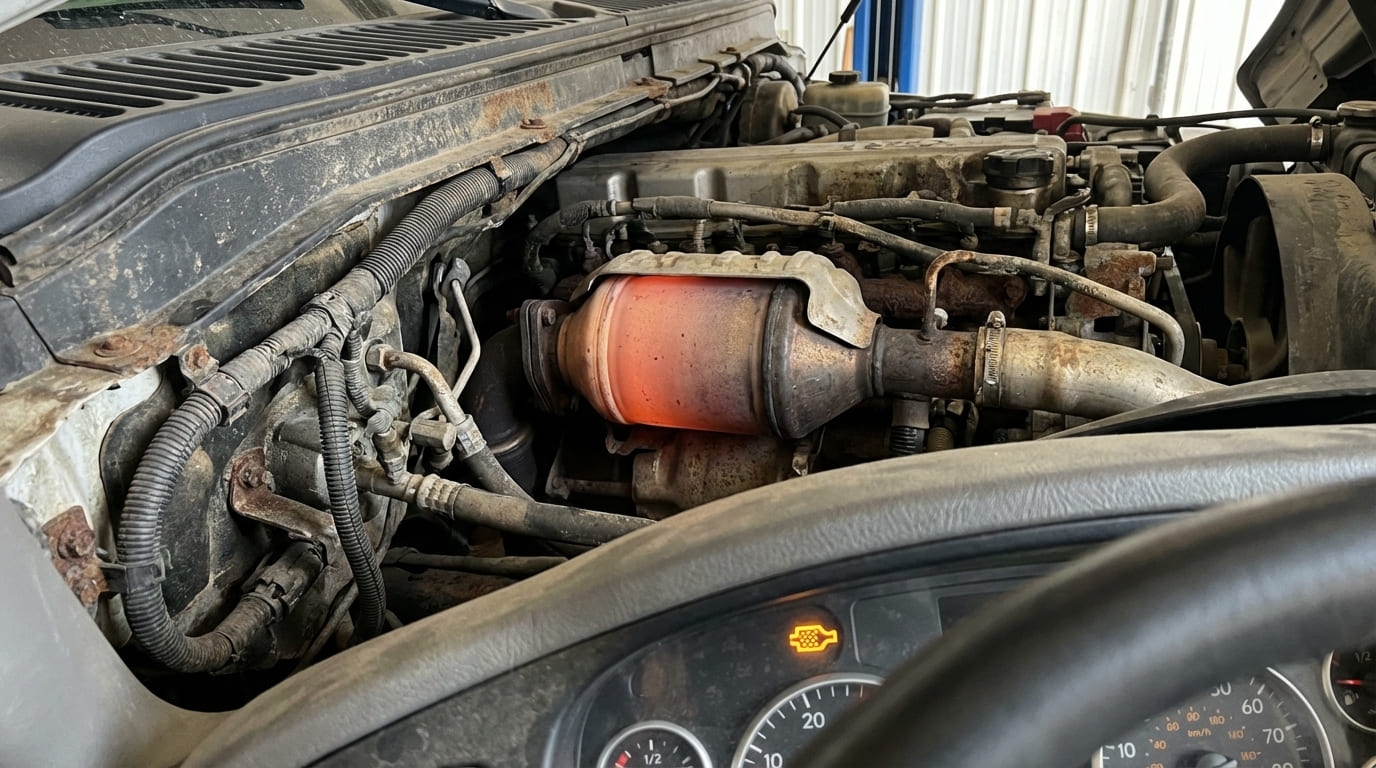
- Misfires: Raw fuel enters the exhaust, overheating the catalytic converter.
- Catalytic converter failure: Melted substrate costs $1,000–$2,500 to replace. Preventable with $100 plug job.
- Coil failure: Worn plugs force coils to work harder. I’ve seen 3–4 coils fail after 120k due to neglected plugs.
OEM vs. Aftermarket: What Actually Matters
Not all plugs are equal. Here’s what to look for:
- Match OEM specs: Electrode material, heat range, and seat type (tapered or gasket) must match.
- Pre-gapped plugs: Most premium brands are accurate, but always verify with a wire gauge.
- Avoid cheap “iridium” plugs: Some use thick electrodes that require higher voltage. Stick to NGK, Denso, Bosch, or OEM.
On a turbocharged VW, I found repeated misfires traced to a bad PCV valve dumping oil into the intake—carbon fouled the plugs. Lesson: plug condition reflects overall engine health. Don’t ignore PCV, valve seals, or oil consumption.
Final Checklist: Do This Every Time
- ✅ Inspect plugs at 100k—even if iridium.
- ✅ Use a torque wrench. Over-tightening strips aluminum heads. Under-tightening causes overheating.
- ✅ Clean plug wells before removal.
- ✅ Replace coils if cracked or carbon-tracked—especially past 80k.
- ⚠️ Never re-gap fine-wire iridium plugs. Electrode is brittle and can break.
- ⚠️ Never mix plug types (e.g., copper and iridium) in the same engine.
- ⚠️ Don’t use anti-seize on pre-lubricated plugs—alters torque and heat transfer.
Diagnostic Decision Table
| Symptom | Most Likely Causes | Less Common Causes | Initial Diagnostic Steps |
|---|---|---|---|
| Intermittent misfire (P030x) | Worn plugs, failing coil | Vacuum leak, clogged injector | Swap coil/plug to another cylinder; see if misfire follows |
| Carbon-fouled plugs | Short trips, rich mixture | Weak coil, wrong heat range | Check fuel trims, inspect for intake leaks, verify plug type |
| Blistered insulator | Overheating, wrong heat range | Lean condition, timing issue | Check cooling system, scan for knock sensor codes |
| Hesitation under load | Worn electrodes, wide gap | MAF/MAP fault, EGR issue | Measure gap, inspect for tracking, scan live data under load |
Spark plug replacement isn’t just about mileage—it’s about engine health. Use factory intervals as a baseline, but let driving conditions and inspection results guide your decisions. A $100 plug job can prevent $2,000 in catalytic converter or engine repairs. When in doubt, inspect at 100,000 miles. It’s the single best preventive maintenance step for modern ignition systems.