As a master mechanic, I see clogged fuel filters cause everything from poor performance to complete engine failure. The good news: catching it early saves money and prevents damage. This guide cuts through the noise and gives you exactly what you need to diagnose, verify, and fix the problem—no fluff, just proven steps from real-world experience.
How a Clogged Fuel Filter Hurts Performance
A fuel filter’s job is simple: stop debris from reaching the injectors and pump. But when it clogs, fuel flow drops. Modern engines demand precise fuel pressure—especially under load. Even a partial blockage starves the engine, triggering a chain reaction of symptoms. Here’s what to watch for—and how to confirm it’s the filter.
Key Symptoms and How to Check Them
The earliest signs are subtle. Ignoring them leads to bigger, costlier problems. Don’t guess—test. Here’s how each symptom plays out and what to do about it.
1. Reduced Power and Poor Acceleration
Drivers notice the car feels “flat” uphill or when merging. The engine can’t deliver fuel fast enough under load, creating a lean condition. This isn’t just annoying—it’s dangerous.
How to Check: Do a road test at 50–60 mph. Floor the throttle briefly in a safe area. If the engine hesitates, surges, or feels like it’s “bogging down,” suspect fuel delivery. Monitor fuel trims with an OBD2 scanner. Sustained STFT and LTFT above +10% indicate lean compensation.
2. Engine Misfires and Rough Idle
Intermittent fuel flow causes stumbling at low RPM. It may smooth out at higher speeds, which fools some owners into thinking it’s “just cold.” But if it’s happening daily, it’s not normal.
How to Check: Scan for P0300 (random misfire) or cylinder-specific codes. Use live data to rule out ignition issues—check coil performance counters. If misfires come and go with load, and fuel trims are high, inspect the fuel system.
3. Engine Stalling at Idle or Low Speed
Especially common at stoplights. The engine runs on minimal fuel at idle. A clogged filter can’t maintain pressure during deceleration, and the engine quits.
How to Check: Watch fuel pressure on a gauge during a decel event. If pressure drops below 35 psi (for most port-injected engines), restriction is likely. Also, test residual pressure: after shut-off, pressure should hold above 30 psi for 10+ minutes.
4. Hard Starting or No-Start
The engine cranks but won’t fire. Fuel pump runs, but pressure never builds. This often follows months of ignored symptoms.
How to Check: Key-on, engine-off (KOEO): listen for the fuel pump prime (2–3 second hum). No sound? Check fuse, relay, and pump power. If pump runs but no pressure, the filter or pump is likely blocked. Connect a fuel pressure gauge—zero or very low pressure confirms delivery failure.
5. Check Engine Light with Lean or Misfire Codes
Codes like P0171 (System Too Lean) or P0300 are red flags. But they don’t prove a clogged filter—other issues cause the same codes.
How to Check: Pull freeze frame data. Was the engine under load? Cold? High RPM? Combine code data with fuel trim and pressure tests. Never replace parts based on codes alone.
6. Whining Noise from the Fuel Tank
A high-pitched whine from the rear of the vehicle—especially at startup or under load—is a warning sign. The fuel pump is straining against a blockage.
How to Check: Place a long screwdriver against the fuel tank and your ear (engine running). A loud, sharp whine vs. a soft hum suggests restriction. Replace the filter first—this often eliminates the noise and saves the pump.
Definitive Diagnosis: Fuel Pressure and Volume Test
Symptoms point to the problem. Testing confirms it. This is the only way to know for sure.
Tools Needed: Fuel pressure gauge (rentable at most auto parts stores), wrench set, safety glasses, shop rags.
Steps:
- Relieve fuel pressure safely (check your model—some have a Schrader valve, others require line disconnect).
- Connect gauge to fuel rail or test port.
- Key-on, engine-off: note initial pressure. Compare to spec (see table below).
- Start engine: check idle pressure.
- Rev to 2500 RPM: watch for pressure drop.
- Shut off: monitor residual pressure for 10 minutes.
- Perform volume test: run pump for 30 seconds into a container. Should deliver 500–750ml depending on engine.
| Engine Type | Normal Pressure (psi) | Min Volume (30 sec) |
|---|---|---|
| Port Fuel Injected (Gasoline) | 40–60 | 500 ml |
| Direct Injection (GDI) | 60–100 (low side), 500–3000+ (high side) | 400 ml |
| Diesel (Common Rail) | 50–80 (supply), 15,000–30,000+ (injection) | 400 ml |
In my shop, we always run a volume test—even if pressure looks good. I’ve seen filters pass idle pressure but deliver only 300ml in 30 seconds. That’s a ticking time bomb. Volume = flow. No flow, no power.
Ruling Out Other Causes
Don’t assume it’s the filter. Other issues mimic these symptoms. Use this table to narrow it down.
| Symptom | Most Likely Cause | Less Common Cause | Key Differentiator |
|---|---|---|---|
| Low pressure under load | Clogged fuel filter | Weak fuel pump | Volume test: good flow before filter, low after = filter issue |
| Lean trims, stable pressure | Vacuum leak | MAF sensor fault | Smoke test positive; pressure steady |
| Cylinder-specific misfire | Clogged injector | Ignition failure | Swap coil/injector; misfire follows part? |
| Fuel pump whine | Restriction (filter) | Worn pump bearings | Noise goes away after filter replacement |
Why Filters Clog—and How to Prevent It
Three main causes:
- Dirty fuel: Filling up at poorly maintained stations introduces rust, water, and sediment.
- Tank corrosion: Old steel tanks rust over time, especially with ethanol-blended fuel and condensation.
- Missed maintenance: Some filters last 30,000 miles, others 100,000. I recommend replacing every 60,000 miles if you drive in cities, in heat, or use ethanol fuel.
I’ve cut open filters full of black sludge from a 10-year-old tank. If you’re replacing a pump or filter, always inspect the tank. A new pump with a dirty tank will fail fast.
Costs and Repair vs. Replace
A clogged filter is cheap to fix—before it causes damage.
| Part/Service | Cost Range | Notes |
|---|---|---|
| Fuel filter (in-line) | $15–$50 | Easy DIY on most vehicles |
| Fuel filter (in-tank) | $80–$200 | Often part of pump assembly; labor-intensive |
| Fuel pump replacement | $300–$800 | Often triggered by neglected filter |
| Diagnostic labor | $100–$150/hour | Save money by testing yourself |
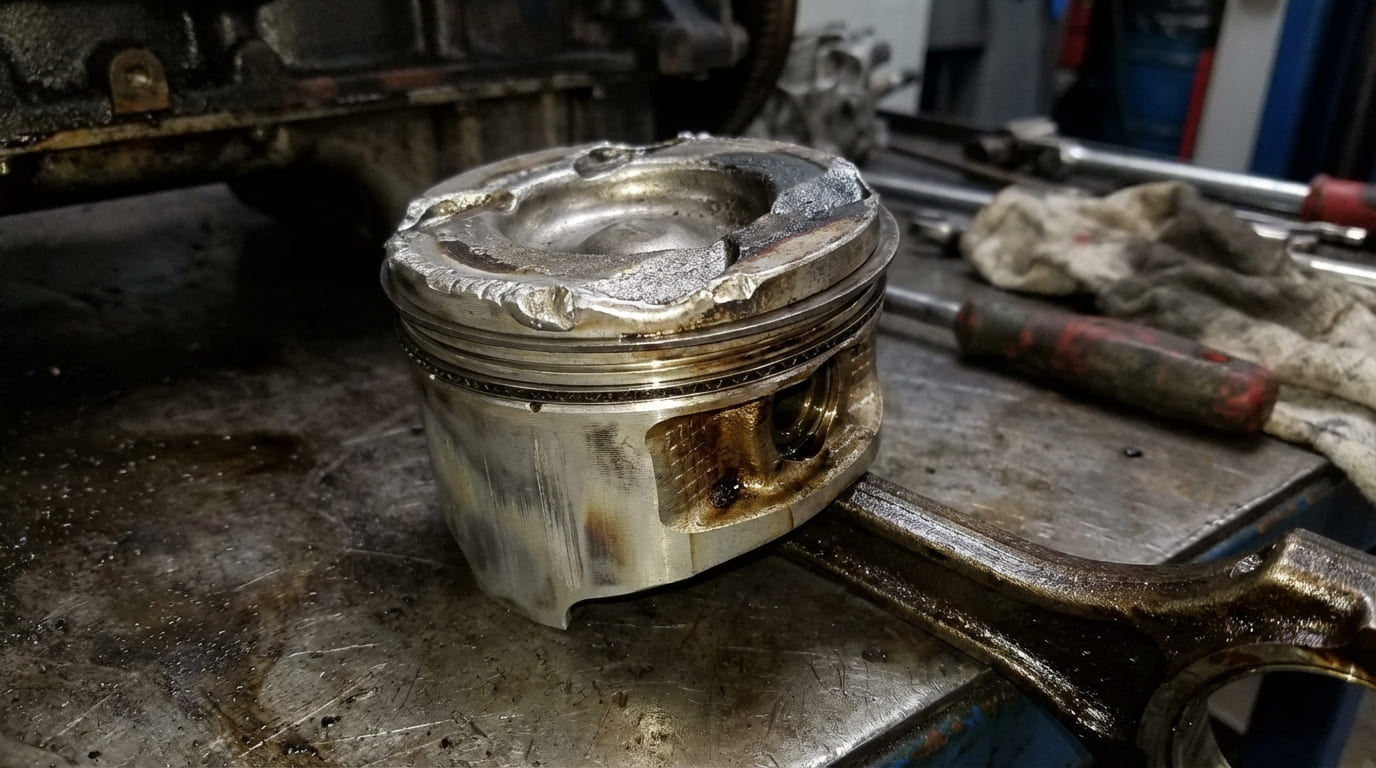
Replacing a $30 filter beats a $600 pump job. And neither compares to a melted piston from long-term lean running. Spend the $30. Do it now.
Best Practices During Replacement
- ✅ Always relieve fuel pressure first—use a rag and depress Schrader valve or disconnect safely.
- ✅ Use OEM-spec or high-quality filter. Cheap filters use thin media that collapses or leaks.
- ✅ Check flow direction arrow—installing backwards creates instant restriction.
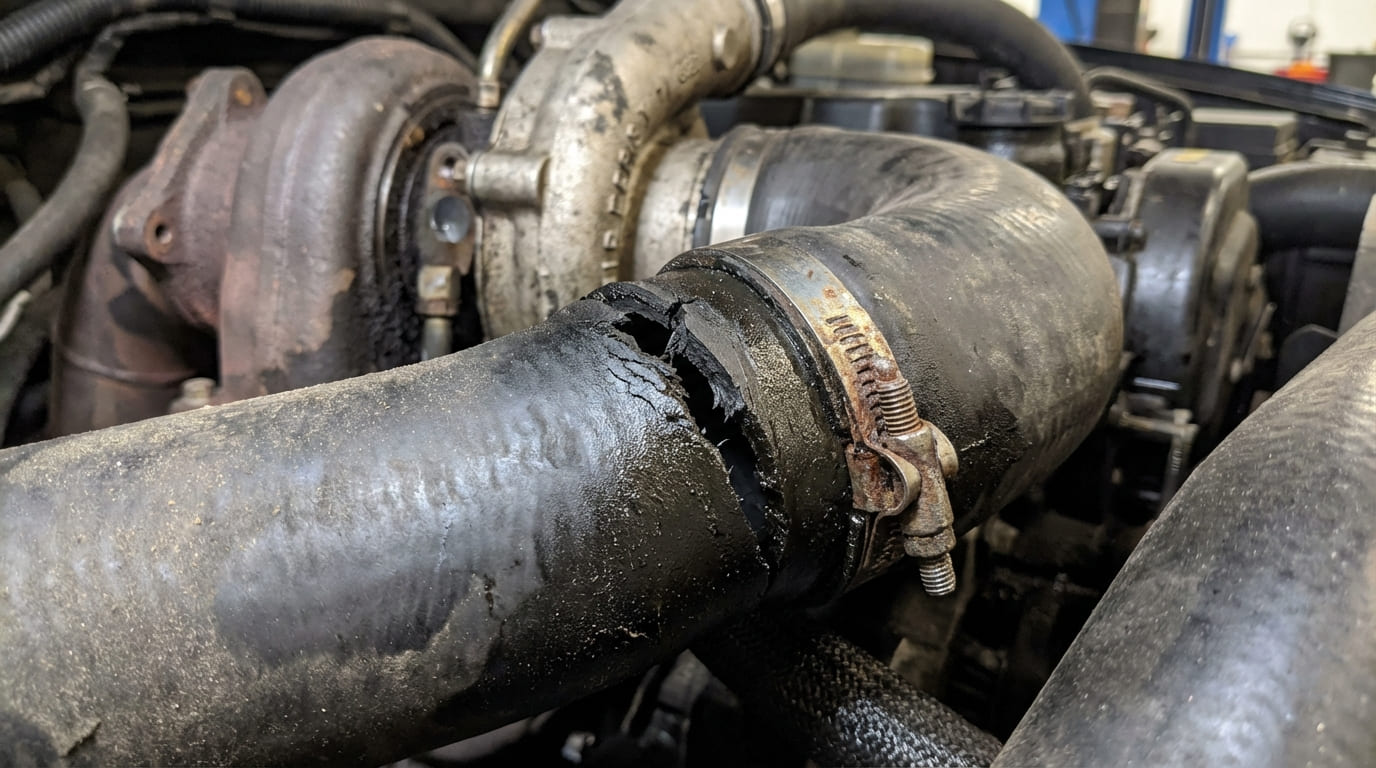
- ✅ Inspect fuel lines. Cracked or swollen rubber lines collapse internally and restrict flow.
- ⚠️ Never reuse clamps or fittings. Use new ones to prevent leaks.
Real-World Lessons from the Shop
Case: 2012 F-150 with P0171 and misfires. Plugs and coils already replaced. Pressure looked fine at idle—60 psi. But under load, it dropped to 42 psi. Volume test: 400ml in 30 seconds (spec: 750ml). Filter was 80% clogged. Replaced—problem solved.
Lesson: Idle pressure can lie. Always test under load and check volume.
Case: 2008 Camry. Owner replaced fuel pump twice in a year. Each time, it failed within 5,000 miles. Found the in-tank filter packed with sludge. Pump was fine—the filter starved it every time.
Lesson: When a pump fails repeatedly, look upstream. The filter is often the real culprit.
Case: Diesel pickup with power loss and black smoke. Assumed turbo issue. Fuel pressure low under load. Filter clogged with paraffin wax—low-quality biodiesel in cold weather.
Lesson: Fuel type matters. In winter, use winter-grade diesel or additives. Change filters more often in cold climates.
Verifying the Repair
Don’t assume it’s fixed. Prove it.
- Recheck fuel pressure at KOEO, idle, and 2500 RPM—must meet spec.
- Perform volume test again—should meet or exceed minimum.
- Clear codes and test drive with load (hills, acceleration).
- Scan fuel trims: should stabilize between -5% and +5%.
- Confirm no misfires and no CEL return.
Fuel additives won’t clean a clogged filter. I’ve tried them all. Once it’s restricted, replace it. The risk isn’t worth the $30 savings. Your fuel system depends on clean, consistent flow—don’t gamble.