As a master mechanic, I’ve seen thousands of fuel injector issues—some obvious, some deceptive. This guide cuts through the noise and gives you the real-world diagnostics, tests, and decisions that matter. If your car is running rough or losing power, here’s how to know if clogged injectors are to blame—and what to do next.
How Clogged Injectors Affect Engine Performance
Fuel injectors are precision components. Over time, varnish, carbon, and debris restrict fuel flow or distort the spray pattern. When that happens, the air-fuel mixture goes out of balance, combustion suffers, and performance drops. The symptoms often start subtly but worsen steadily.
Key Symptoms and How to Check Them
Don’t guess—test. Below are the most common signs of clogged fuel injectors, paired with practical diagnostic steps you can perform or request from a shop.
1. Rough Idle or Misfires
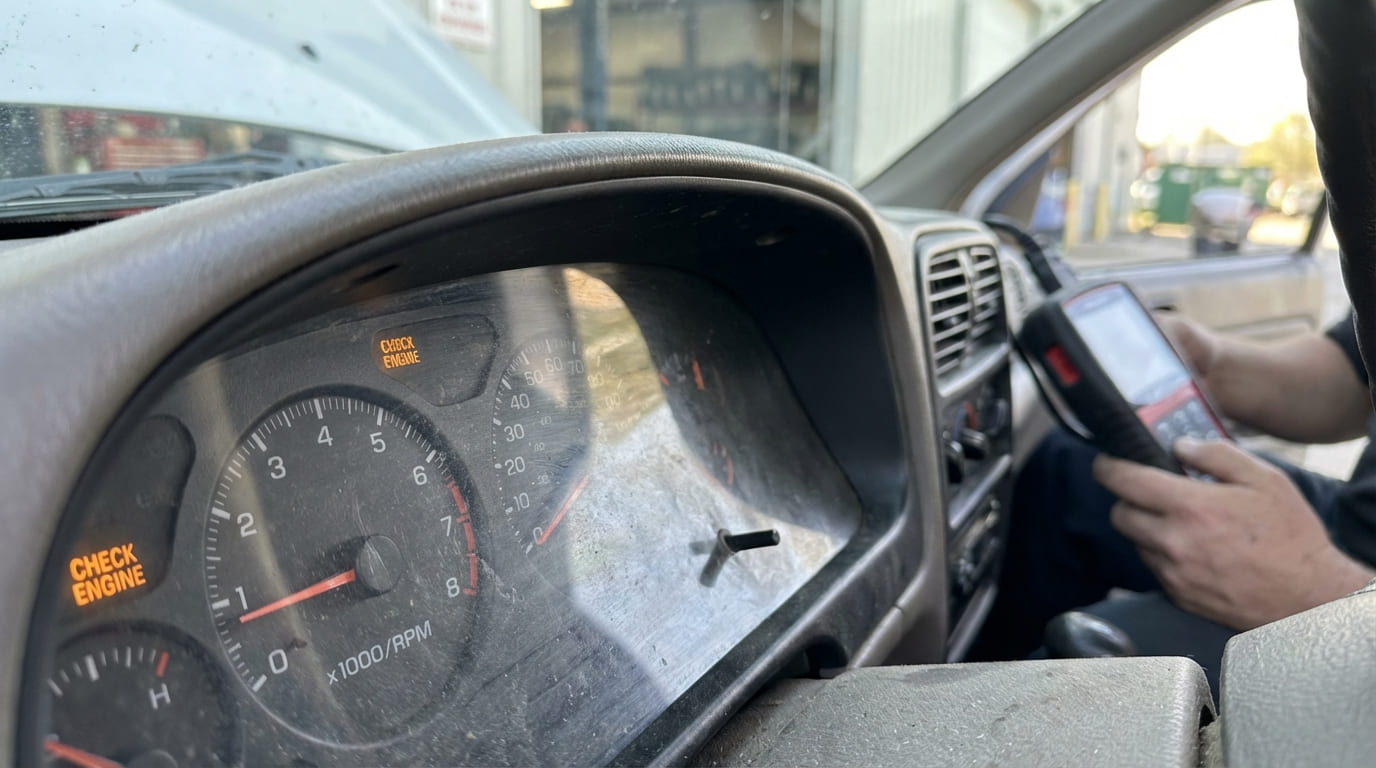
A cylinder not getting enough fuel will misfire, especially at idle. This feels like a rhythmic shake or vibration. If the check engine light is flashing, it’s a strong sign of active misfiring.
How to Check: Use an OBD2 scanner to read codes. A P030X code (e.g., P0302) pinpoints the misfiring cylinder. Swap the coil or spark plug to that cylinder—if the misfire moves, the problem is ignition-related. If it stays, suspect the injector or compression.
2. Poor Acceleration and Power Loss
Drivers often say the engine “feels flat” or “won’t respond.” This happens when injectors can’t deliver enough fuel under load, creating a lean condition.
How to Check: Monitor long-term fuel trims (LTFT) with a scan tool. Trims above +10% suggest the ECU is adding fuel to compensate—common with restricted injectors. A vacuum leak can cause the same, so rule that out first.
3. Engine Hesitation or Stumbling
Hesitation during light acceleration—especially between 2,000 and 3,500 RPM—is a classic sign of varnish buildup in the injector nozzle. The fuel doesn’t atomize quickly enough when you press the throttle.
How to Check: Perform a snap-throttle test while watching short-term fuel trims (STFT). If trims spike lean momentarily, the injectors may not be responding fast enough.
4. Increased Fuel Consumption
Paradoxically, clogged injectors can make your car use more fuel. The ECU adds fuel across all cylinders to compensate for a lean cylinder, making the rest run rich.
How to Check: Track fuel economy over several tanks. A 10–20% drop with no driving pattern change is a red flag. Combine this with fuel trim data for confirmation.
5. Hard Starting, Especially When Cold
If the engine cranks but takes multiple tries to start, particularly in the morning, gummed-up injectors may not spray properly until warmed up.
How to Check: Listen for a strong fuel pump prime (2-second whir when turning the key to ON). Then, check cranking fuel pressure. Low pressure or a fast drop after shutdown suggests leaking or clogged injectors.
6. Check Engine Light with Lean or Rich Codes
The ECU detects air-fuel imbalances and sets codes. These don’t confirm clogged injectors—but they point you in the right direction.
- P0171 / P0174 – System Too Lean (common with clogged injectors)
- P0172 / P0175 – System Too Rich (possible with leaking injectors)
- P0300–P0308 – Cylinder Misfire Detected
How to Check: Don’t replace parts based on codes alone. Use live data and physical tests to verify.
Diagnostic Comparison Table
| Symptom | Most Likely Cause | Less Common But Possible Causes | Diagnostic Approach |
|---|---|---|---|
| Single-cylinder misfire | Clogged or leaking injector | Bad coil, worn plug, low compression | Swap coil/plug, perform balance test, check compression |
| Lean fuel trim (P0171/P0174) | Restricted injectors, vacuum leak | Dirty MAF, fuel pressure loss, EGR leak | Smoke test, fuel pressure test, MAF voltage check |
| Rich condition (P0172/P0175) | Leaking injector, failed pressure regulator | Fouled O2 sensor, coolant sensor fault | Inspect for fuel smell, check regulator vacuum line, review live data |
| Hard cold start | Sticking pintle, weak fuel pressure | Low battery, faulty coolant sensor | Check cranking fuel pressure, inspect injector spray pattern |
How to Confirm Clogged Injectors
Before removing or replacing injectors, verify the problem with these tests. Skipping them risks wasted time and money.
Fuel Injector Balance Test
This test measures pressure drop at the fuel rail when each injector is fired. A healthy injector drops 1–3 psi over 15 seconds. More than a 1.5 psi difference between injectors indicates a flow problem.
Tools Needed: Fuel pressure gauge, scan tool with bi-directional control.
In my shop, we always run a balance test before disassembly. I’ve saved customers hundreds by finding one weak injector instead of replacing the whole set.
Fuel Injector Resistance Test
Use a digital multimeter to check coil resistance at the connector. High-impedance injectors: 10–14 ohms. Low-impedance: 0.5–3 ohms. Out-of-range readings suggest electrical failure—but not clogging.
Limitation: A perfect resistance reading doesn’t guarantee clean flow. I’ve tested injectors that passed ohms but failed flow by 40%.
Spray Pattern Inspection (Bench Test)
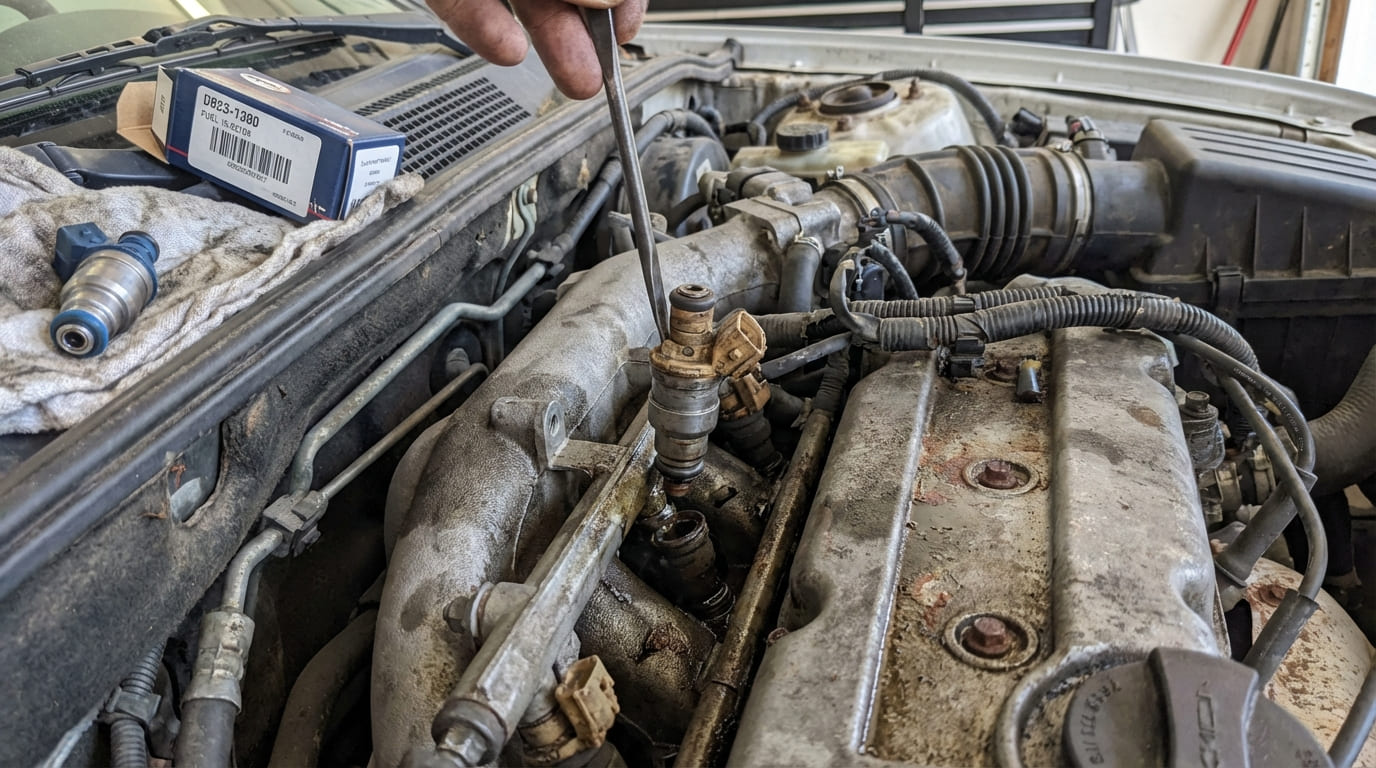
The gold standard. Remove injectors and test on a bench with a flow rig. A clean injector sprays a uniform cone. Dribbling, streams, or uneven spray mean deposits or wear.
Cost Note: Professional cleaning and flow testing: $15–$25 per injector. Replacement: $50–$150 per injector (OEM). For direct-injection engines, replacement is often more cost-effective than cleaning.
Ruling Out Other Causes
Many issues mimic clogged injectors. Always eliminate these first:
- Ignition Problems: Test coils and plugs. Swap components to see if the misfire follows.
- Vacuum Leaks: Use a smoke machine. Even small leaks on intake boots or PCV lines cause lean codes.
- MAF Sensor: Clean with MAF-safe spray. Check voltage response during throttle sweeps.
- Fuel Pump/Filter: Test fuel pressure and volume. A weak pump affects all injectors equally.
Root Causes of Clogging
Prevention starts with understanding why injectors fail:
- Fuel Contaminants: Dirt, rust, or water in the tank. Always use reputable gas stations.
- Ethanol Buildup: E10 fuel attracts moisture. Short trips prevent full evaporation, leading to sludge.
- Carbon on Direct Injection: No fuel wash on intake valves leads to carbon buildup that disrupts airflow and combustion.
- Old Fuel Filters: Replace every 60,000 miles or as recommended. A clogged filter lets debris bypass into injectors.
Risks of Ignoring the Problem
Driving with clogged injectors risks expensive damage:
- Catalytic Converter Failure: Unburned fuel overheats the converter. Replacement: $1,000–$2,500.
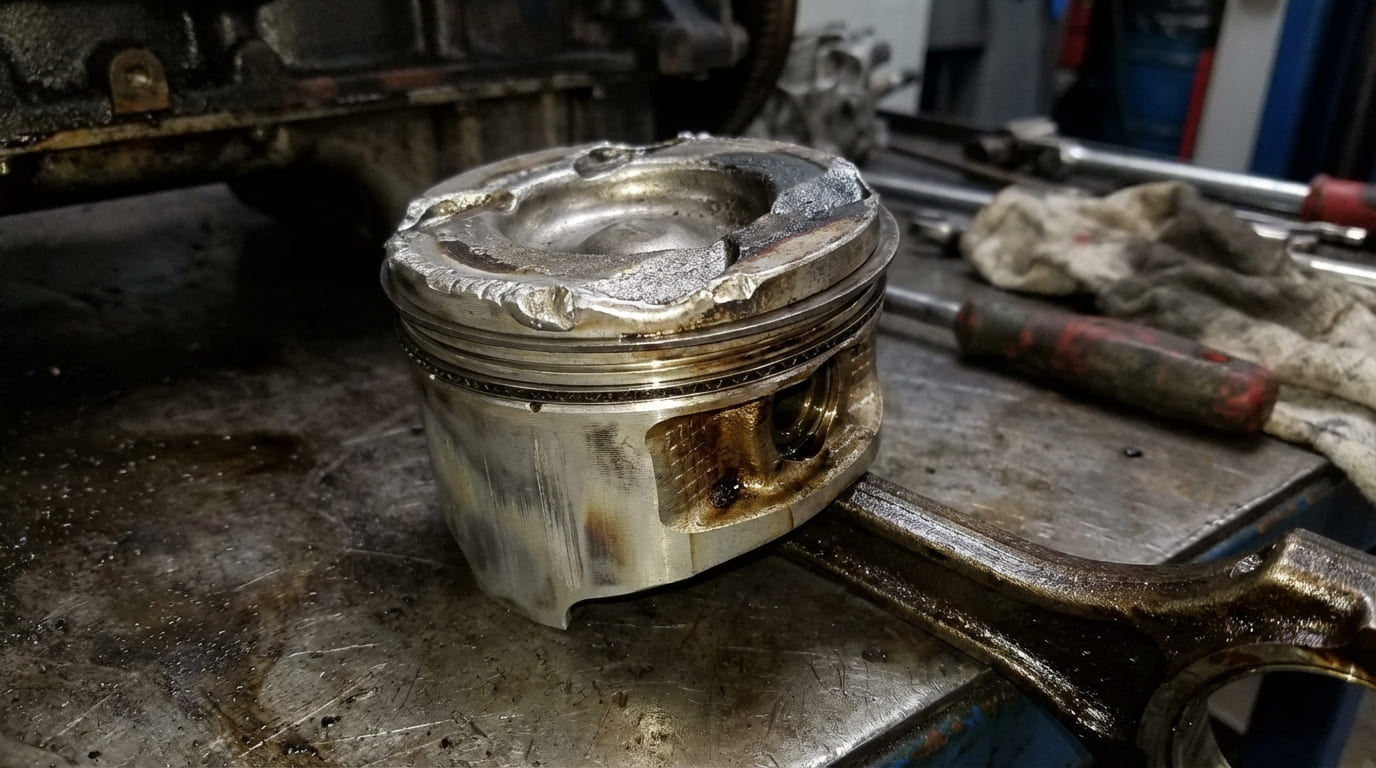
- Engine Knock: Lean mixtures increase cylinder temps. On turbos, this can cause detonation and piston damage.
- Cylinder Washdown: A leaking injector dilutes oil, accelerating wear. Can lead to ring or bearing failure.
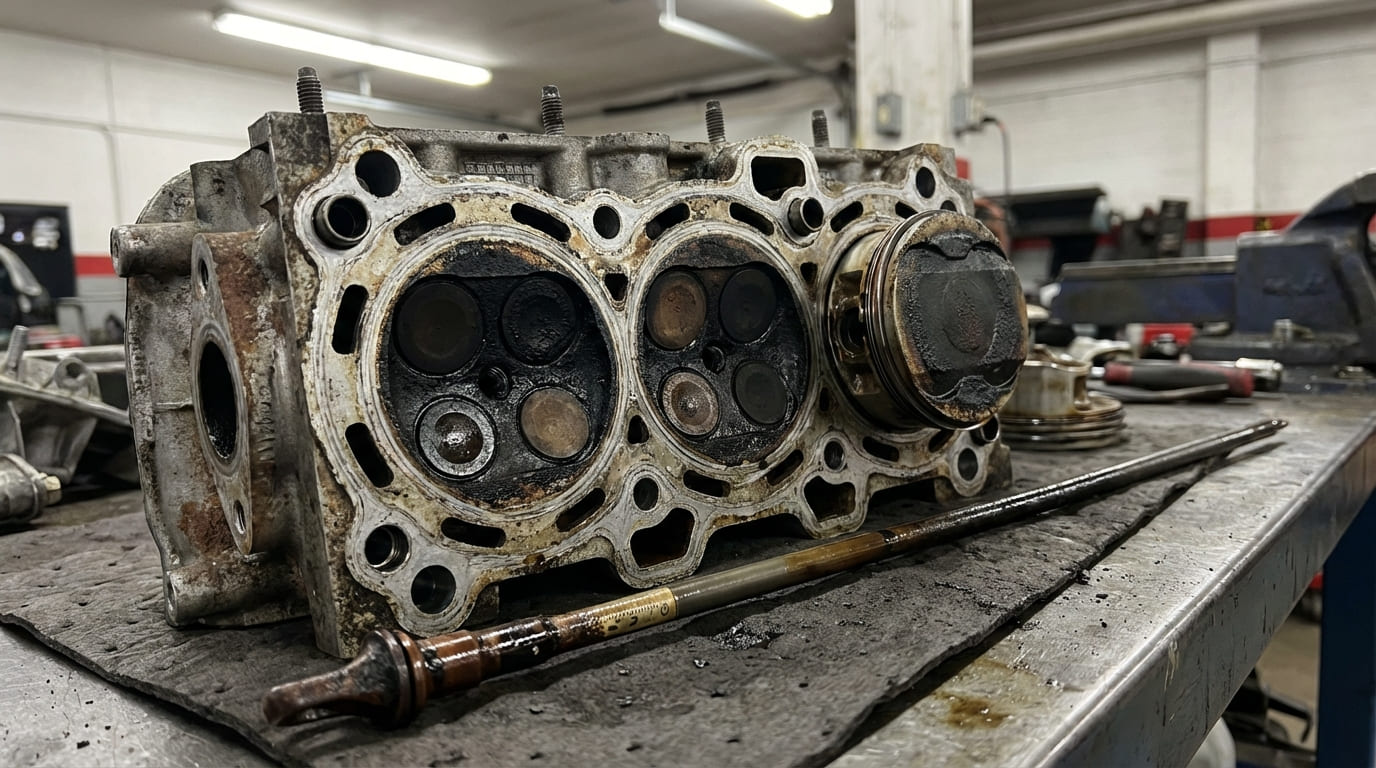
- Valve Damage: Sustained lean operation can burn exhaust valves, requiring head work.
Repair vs. Replace: What I Recommend
After 20 years in the shop, here’s my decision logic:
- Mild Clogging, No Leaks: Try a professional fuel injection cleaning ($100–$200). May restore flow if caught early.
- Severe Restriction or Leaking: Replace the faulty injector(s). Always replace O-rings and inspect fuel rail seals.
- Direct Injection with Carbon: Cleaning rarely works. Replacement is usually the better long-term fix.
I once rebuilt a set of injectors for a customer to save money—only to have two fail again in 3,000 miles. Now I advise: if it’s a high-mileage engine with known injector issues, replace with OEM or high-quality reman units. It’s cheaper than doing it twice.
Best Practices for Longevity
- ✅ Replace O-rings every time: A $5 part can cause a fuel leak or vacuum leak if reused.
- ✅ Clean injector bores: Use a thread chaser or tap to remove debris before reinstalling. I’ve fixed “bad injectors” that just weren’t seating.
- ✅ Use OEM-spec additives: Techron or ISO-qualified gas helps prevent deposits. Avoid off-brand cleaners—they often lack detergents.
- ⚠️ Never reuse torque-to-yield bolts: Fuel rail bolts stretch. Reusing them risks leaks or rail warping.
- ⚠️ Test all injectors as a set: One may be clogged, another leaking. Don’t assume they all fail the same way.
Situation: A 2014 F-150 came in with a P0302 code and rough idle. The owner had already replaced plugs and coils.
Initial Assumption: I suspected a clogged injector, common on that model.
Discovery: The balance test showed normal drop. But when I pulled the injector, the O-ring was pinched and the seat was corroded. Fuel was leaking past, not through.
Nuanced Lesson Learned: Not every misfire tied to a cylinder is due to flow issues—mechanical seating and sealing matter just as much as internal cleanliness.
Situation: A Subaru with direct injection had hesitation and a P0171 code. Fuel trims were maxed at +18%.
Initial Assumption: I thought injectors were clogged from ethanol deposits.
Discovery: The injectors flowed fine on the bench. A smoke test revealed a cracked PCV hose—a vacuum leak was fooling the system into thinking it was lean.
Nuanced Lesson Learned: Fuel trim adaptations can mask the real problem. Always verify airflow integrity before condemning injectors.
Situation: A high-mileage Camry had poor fuel economy and a slight stumble. No codes.
Initial Assumption: I figured it was ignition-related—common at 150k miles.
Discovery: Scope showed clean spark. But a fuel pressure decay test revealed a slow leak-down. One injector was dripping after shutdown.
Nuanced Lesson Learned: Even without DTCs, a leaking injector can degrade performance. Silent failures are easy to overlook without proper testing.
Diagnosing clogged fuel injectors isn’t about chasing codes—it’s about testing systems. The symptoms overlap with ignition, airflow, and fuel delivery issues. Always verify with data and physical tests. And when in doubt, consult factory service specs. What’s normal for one engine could be a failure on another. Stay methodical, and you’ll fix it right the first time.