In my 20+ years turning wrenches—from backyard garages to high-bay shops—I’ve seen oxygen sensor issues misdiagnosed more times than I can count. These little sensors play an outsized role in engine management, but their symptoms often overlap with other system failures. What looks like a bad O2 sensor might actually be an exhaust leak, fuel pressure anomaly, or even a vacuum hose gone rogue. Below is how I approach these cases, with real-world nuance and the kind of detail that keeps comebacks off the schedule.
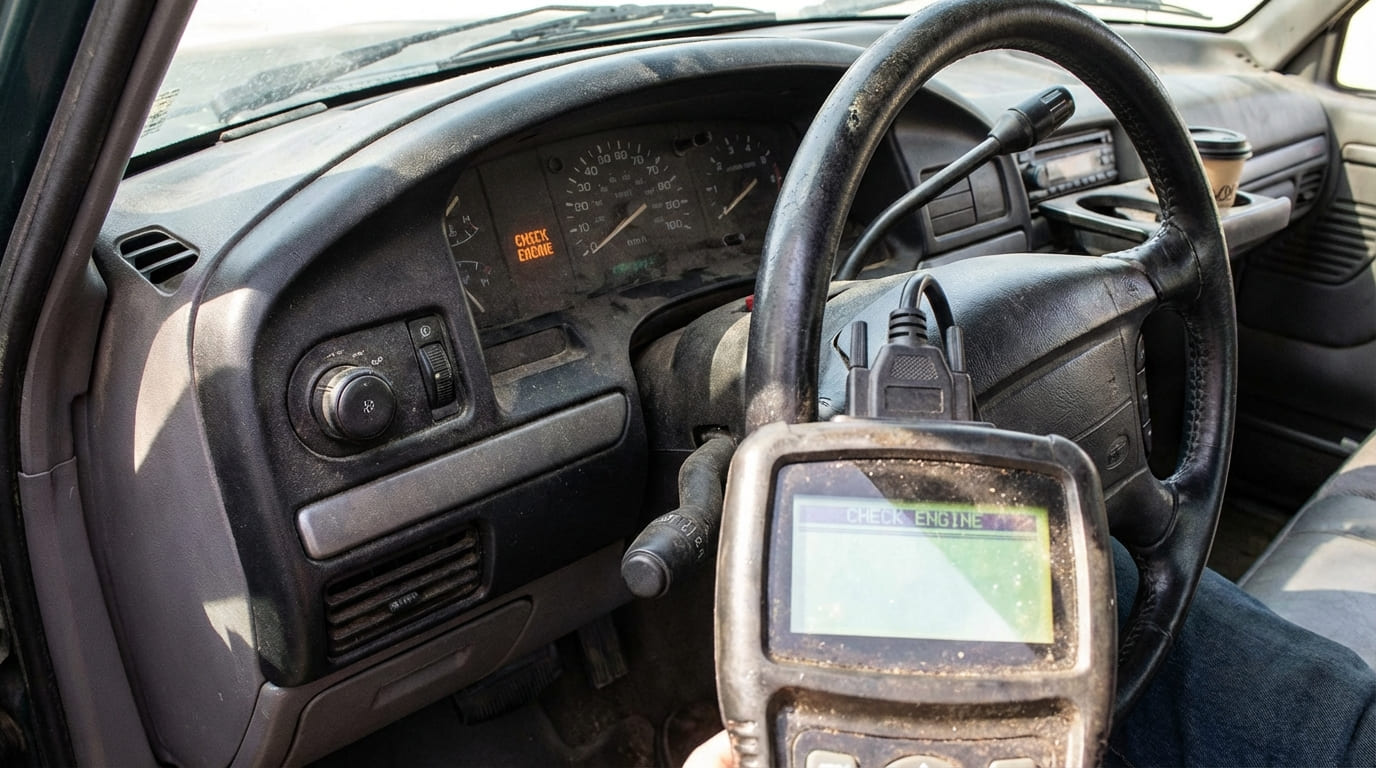
1. Illuminated Check Engine Light with Specific Codes
The “Check Engine” light is your first clue, but not every code means the sensor is dead. Use diagnostic trouble codes (DTCs) as a starting point, then verify with live data. Here’s how to interpret the most common ones:
Common O2 Sensor-Related Codes and What They Really Mean
These codes guide your diagnosis—but don’t assume replacement is the fix. Wiring, exhaust leaks, and contamination are frequent culprits.
- P0130–P0135 (Bank 1, Sensor 1): Often caused by heater circuit failure or wiring damage. Check for corrosion at the connector, especially on vehicles exposed to road salt. The sensor may still function, but the heater can’t bring it to operating temperature.
- P0140–P0145 (Bank 1, Sensor 2): Downstream codes usually indicate a lazy sensor or failing catalytic converter. But don’t replace the cat yet—verify upstream sensor performance first.
- P0150–P0165 (Bank 2 Sensors): Same logic applies. On transverse V6 engines, these are harder to access, so technicians sometimes skip inspection and replace prematurely.
- P0171/P0174 (System Too Lean) or P0172/P0175 (System Too Rich): These are fuel trim codes, not direct O2 sensor failures. Only about half the time is the sensor actually at fault. The rest? Vacuum leaks, MAF sensor issues, or exhaust leaks upstream.
- P0420/P0430 (Catalyst Efficiency): Often blamed on the downstream O2 sensor or converter. But if the upstream sensor is slow, it can cause the cat monitor to fail—even if the converter is fine.
Always pull freeze frame data: Was the engine cold? At idle? Under load? That context tells you when the fault occurred and helps rule out intermittent issues.
In my shop, we never replace an O2 sensor based on a code alone. We verify with live data first. I’ve saved customers hundreds by finding a $20 vacuum hose instead of a $300 sensor.
2. Noticeable Drop in Fuel Economy
A sudden decrease in MPG is one of the clearest signs of a failing upstream O2 sensor. When the sensor sends incorrect data, the PCM can’t maintain the ideal 14.7:1 air-fuel ratio.
How to Check
Use an OBD2 scanner with live data:
- Monitor Short-Term Fuel Trim (STFT) and Long-Term Fuel Trim (LTFT). Values consistently beyond ±10% indicate a problem.
- Watch the upstream O2 voltage. It should switch rapidly between 0.1V and 0.9V once warmed up. A flat line at 0.45V or sluggish response means the sensor is degraded.
If one bank shows LTFT at +20% and the other is normal, suspect a sensor or vacuum leak on that side.
3. Rough Idle or Misfires
An incorrect air-fuel mixture destabilizes combustion. A lean mixture can cause misfires; a rich one fouls spark plugs and builds carbon.
How to Check
Before blaming coils or injectors:
- Check misfire counts in live data and correlate them with O2 sensor behavior.
- If misfires spike when the O2 signal flatlines, it’s likely fuel-related.
- Still rule out ignition components and fuel delivery—don’t assume it’s the sensor.
4. Hesitation or Poor Acceleration
A sluggish O2 sensor can’t keep up with rapid throttle changes, leaving the PCM guessing during acceleration.
How to Check
Perform a snap-throttle test:
- Rev the engine quickly from idle to 2,500–3,000 RPM.
- Watch the upstream O2 voltage: it should dip (lean) then spike (rich) sharply within 100–250 ms.
- A slow ramp-up indicates a worn or contaminated sensor.
On turbocharged or GDI engines, response time is critical. I’ve seen cheap aftermarket sensors lag so much the engine feels like it’s gasping for air. Stick with OEM or high-tier brands like Denso or NGK.
5. Failed Emissions Test
High hydrocarbons (HC) or carbon monoxide (CO) on a smog test often trace back to O2 sensor performance. The downstream sensor monitors catalyst efficiency, but if it’s faulty, the test can fail incorrectly.
How to Check
- Use an OBD2 scanner to check if the catalyst monitor is “Ready”. If not, complete the drive cycle.
- If P0420 appears, check upstream sensor data first. A lazy upstream sensor can cause the cat to appear failed.
- For precision, use a 5-gas analyzer to see actual exhaust composition.
6. Rotten Egg Smell from Exhaust
This sulfur odor means excess fuel is overwhelming the catalytic converter. The sulfur in gasoline converts to hydrogen sulfide under rich conditions.
How to Check
- Check LTFT: if it’s deeply negative (e.g., –15%), the PCM is pulling fuel, but the O2 sensor may be lying.
- Confirm with a wideband air-fuel ratio meter if possible.
- Rule out low-quality fuel or a failing catalytic converter.
7. Black Smoke from Exhaust
Black smoke under acceleration indicates a rich mixture and incomplete combustion. While more common on diesels, it happens on gas engines too—especially with a dead upstream O2 sensor stuck at high voltage.
How to Check
- Monitor O2 voltage under load. If it’s pegged near 0.9V and fuel trims are maxed negative, the sensor isn’t working.
- Also check fuel pressure, fuel injectors, and the fuel pressure regulator—these can mimic O2 sensor failure.
8. Upstream vs. Downstream Sensor: Key Differences in Symptoms
Diagnosing which sensor is faulty saves time and money. Here’s how to tell:
Upstream (Pre-Cat) Sensor Problems
These directly control fuel delivery. Symptoms include poor fuel economy, rough idle, hesitation, and fuel trim codes. Live data shows flat or slow-switching voltage and unstable trims.
Downstream (Post-Cat) Sensor Problems
These monitor catalyst efficiency. The car usually runs fine, but you get P0420 or sensor circuit codes. The downstream O2 voltage should be stable. If it’s switching like the upstream sensor, suspect a bad cat, exhaust leak post-cat, or contaminated sensor.
9. Risks of Driving with a Faulty O2 Sensor
I don’t recommend long-term driving with a confirmed fault. Risks include:
- Catalytic converter damage: A rich mixture can overheat and melt the substrate. Replacement costs $800–$1,500.
- Engine damage: Lean conditions increase combustion temperatures and can cause detonation.
- Oil dilution: Excess fuel can wash down cylinder walls and thin the oil, especially in high-mileage engines.
I once pulled a converter that looked like a lava lamp—glassy chunks where the substrate had melted. Root cause? A $50 O2 sensor left unreplaced for 10,000 miles. Fix it early.
10. Common Misdiagnoses: What Else Could Be the Problem?
Many issues mimic O2 sensor failure. Always rule these out:
- Exhaust leaks upstream: Let in oxygen, causing false lean readings.
- Silicone sealants: Poison the sensor tip if used near the intake.
- Coolant contamination: From a head gasket leak, it coats the sensor and skews output.
- Fuel delivery problems: Weak fuel pump or clogged filter can cause rich/lean conditions.
- PCM or grounding issues: Rare, but a bad ground can mimic sensor circuit faults.
Best Practices: Do This, Not That
- ✅ Clean sensor threads with a tap and compressed air before installation. Debris can affect readings.
- ✅ Use anti-seize on threads—sparingly. Too much can wick into the sensor and poison it.
- ✅ Check for exhaust leaks with a smoke test or visual inspection before replacing any sensor.
- ⚠️ Don’t replace sensors based on mileage alone. Some last 200k miles; others fail at 80k. Test first.
- ⚠️ Avoid cheap aftermarket sensors on modern engines. I’ve seen them drift in calibration within months.
- ⚠️ Never ignore connector condition. Burnt or corroded pins are often the real problem.
Diagnostic Decision Table
| Symptom | Most Likely Causes | Less Common But Possible |
|---|---|---|
| P0171 (Lean) | Exhaust leak, vacuum leak, dirty MAF, failing upstream O2 | Fuel pump issues, clogged injectors, ECU calibration anomaly |
| P0172 (Rich) | Failing upstream O2 (stuck rich), leaking fuel injector, fuel pressure regulator failure | Coolant temp sensor fault, PCM issue, contaminated sensor |
| P0420 (Catalyst Efficiency) | Failed cat, faulty downstream O2, exhaust leak post-cat | Upstream O2 malfunction affecting mixture, oil consumption fouling cat |
| Black Smoke | Rich condition from O2 failure, fuel system fault | Boost leak in turbo engine, incorrect ignition timing |
| Rotten Egg Smell | Rich mixture overwhelming cat, low-quality fuel | Cat breakdown from age, sulfur additive in fuel |
Situation: A 2010 Camry came in with P0171 and poor fuel economy. The previous shop replaced the upstream O2 sensor twice.
Discovery: I checked live data and saw both banks running lean, but the new sensor on Bank 1 was actually responding—just slowly. A smoke test revealed a cracked intake manifold gasket.
Nuanced Lesson Learned: Just because a code points to one cylinder bank doesn’t mean the issue is isolated there. Shared vacuum sources or intake leaks can affect multiple sensors. Always verify with physical testing.
Situation: A 2008 F-150 showed P0420 and failed emissions. The owner had already replaced the downstream O2 sensor.
Discovery: The upstream sensor on Bank 1 had a lazy response—switching every 2–3 seconds instead of 100–200 ms. The cat was fine; it was being fed bad mixture data.
Nuanced Lesson Learned: Catalyst monitors depend on accurate upstream feedback. Don’t assume the cat or downstream sensor is faulty without validating the entire feedback loop.
Situation: A Subaru with P0037 (HO2S Heater Circuit Low, Bank 1 Sensor 2) kept blowing the fuse after sensor replacement.
Discovery: The harness was chafed against the exhaust manifold, shorting the heater circuit. The sensor wasn’t the problem—it was the wiring.
Nuanced Lesson Learned: Electrical faults in O2 circuits often stem from physical damage. Always inspect the harness path, especially near hot or moving components.