Low oil pressure at idle is a serious symptom that often masks deeper issues. Ignoring it risks engine failure. As a master mechanic, I’ve seen engines survive for months with low pressure—only to seize without warning. This guide cuts through theory and delivers a step-by-step diagnostic pathway based on real shop experience. We’ll verify the problem, identify root causes, and prioritize fixes by cost, effort, and likelihood.
Step 1: Confirm the Problem with a Mechanical Gauge
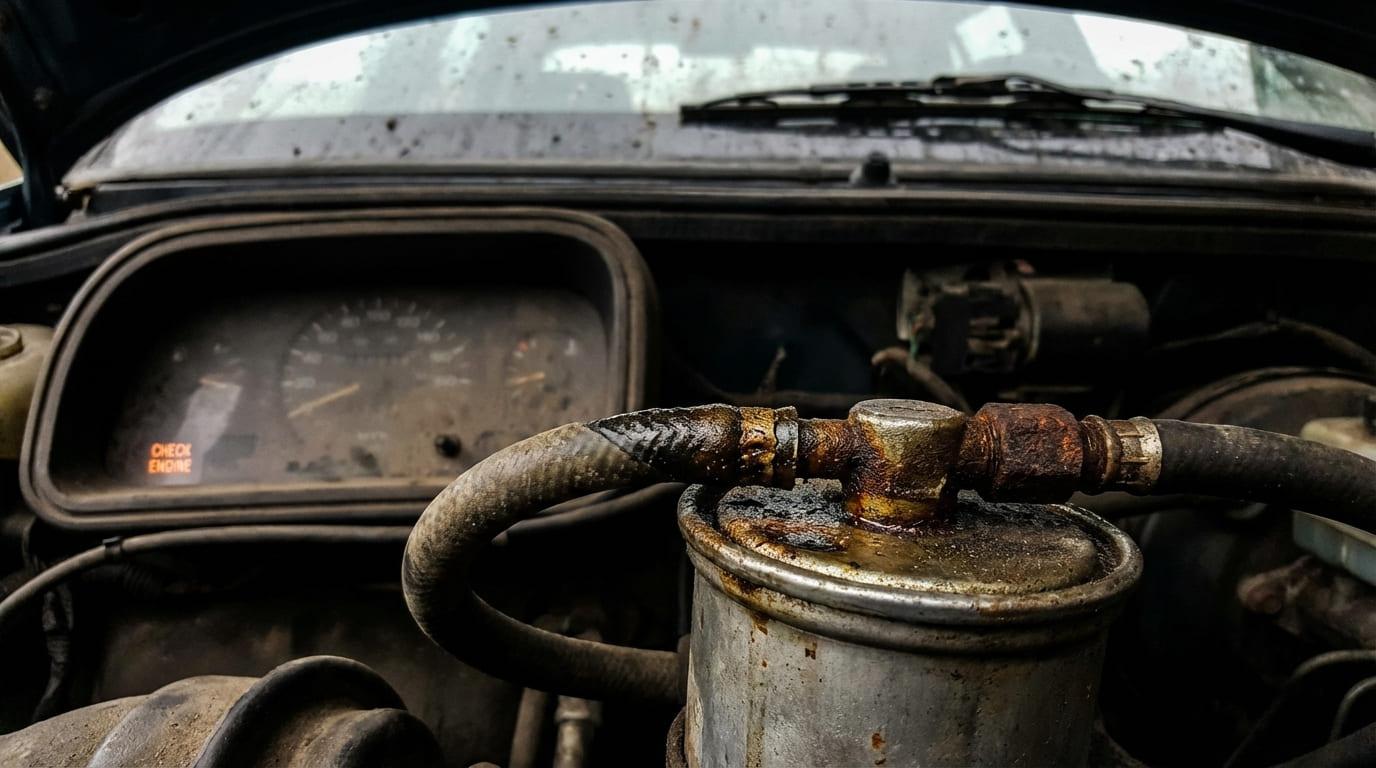
Never trust a dashboard oil pressure gauge or warning light alone. Many sensors fail open or short, giving false readings. The first and most critical step is verification.
How to Check Oil Pressure Correctly
Use a calibrated mechanical oil pressure gauge. It’s the only way to get an accurate reading.
- Locate the engine’s oil pressure sender port—common locations include the rear of the intake manifold (GM LS), near the oil filter adapter (Ford), or on the engine block (most others).
- Remove the sender and install the mechanical gauge using an adapter if needed.
- Start the engine and let it reach normal operating temperature (195–220°F).
- Record pressure at hot idle (600–900 RPM) and at 2,000 RPM.
Typical OEM specs:
- Idle: 10–15 PSI (0.7–1.0 bar)
- 2,000 RPM: 30–60 PSI (2.0–4.1 bar)
Some modern engines (e.g., turbocharged 4-cylinders) may accept as low as 8 PSI at idle. Always check the manufacturer’s specification. If the mechanical gauge reads within spec, the issue is likely electrical—replace the oil pressure sensor ($20–$50) and retest.
In my shop, we always clean the sender port with a tap before installing the mechanical gauge. Sludge or thread debris can restrict flow and give a falsely low reading.
Step 2: Rule Out Simple and Inexpensive Causes First
Before dropping the oil pan or tearing into the engine, eliminate the most common and cheapest-to-fix issues.
Check Oil Level, Type, and Condition
Incorrect oil level or viscosity is the #1 cause of low idle pressure.
- Park on level ground. Shut off engine and wait 5–10 minutes for oil to drain.
- Check dipstick. Add oil if low; drain if overfilled (foaming reduces pressure).
- Verify oil viscosity matches OEM spec (e.g., 5W-30, not 0W-20 or 10W-40).
- Inspect oil condition—milky oil suggests coolant contamination; foamy oil indicates aeration.
If wrong oil was used, drain and refill with correct grade. Cost: $30–$70 DIY. Recheck pressure with mechanical gauge.
Inspect and Replace the Oil Filter
A faulty or incorrect oil filter can bleed off pressure at idle.
- Check if the filter was recently changed.
- Look for non-OEM filters—some cheap brands have improperly calibrated bypass valves that open too early.
- Remove the filter and inspect for collapse, bulging, or debris.
Replace with an OEM or premium filter (Wix, Purolator, or OEM). Cost: $10–$25. Retest pressure.
I once fixed a car with 8 PSI at idle by swapping a no-name filter for a Wix. The bypass valve was stuck open. Don’t let a $12 part kill a $3,000 engine.
Step 3: Investigate Internal Engine Causes
If oil level, type, filter, and sensor are good, but pressure is still low at idle, the issue is internal. Now we dig deeper—methodically.
Oil Pump Wear or Failure
The oil pump must generate flow proportional to engine speed. If pressure doesn’t rise with RPM, the pump is suspect.
- Access varies: some pumps are in the oil pan, others behind the timing cover.
- Inspect drive gears for wear or sheared teeth—common on Ford 4.6L oil pump shafts.
- Use a bore scope through the pickup tube to inspect gears without full disassembly.
Replacement cost: $150–$400 for pump, plus 3–6 hours labor. Often requires pan drop or timing cover removal.
Pressure Relief Valve Stuck Open
This valve prevents over-pressurization by bleeding oil back to the sump. If stuck open, pressure never builds.
- Location: inside the oil pump housing, filter adapter, or engine block.
- Remove and inspect—clean with solvent, check spring for breakage, plunger for free movement.
- On Toyota 1MZ-FE and 3MZ-FE V6 engines, it’s in the filter housing—easy access.
Cost: $0–$50 (clean or replace). High reward for low effort.
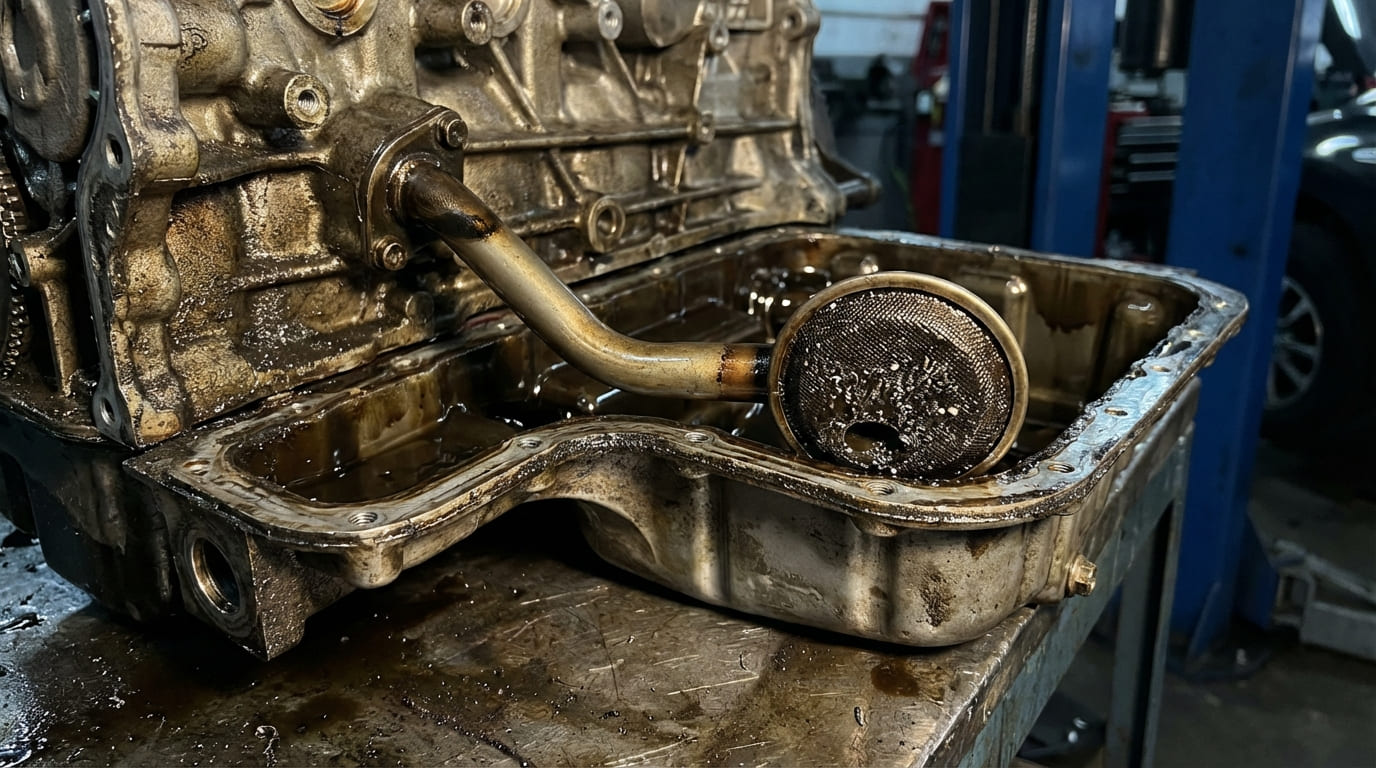
Oil Pickup Tube Issues
The pickup tube draws oil from the pan to the pump. Any restriction or leak here starves the system.
- Drop the oil pan to inspect.
- Check for sludge, debris, or a collapsed screen.
- Inspect the gasket—folded or misaligned gaskets can block flow by 50% or more.
- Look for cracks or dents in the tube, especially after undercarriage impacts.
Even a small gap between the pickup and pump inlet can draw air, reducing pressure at idle.
Repair: Clean or replace pickup. Use OEM-style steel gaskets—avoid rubber seals that can collapse. Cost: $20–$80.
In a 2012 Silverado case, a folded pickup gasket caused 7 PSI at idle. Bearings were fine. Moral: always inspect the entire suction path, not just the pump.
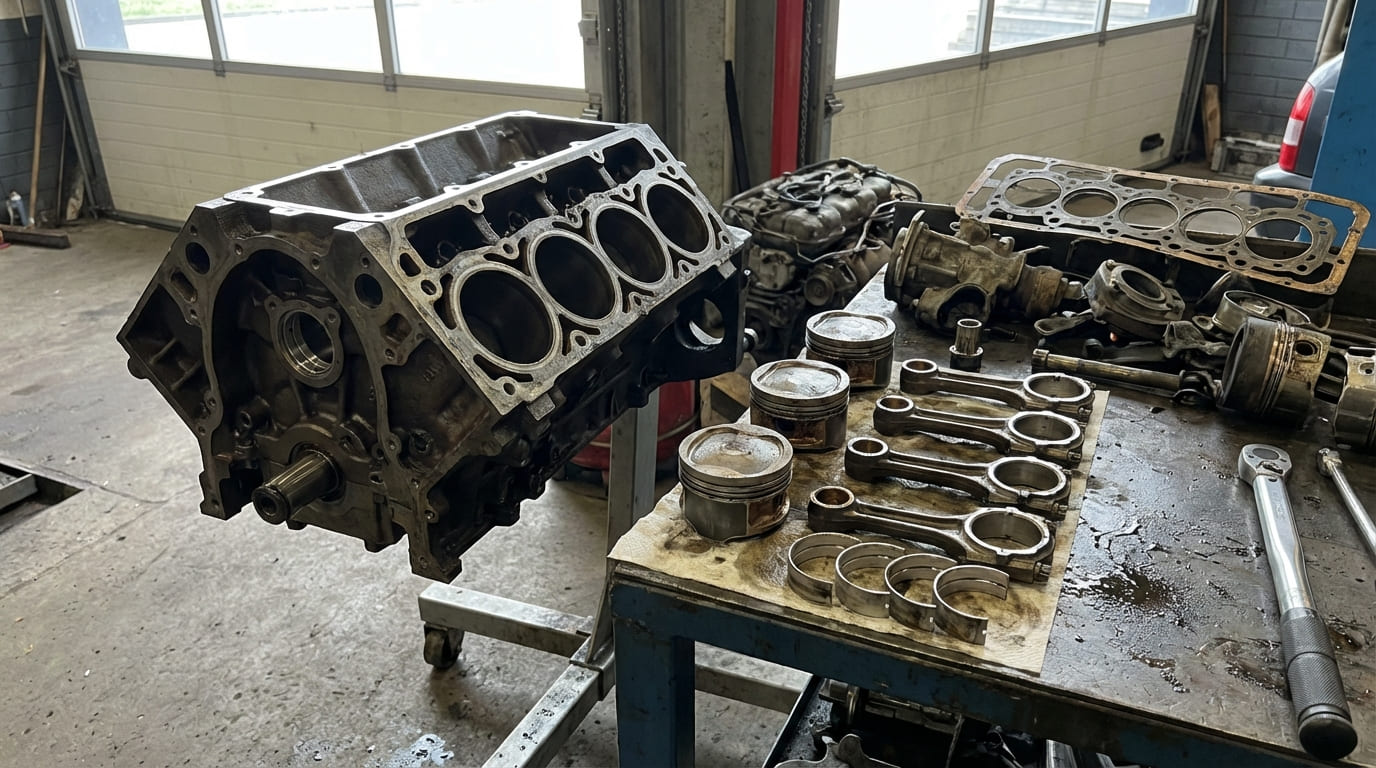
Excessive Bearing Clearance
Worn main, rod, or cam bearings increase clearance, allowing oil to escape faster than the pump can supply it—especially at idle.
- Symptom: pressure drops sharply when engine is hot.
- Check oil analysis—elevated copper, lead, or tin indicates bearing wear.
- Listen for a low-frequency knock at idle with a mechanic’s stethoscope.
- Definitive test: drop pan and measure clearance with Plastigauge.
Typical clearance specs:
| Engine Type | Main Bearing Clearance | Rod Bearing Clearance |
|---|---|---|
| GM LS V8 | 0.0018–0.0025″ | 0.0019–0.0026″ |
| Ford 5.0L Coyote | 0.0017–0.0024″ | 0.0018–0.0025″ |
| Toyota 2JZ | 0.0016–0.0023″ | 0.0015–0.0022″ |
If clearance exceeds spec, bearings must be replaced. Requires engine teardown. Cost: $1,500–$4,000.
Internal Oil Leaks (Cracked Block or Head)
Rare but catastrophic. Oil leaks internally into coolant passages or engine cavities, bypassing the system.
- Symptoms: unexplained oil loss, pressure drops without external leaks, coolant contamination.
- Diagnosis: pressure test oil galleries with a dedicated pump (20–60 PSI).
- Look for bubbles in coolant or oil in radiator.
Common in older aluminum blocks (e.g., GM 5.3L, Ford 4.6L). Repair options:
- Small cracks: epoxy seal or dry ice plug.
- Major cracks: block replacement or engine rebuild.
Cost: $2,000–$6,000. Often more economical to replace engine.
I diagnosed a 1998 Mustang GT with a crack between the lifter bore and main gallery. Oil was bleeding into the valley. No external signs. When pressure loss defies logic, test gallery integrity.
Diagnostic Decision Table
| Symptom / Test Result | Most Likely Causes | Less Common but Possible | Diagnostic Next Step |
|---|---|---|---|
| Low pressure only at idle, improves with RPM | Excessive bearing clearance, high oil temperature | Marginal pump wear, incorrect oil viscosity | Check oil temp, perform oil analysis, verify bearing clearances |
| Low pressure at all RPMs | Oil pump failure, relief valve stuck open | Severe internal leak, cracked block | Inspect pump and relief valve, pressure test galleries |
| Pressure drops after engine warms up | Oil too thin when hot, worn bearings | Pickup tube suction leak, aeration | Verify oil grade, check for foaming, inspect pickup seal |
| Pressure normal on mechanical gauge | Failed oil pressure sensor or wiring | Instrument cluster fault | Test sensor signal, check for open/short in circuit |
| Pressure spikes then drops suddenly | Clogged filter or pickup screen | Air ingestion, pump cavitation | Inspect filter, drop pan, check for debris |
Best Practices: What to Do and Avoid
- ✅ Use a mechanical gauge to verify pressure—saves time and prevents misdiagnosis.
- ✅ Clean oil gallery threads with a tap before installing the sender—prevents false readings.
- ✅ Replace the oil filter with every oil change—use OEM or premium brands.
- ⚠️ Avoid reusing torque-to-yield (TTY) head or main bolts—they stretch and lose clamping force.
- ⚠️ Avoid assuming low idle pressure means a rebuild—rule out simple causes first.
- ⚠️ Avoid running higher viscosity oil (e.g., 20W-50) as a permanent fix—it increases pump load and hurts cold starts.
Final Thoughts
Low oil pressure at idle is rarely one single failure. It’s often a chain reaction—poor maintenance leads to sludge, which damages the pump, which accelerates bearing wear. The fastest fix isn’t always the deepest teardown. Start simple, verify every step, and trust the mechanical gauge over the dashboard light.
Every engine has unique specs. What’s normal for a Subaru boxer engine may be dangerous for a Chrysler Hemi. Always consult the factory service manual for pressure thresholds, torque specs, and clearances. The numbers are your roadmap—follow them, and you’ll save time, money, and engines.