In my two decades as a shop foreman, few components have caused as much confusion—and avoidable comebacks—as the humble PCV valve. It’s small, inexpensive, and often overlooked, but when it fails, the symptoms can mimic serious engine problems. Over the years, I’ve seen good engines torn apart because someone misdiagnosed a $15 valve. Let’s walk through what to look for, how to test it properly, and—just as importantly—what else could be masquerading as a bad PCV valve.
Common Symptoms of a Faulty PCV Valve
PCV valve failures typically fall into three categories: stuck open, stuck closed, or partially clogged. Each creates a distinct set of symptoms. Recognizing the pattern helps avoid misdiagnosis.
Stuck Open or Leaking: Unmetered Air and Lean Conditions
When the PCV valve is stuck open, it acts like a vacuum leak, allowing uncontrolled air into the intake. This disrupts the air-fuel ratio and triggers several drivability issues:
- Rough idle, hesitation, or stalling—especially at warm-up or low RPM.
- Lean fuel trims (positive STFT/LTFT), often exceeding +15%.
- Check Engine Light with P0171 (System Too Lean) or P0174 (Bank 2 Lean).
- Intermittent misfires (P030x), typically due to lean combustion, not ignition faults.
- Increased oil consumption—oil mist pulled into the intake burns in the cylinders, leaving oily spark plugs or intake residue.
In my shop, we always check fuel trims first. If they’re consistently high at idle but normalize at higher loads, suspect a vacuum-related issue—often the PCV system or a gasket leak.
Stuck Closed or Clogged: Pressure Buildup and Oil Issues
A blocked PCV valve prevents crankcase ventilation. Pressure builds, forcing oil past seals and accelerating wear:
- Oil leaks from valve cover gaskets, rear main seal, or camshaft seals—especially after the engine has been running.
- Blow-by or puff of air when removing the oil filler cap at idle.
- Whistling or hissing from the dipstick tube or breather hoses.
- Swollen or collapsed PCV hoses—swelling indicates overpressure; collapse may mean vacuum imbalance.
- Oil contamination: milky residue under the oil cap (often mistaken for head gasket failure).
- Sludge buildup in the crankcase due to trapped moisture and fuel dilution.
- Poor performance or misfires from oil-fouled spark plugs or intake valves.
- Check Engine Light with misfire codes or even rich codes (P0172/P0175) due to oil disrupting combustion.
I’ve seen techs replace head gaskets over a milky oil cap—only to find the real culprit was a clogged PCV. Always rule out ventilation issues before tearing into the engine.
Partially Clogged: The Silent Degradation
These are the sneaky failures. The engine runs “okay,” but small issues pile up:
- Gradual oil leaks that return after gasket replacement.
- Intermittent lean trims that fluctuate.
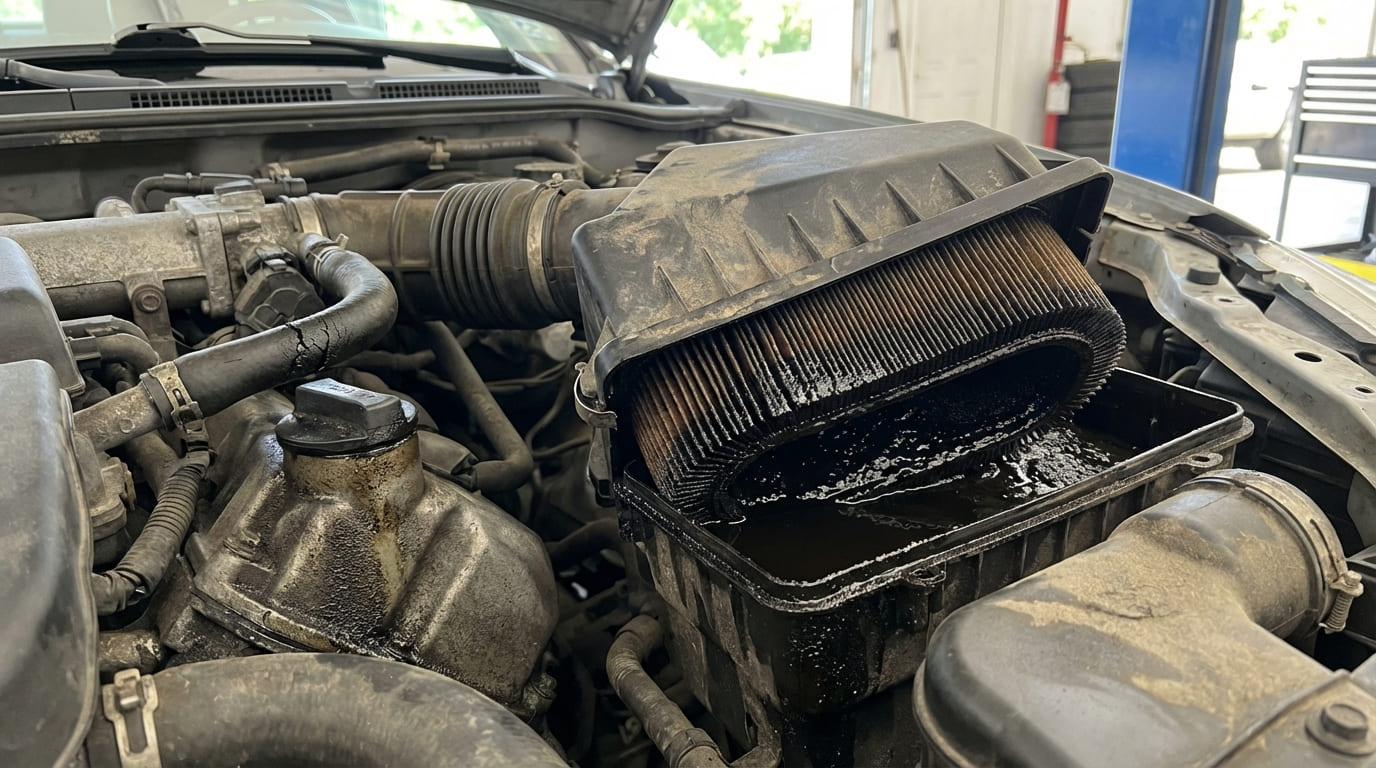
- Oil pooling in the intake manifold or throttle body—common on direct-injection engines, contributing to carbon buildup.
On turbocharged engines, partial clogs are a leading cause of intercooler oil residue. Don’t assume it’s a bad turbo seal—check the PCV first.
How to Diagnose a Faulty PCV Valve
Don’t guess—test. Symptoms alone can mislead. Use a systematic approach to confirm the fault.
Visual Inspection and Basic Checks
Start here. It takes five minutes and often reveals the issue:
- Remove the PCV valve and inspect for cracks, sludge, or gummed-up internals.
- Check hoses for brittleness, kinks, or oil sludge blocking flow.
- Examine the grommet and valve cover port for carbon buildup or poor sealing.
Shake Test (For Plunger-Type Valves Only)
A quick field check—but know its limits:
- Remove the valve.
- Shake gently. A rattle means the plunger moves.
- No sound? It may be stuck—but many modern valves use diaphragms and won’t rattle at all.
Never rely solely on the shake test. I’ve seen valves rattle freely but still fail under vacuum. Always follow up with a vacuum or smoke test.
Vacuum Test (Engine Running)
The most reliable field test for function:
- Disconnect the PCV hose from the valve cover, leaving it connected to the intake.
- Place your finger over the valve’s engine-side port.
- You should feel steady, moderate vacuum—similar to intake manifold vacuum (~15–20 inHg).
- No vacuum? Likely blockage or stuck-closed valve.
- Excessive suction? Could indicate a stuck-open valve or system imbalance.
Oil Filler Cap Test (Crankcase Pressure)
A classic diagnostic for restricted ventilation:
- Warm engine to operating temperature.
- Idle the engine and slowly loosen the oil filler cap.
- Slight vacuum (cap pulls down): normal on most engines.
- Gentle pressure (cap lifts): acceptable on some designs.
- Forceful blow-by or visible smoke: strong indicator of clogged PCV or excessive blow-by.
Smoke Test (For Leaks and Flow Verification)
Best for confirming vacuum leaks or blocked flow paths:
- Seal the oil filler cap with a smoke machine adapter.
- Introduce low-pressure smoke into the crankcase.
- Look for smoke escaping at the PCV valve grommet, hose joints, or intake connections.
- No smoke reaching the intake? Possible blockage in the PCV system.
Scan Tool Data Analysis
Modern diagnostics make this faster and more accurate:
- Monitor STFT and LTFT: sustained positive trims (> +10%) suggest unmetered air.
- Check MAP sensor readings: higher-than-normal vacuum at idle may indicate a leak path.
- Review misfire counters: if misfires are on specific cylinders, check for oil fouling—common in valley-intake V6/V8 engines.
Repair vs. Replace: Cost and Best Practices
PCV valves are cheap—typically $10–$30. But cutting corners leads to repeat issues.
| Component | Average Cost | Viability |
|---|---|---|
| PCV Valve (OEM) | $15–$25 | Always replace with OEM-spec. Avoid universal valves. |
| PCV Hoses | $10–$20 (kit) | Replace with valve. Cracked hoses are common failure points. |
| Integrated Valve Cover (e.g., Ford, GM) | $200–$500 | Some engines require full cover replacement. Labor-heavy—factor in 1.5–2.5 hours. |
- ✅ Replace hoses with the valve—they’re cheap and often degraded.
- ✅ Clean the grommet and bore in the valve cover to ensure a tight seal.
- ✅ Verify correct valve orientation and routing—especially on V6/V8 engines with dual banks.
- ⚠️ Avoid aftermarket “universal” valves. Flow rates vary; mismatched valves cause lean conditions.
- ⚠️ Don’t skip the factory service manual. PCV system design varies widely—even between model years.
In my shop, we always replace the entire PCV system—valve, hoses, and grommet—on high-mileage vehicles. It’s less than $50 and prevents 90% of comebacks.
Differential Diagnosis: What Else Could It Be?
PCV symptoms overlap with other issues. Use this guide to avoid misdiagnosis:
| Symptom | Most Likely Causes | Less Common but Possible |
|---|---|---|
| Lean fuel trim, rough idle | Stuck-open PCV, intake gasket leak, disconnected vacuum line | MAF sensor contamination, EGR valve stuck open |
| Oil leaks, pressure buildup | Clogged PCV, blocked breather, excessive blow-by | Failed turbo seal, internal engine damage |
| Oil in intake manifold | PCV overflow, excessive crankcase pressure | Failed turbo seals, worn valve guide seals |
| Milky oil cap | Short-trip driving, clogged PCV, infrequent oil changes | Head gasket leak (verify with block test first) |
Real-World Case Studies
Situation: 2013 Toyota Camry with P0171 and rough idle. MAF and O2 sensors already replaced.
Diagnosis: Fuel trims at +22% at idle. Smoke test clean. PCV valve looked okay but was gummed internally.
Solution: Replaced valve and hoses. Trims normalized. Lesson: varnish can restrict flow even if the valve isn’t fully stuck.
Situation: 2008 Ford 5.4L with recurring rear main seal leaks. Seal replaced twice.
Diagnosis: Oil cap test showed high pressure. PCV valve and breather clogged with sludge.
Solution: Cleaned system, replaced valve and hoses. No more leaks. Lesson: fix the pressure, not just the seal.
Situation: 2016 Subaru WRX with oil in intercooler and misfires.
Diagnosis: PCV system functional, but breather hose kinked behind the engine.
Solution: Re-routed hose. Oil buildup stopped. Lesson: routing and assembly matter—inspect the whole system.
Maintenance and Final Advice
The PCV system isn’t just for emissions—it’s critical for engine health. I recommend inspecting it every oil change after 60,000 miles. Look for oil flow in hoses, stiffness, and proper valve movement.
Manufacturer intervals (often 60,000–100,000 miles) assume ideal conditions. In reality, short trips, dust, or stop-and-go driving can foul the system much sooner.
When in doubt, replace it. A $20 part can save you from misdiagnosing a $2,000 engine job. And always test the system—not just the valve.