In my two decades turning wrenches in independent shops and dealership bays, few components have taught me more about the importance of subtle observation than the water pump. It’s not a flashy part, but when it starts to fail, it speaks—through temperature, noise, leaks, and even cabin comfort. The trick isn’t just recognizing the signs, but interpreting them correctly. A failing water pump can mimic other issues, and jumping to conclusions can cost time and money. Let me walk you through what I’ve learned diagnosing hundreds of overheating engines.
1) Engine Overheating
Overheating is often the first red flag that brings a car into the bay. While the thermostat gets blamed more than it deserves, insufficient coolant circulation due to water pump failure is a frequent culprit.
As the pump’s impeller corrodes, erodes, or detaches from the shaft, its ability to move coolant diminishes. If the bearing seizes, the impeller stops turning entirely. Coolant loss from a leaking shaft seal also reduces system volume, accelerating overheating.
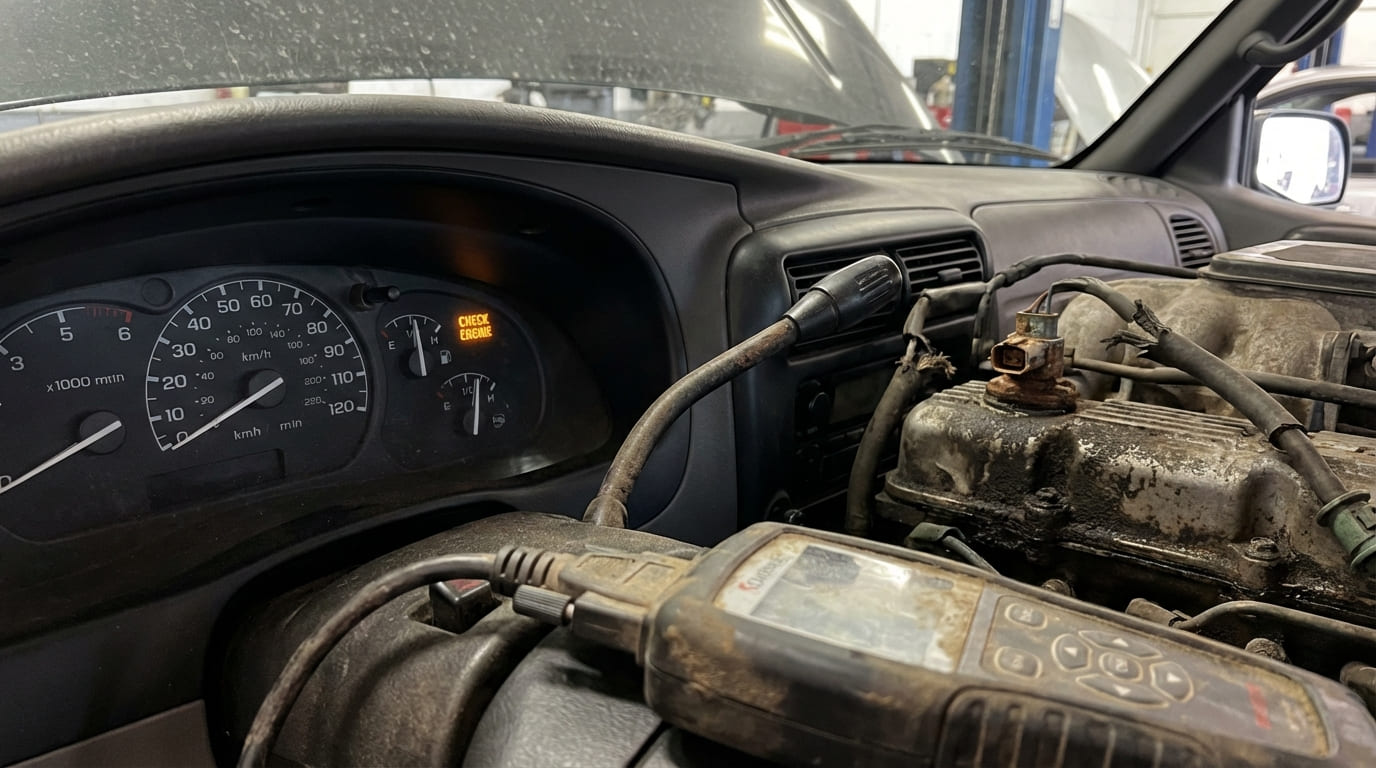
To verify, use an OBD2 scanner to monitor live engine coolant temperature (ECT). Sustained readings above 220°F (104°C) under normal load suggest a circulation issue. Confirm with an infrared thermometer: check the thermostat housing and both radiator tanks. If the top tank is significantly cooler than the bottom, flow is restricted.
Don’t confuse this with thermostat failure—here, the upper radiator hose won’t build pressure when squeezed. Radiator clogs show a temperature gradient across the core. Overheating mainly at idle points to a cooling fan issue. Always check multiple causes—vehicles often have more than one cooling system fault.
2) Coolant Leakage
A wet water pump is rarely a good sign. The location and pattern of the leak reveal what’s failing inside.
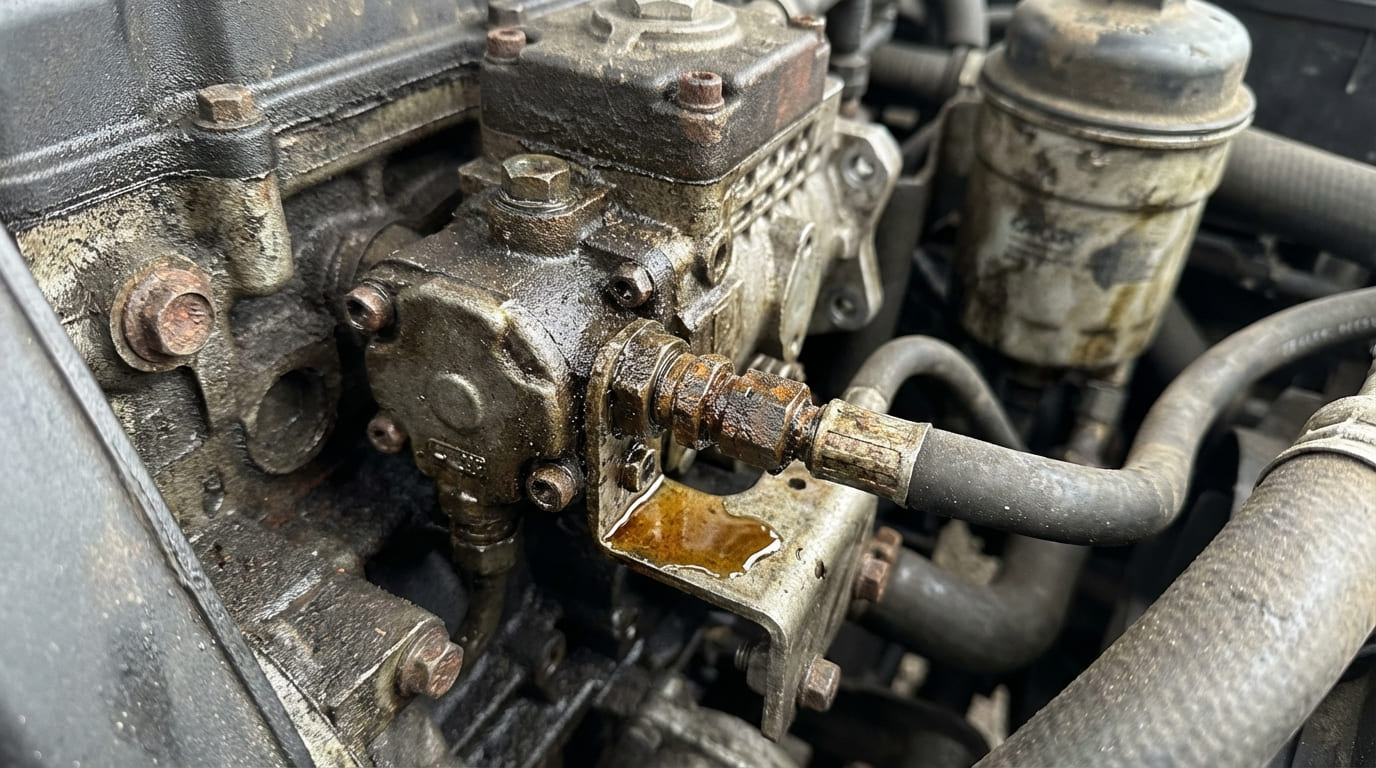
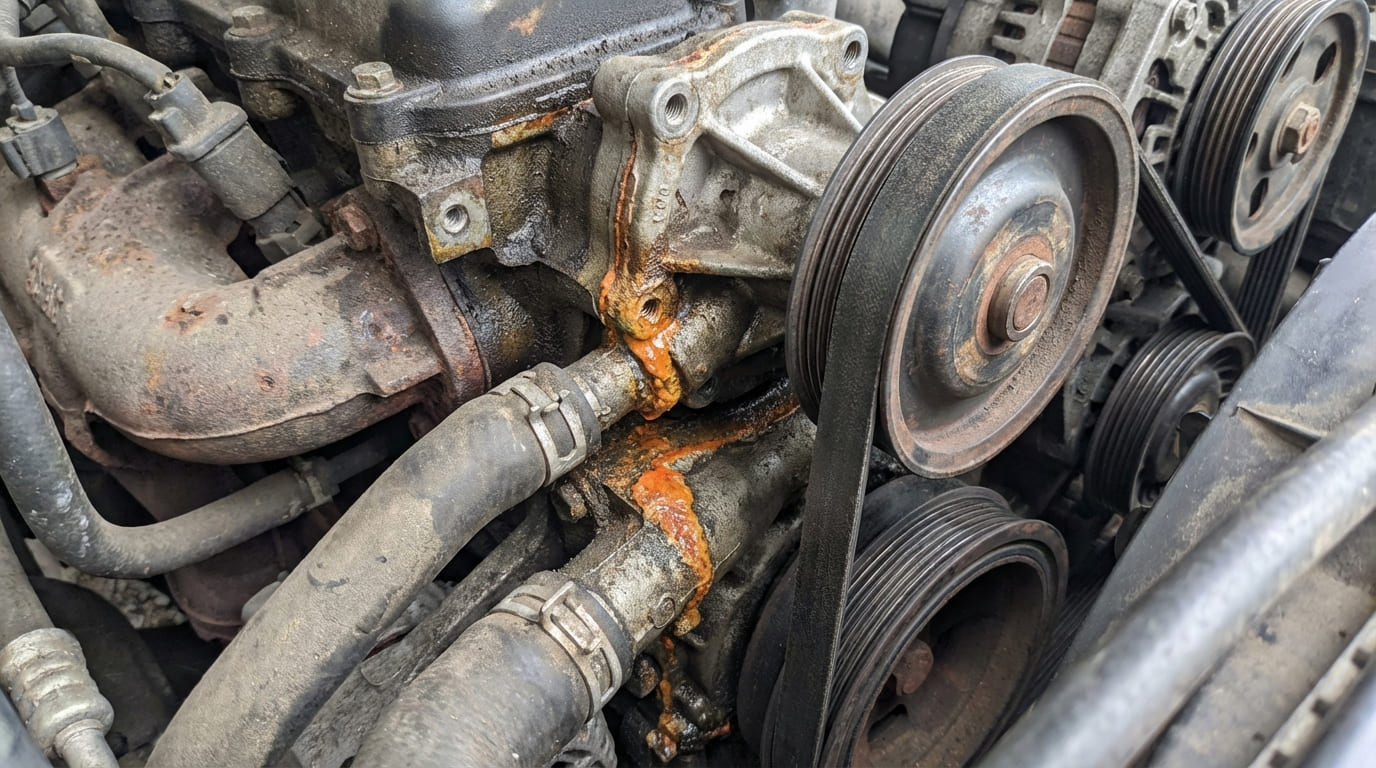
The most telling sign is coolant from the weep hole—a small port at the base of the pump. It’s designed to vent coolant before it ruins the bearing. Leaks at the gasket surface may stem from overtightened bolts, warped housing, or improper installation.
Use a cooling system pressure tester to confirm. Pressurize to the cap’s rating (usually 15 psi). If pressure drops more than 2 psi in 15 minutes and you see dampness at the weep hole, the shaft seal is compromised. UV dye and a black light help spot intermittent leaks.
Don’t mistake a nearby hose clamp or cracked radiator end tank for a pump leak—coolant runs downhill and can pool near the pump. A sweet smell inside the cabin with a wet passenger floor points to a heater core, not the pump.
3) Noise from the Water Pump Area
Bearings don’t fail quietly. A whining, grinding, or growling noise that rises with engine RPM is a red flag. Some pumps chirp; others rattle from a loose or broken impeller.
Use an automotive stethoscope to isolate the source. If the noise peaks at the pump, shut the engine off, remove the serpentine belt, and spin the pulley by hand. Any roughness, play, or binding means trouble. In my shop, we replace any pump with more than 0.005 inch (0.127 mm) of axial or radial play.
Alternator noise often worsens with electrical load—try turning on headlights and the blower. Idler pulley or tensioner noise persists after belt removal. Power steering whine increases when turning the wheel. Misdiagnosing these can cost hundreds—always verify with the belt off.
4) Steam or Smoke from the Engine Compartment
Steam from near the exhaust manifold is a serious warning. It means coolant is leaking and hitting hot metal—often from a failing pump seal.
The sweet smell of antifreeze is the giveaway. Coolant leaks from the weep hole or gasket can drip onto the manifold or cylinder head, vaporizing instantly.
Start with a cold inspection—look for white or rust-colored residue near exhaust components. Pressure test the system and watch for steam as the engine warms. UV dye helps confirm the leak source if it’s not visible.
Oil burning off produces dark, acrid smoke. Power steering fluid leaks smell rubbery and often come from the front of the engine. Steam near the radiator cap suggests over-pressurization, not a pump issue.
5) Loose Water Pump Pulley
Any wobble in the pulley means the bearing is failing or the shaft is damaged. This can lead to belt slippage or failure.
Causes include severe bearing wear, a loose mounting bolt, or a cracked pulley hub. On aluminum pumps, the shaft can pull through the housing over time.
With the belt off and engine off, grip the pulley and check for movement. Any detectable wiggle—side-to-side or in-and-out—is a failure sign. Use a dial indicator if available, but experienced hands can feel 0.005 inch of play.
Always rule out a wobbling harmonic balancer or flexing tensioner arm—especially on V6 engines. Rotate other pulleys to isolate the source.
6) Impaired Heater Performance
Cold air when you expect heat isn’t always a blend door problem. A failing pump may not circulate enough coolant through the heater core.
If the impeller is corroded or missing blades, flow drops. The engine might run at normal temperature, but the cabin stays cold.
Use an infrared thermometer on the heater core inlet and outlet hoses. A healthy system shows a 15–20°F drop across the core. If both hoses are lukewarm, flow is poor. Confirm engine temp and coolant level first.
A clogged heater core shows a large temp difference but hot inlet. Blend door issues often come with actuator noises. Low coolant affects all systems—radiator, heater, and reservoir.
Water Pump Repair: Cost, Tools, and Best Practices
Water pump replacement typically costs $200–$400 at a shop, with parts ranging from $50–$150 and labor $150–$300 depending on accessibility. On timing belt-driven engines, it’s cost-effective to replace the pump when doing the belt—labor overlaps, and failure soon after is common.
Essential tools: socket set, torque wrench, cooling system pressure tester, OBD2 scanner, IR thermometer. For timing belt jobs, you’ll need a timing kit and possibly a harmonic balancer puller.
- ✅ Inspect the impeller during removal. I’ve seen pumps with half the blades missing—no flow, no leaks, no noise.
- ✅ Clean block and housing threads with a tap before installing bolts. Aluminum housings gall easily—clean threads prevent warpage and leaks.
- ✅ Replace the thermostat with the pump. They wear out together, and the labor is already there.
- ⚠️ Never reuse torque-to-yield (TTY) bolts unless specified. They stretch—reusing them risks uneven clamping and leaks.
- ⚠️ Don’t over-tighten mounting bolts. On aluminum pumps, this cracks the housing. Always follow OEM torque specs and sequence.
- ⚠️ Never start the engine without burping the cooling system. Air pockets cause hot spots and can destroy a new pump in minutes.
Diagnostic Scenarios: Common Presentations and Probable Causes
| Symptom | Most Likely Cause | Less Common But Possible | Verification Method |
|---|---|---|---|
| Overheating + no heat | Low coolant / poor circulation (failed pump or thermostat) | Clogged radiator, air pocket, collapsed hose | Pressure test, flow test, IR temp check |
| Whining noise + play in pulley | Worn pump bearings | Idler pulley, tensioner, alternator | Belt removal, stethoscope, visual spin test |
| Leak at weep hole | Shaft seal failure | Cracked housing, contamination in seal face | Pressure test, visual inspection |
| Steam near exhaust manifold | Coolant leak from pump or hose | Head gasket, intake manifold gasket | Dye test, pressure test, sniff test |
| Overheating after recent coolant work | Air pocket or incorrect thermostat install | Wrong pump type, impeller direction | Bleed system, verify flow, check ECT data |
Field Stories from the Bench
Situation: A 2012 F-150 came in with overheating and a puddle under the pump. Owner insisted it was the radiator.
Initial Assumption: Failed water pump shaft seal.
Deep Dive: After replacement, it still overheated. I did a flow test and found weak output. Pulled the new pump—impeller was plastic and had slipped on the shaft.
Nuanced Lesson Learned: Not all replacement pumps are created equal. Some aftermarket units use inferior materials. I now check impeller attachment method before installation—especially on aluminum-housed pumps.
Situation: A Honda Accord had a whining noise. Previous shop replaced the alternator—noise remained.
Initial Assumption: Bad alternator bearing.
Deep Dive: With the belt off, the noise vanished. I rotated each pulley. The water pump pulley had slight play but no noise. Reinstalled belt—noise returned. Realized the pump was slightly misaligned due to a bent mounting ear.
Nuanced Lesson Learned: Misalignment can cause noise without bearing failure. Always check pulley alignment with a straightedge—especially on engines with multiple accessories.
Situation: Customer complained of no heat. Coolant level was fine, no leaks.
Initial Assumption: Blend door actuator.
Deep Dive: IR gun showed both heater hoses cold. Engine temp normal. Removed water pump—impeller was severely corroded, blades nearly gone.
Nuanced Lesson Learned: A pump can fail hydraulically without leaking or making noise. Flow matters as much as pressure. Always verify actual coolant movement, not just temperature readings.
Final Thought
Water pump diagnosis isn’t about one symptom—it’s about connecting temperature, flow, noise, and system history. I’ve seen good pumps pulled because someone skipped the pressure test, and I’ve saved engines by catching a slow leak early. The service manual is your best friend: warpage limits, torque specs, and flow rates vary widely. Always use the data for the specific engine in front of you.