As a master mechanic, I’ve seen thermostat issues misdiagnosed more times than I can count. The symptoms are often clear—overheating or poor warm-up—but jumping straight to replacement without proper testing can waste time and money. This guide cuts through the noise with actionable diagnostics, real-world pitfalls, and shop-tested repair logic to help you fix the problem right the first time.
Thermostat Stuck Open: Symptoms and Diagnostics
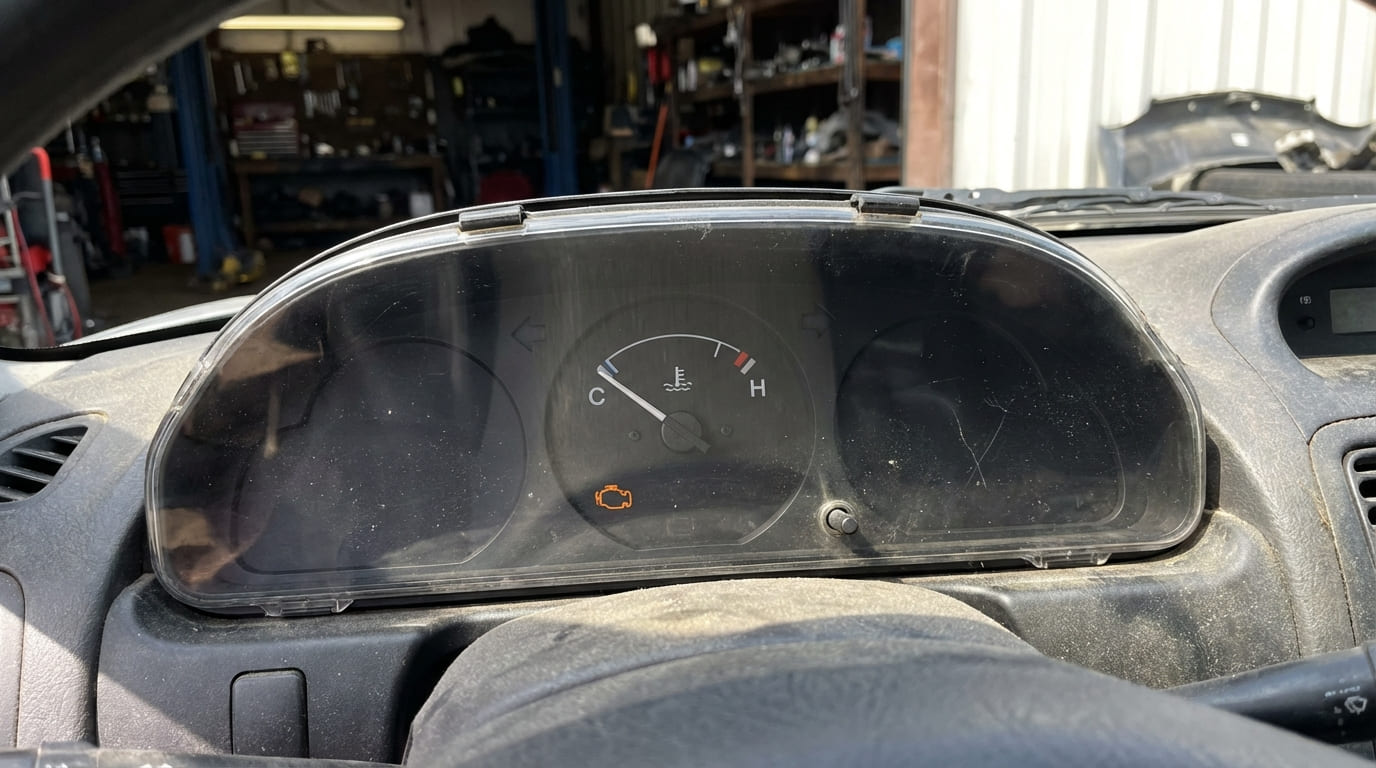
When a thermostat is stuck open, coolant flows freely through the radiator even when the engine is cold. This prevents the engine from reaching optimal operating temperature, typically 85–105°C. If your engine struggles to exceed 75°C after 10 minutes of driving, suspect a stuck-open thermostat.
Key Symptoms and How to Check
- Low engine temperature readings: Use an OBD2 scanner to monitor live ECT (Engine Coolant Temperature) data. A healthy engine should reach at least 80°C within 10 minutes. If it doesn’t, cross-check with an infrared thermometer at the thermostat housing.
- Weak heater output: If the cabin heater blows lukewarm air even after extended driving, and coolant level is good, a stuck-open thermostat is likely.
- Poor fuel economy: The ECU stays in open-loop mode, running a richer mixture. Expect 10–15% lower MPG.
- DTC P0128: This code indicates coolant temperature below thermostat regulating temperature. But don’t assume it’s the thermostat—faulty ECT sensors or wiring can trigger the same code.
In my shop, we always verify the ECT sensor reading with an infrared gun before replacing any thermostat. I’ve saved customers hundreds by catching bad sensors instead of throwing parts at the problem.
How to Test a Suspected Stuck-Open Thermostat
Bench testing is the gold standard. Remove the thermostat and place it in a pot of water with a calibrated thermometer. Most open between 82°C and 95°C—check the rating stamped on the unit. If it’s already open at room temperature, it’s failed.
Also inspect the thermostat housing and gasket. A missing or damaged gasket can allow coolant bypass, mimicking a stuck-open condition even with a good thermostat.
Thermostat Stuck Closed: Overheating and Flow Blockage
A stuck-closed thermostat blocks coolant flow to the radiator. Under load, engine temperature spikes rapidly—often within minutes. This is a serious condition that can lead to head gasket failure or engine damage if ignored.
Key Symptoms and How to Check
- Rapid temperature rise: Monitor ECT live data. If temperature climbs past 105°C quickly, especially under load, suspect a blockage.
- Cool upper radiator hose: Use an infrared thermometer. If the engine is hot but the upper hose is cool, coolant isn’t flowing—classic sign of a stuck-closed thermostat.
- Boiling coolant and pressurized system: Check the overflow tank. Boiling coolant and bulging hoses indicate excessive pressure from trapped heat.
- DTC P0217: Over temperature condition. Also watch for misfire codes (P030X) caused by detonation.
Never assume a cold upper hose means a bad thermostat. I once spent an hour chasing a “stuck thermostat” only to find a collapsed lower radiator hose sucking shut under vacuum. Always verify flow—don’t just replace parts.
How to Test a Suspected Stuck-Closed Thermostat
Perform the same bench test: heat in water and observe. If it doesn’t begin opening near its rated temperature, it’s faulty. Also check for debris or scale buildup that could prevent opening.
Before removal, perform a cooling system pressure test (13–18 psi, per OEM spec). A stable pressure reading rules out leaks and supports a flow restriction diagnosis.
Secondary Damage from Thermostat Failures
Ignoring thermostat issues leads to costly secondary damage. Here’s what to watch for:
| Failure Type | Common Secondary Damage | Repair vs. Replace Consideration |
|---|---|---|
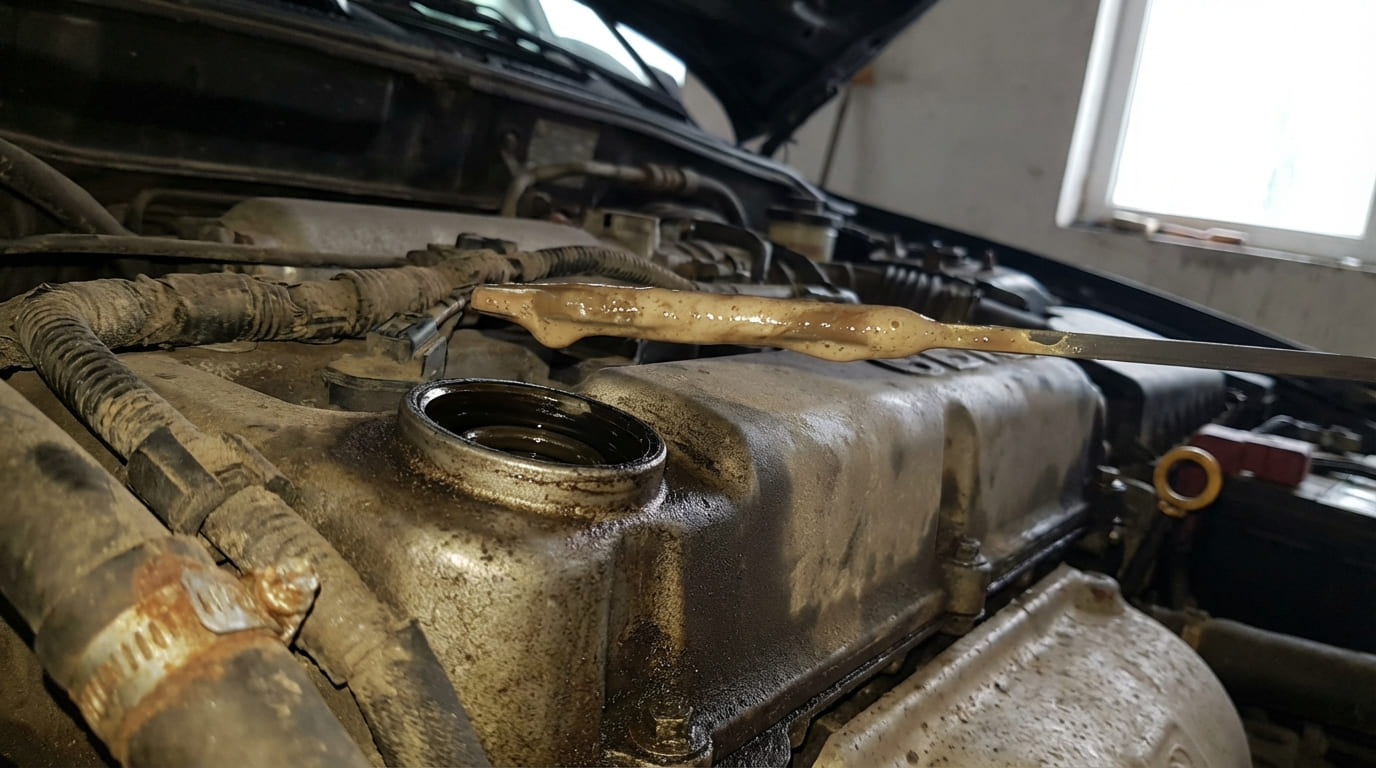
| Stuck Open | Fuel dilution in oil, spark plug fouling, poor catalytic converter efficiency | Change oil and inspect plugs. If converter efficiency is down, consider replacement if DTCs persist after fixing thermostat. |
| Stuck Closed | Head gasket failure, warped cylinder head, water pump seal damage, transmission overheating | After overheating, inspect head for warpage. If head gasket failed, replace in full kit. Check transmission fluid condition if cooler is in radiator. |
Electronic Thermostats: Modern Complexity
Many modern engines use electronic thermostats with heater elements controlled by the ECU. These allow precise temperature management but introduce new failure points.
Common Failures and How to Diagnose
- Heater element failure: Prevents early opening under load, causing overheating at highway speeds. Test resistance with a multimeter—typical range is 10–20 ohms. Open circuit means replacement is needed.
- Wiring or connector damage: Check for chafed wires near exhaust manifolds. Backprobe the connector with a scan tool to verify ECU is sending a PWM signal.
- ECU strategy confusion: Some systems open the thermostat early to heat the catalytic converter. Don’t mistake normal behavior for a fault—know your vehicle’s thermal strategy.
A 2018 Toyota Camry came in with intermittent overheating. Scan data showed the ECU wasn’t commanding the thermostat heater. Voltage test revealed a chafed wire in the harness. Fixed with a splice—$20 repair instead of a $200 thermostat.
Repair Costs and Practical Advice
Thermostat replacement typically costs $150–$300 at a shop, including coolant flush. DIY cost is $30–$80 for the part and $10 for coolant. Labor takes 1–2 hours depending on engine access.
Is it worth replacing yourself? Yes, if you’re comfortable draining and refilling coolant and bleeding air from the system. Many modern engines require a specific bleed procedure—ignoring it causes post-repair overheating.
| Part | Cost Range | Repair Viability |
|---|---|---|
| OEM Thermostat | $50–$120 | Always recommended—aftermarket units may have incorrect opening curves. |
| Aftermarket Thermostat | $30–$60 | Acceptable for basic engines, but avoid on performance or modern direct-injection engines. |
| Electronic Thermostat | $100–$250 | Replace only with OEM or OE-spec unit. Programming may be required on some German vehicles. |
Best Practices: Do and Avoid
- ✅ Clean thermostat housing and engine mating surface thoroughly. Gasket debris causes leaks and improper seating.
- ✅ Use OEM-specified thermostat. Aftermarket units can alter engine management behavior.
- ✅ Bench-test every removed thermostat. Takes 5 minutes and confirms function.
- ⚠️ Never reuse old gaskets. Most modern thermostats have pre-applied seals—double sealing causes binding.
- ⚠️ Don’t skip the coolant bleed procedure. Air pockets are the #1 cause of post-replacement overheating.
- ⚠️ Don’t assume the thermostat is the only flow control. Some engines use electric coolant pumps or auxiliary valves.
The thermostat isn’t the problem—it’s the symptom. Diagnose the system, not the part. I’ve seen wiring faults, collapsed hoses, and missing gaskets mimic thermostat failure. Test, don’t guess.