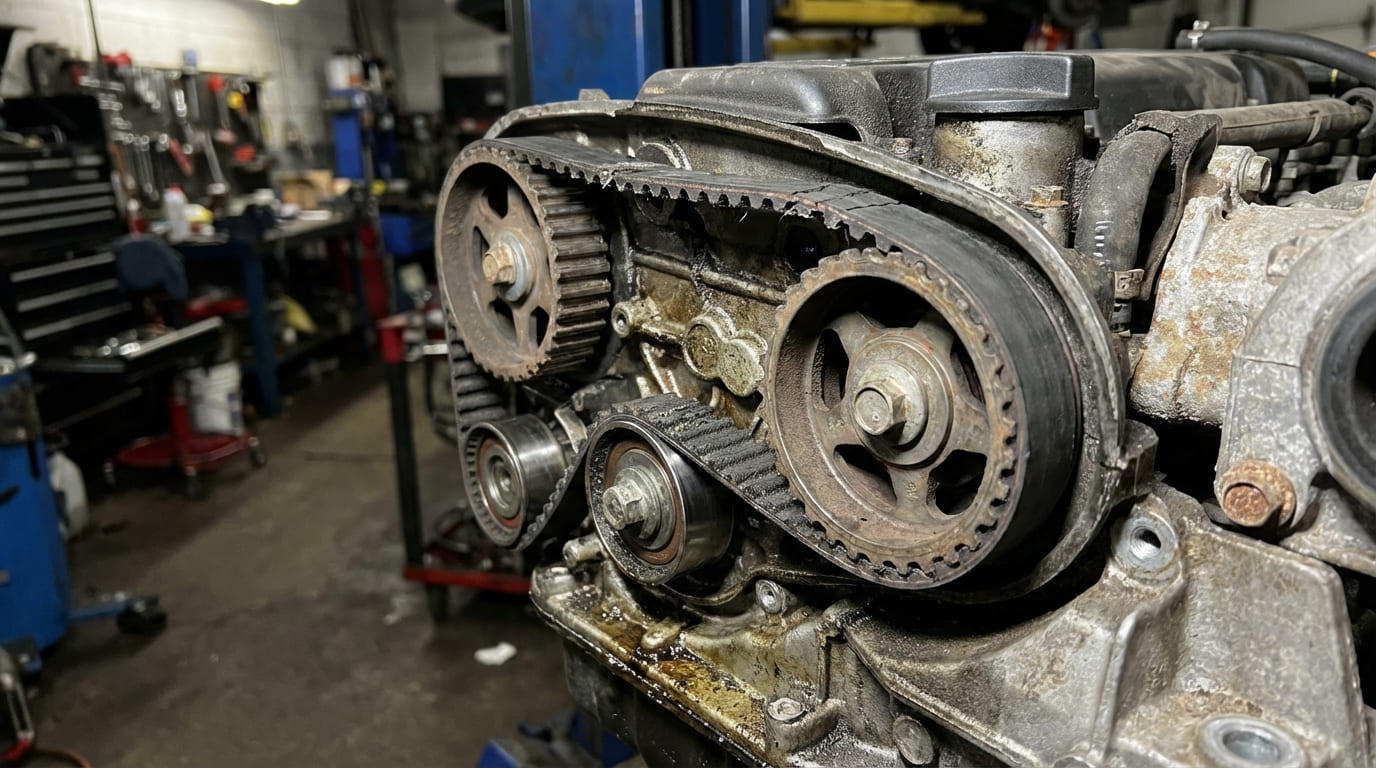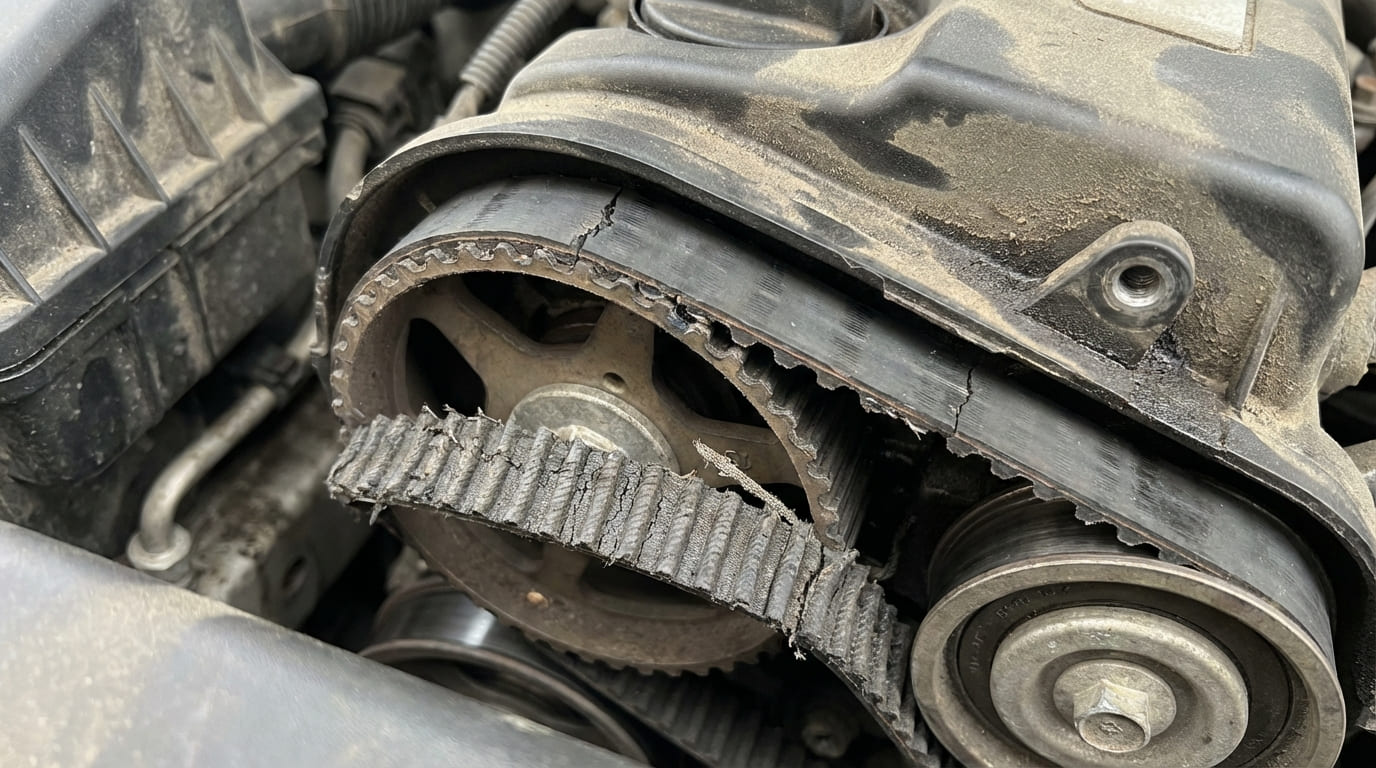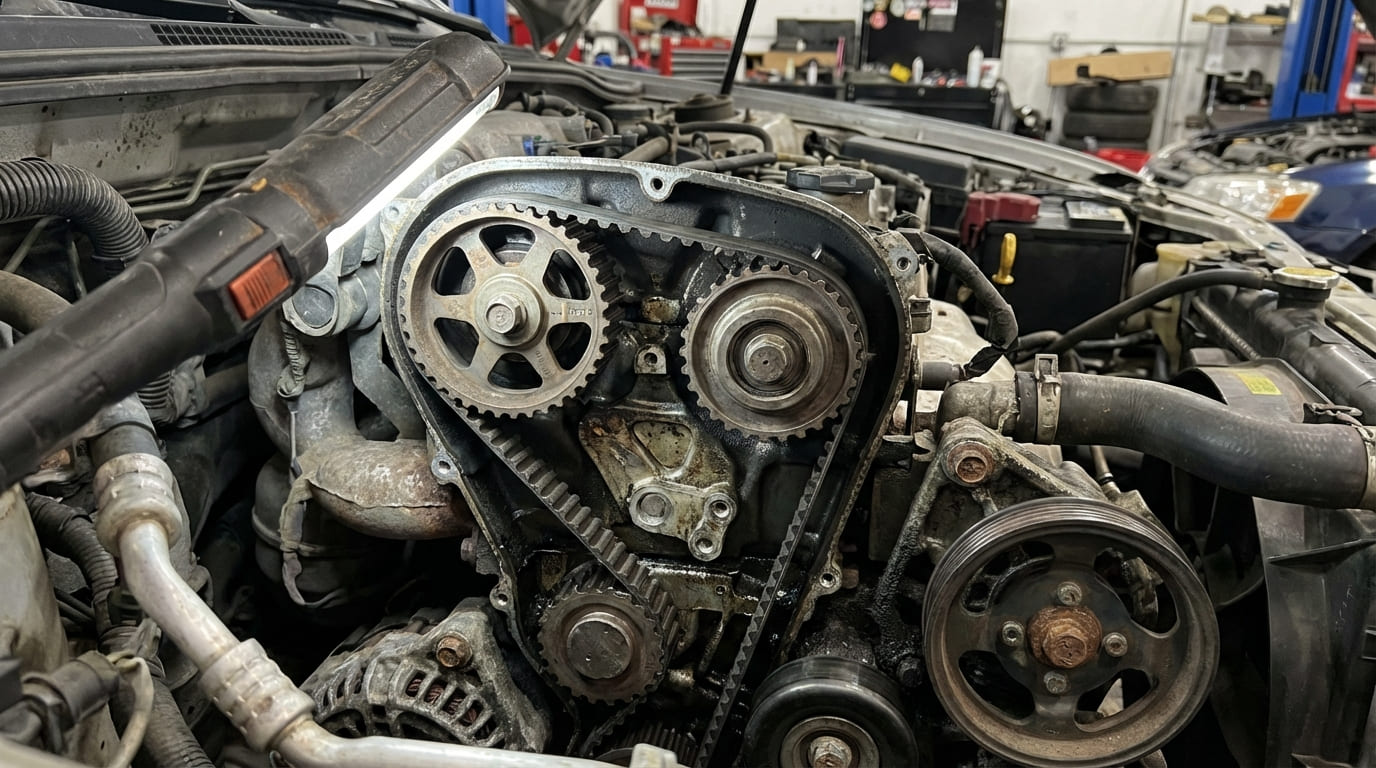
In my two decades as a master mechanic, one of the most critical yet misunderstood failures I’ve seen is timing belt jump. Yes, a timing belt can jump timing — and when it does, the consequences range from a rough idle to a ruined engine. Whether damage occurs depends on engine type, how many teeth were skipped, and how quickly the issue is caught. This guide cuts through the noise and gives you exactly what you need to know: how to diagnose it, what causes it, and how to fix it right.
How Timing Belt Jump Happens
Timing belt jump occurs when the belt loses synchronization between the crankshaft and camshaft(s). This misalignment throws off valve timing, leading to poor performance or catastrophic failure. The two primary mechanisms are tooth skipping and belt degradation.
Key Causes of Timing Jump
- Loss of tension: The most common cause. Worn or failed tensioners — especially hydraulic types — allow slack, letting teeth skip under load.
- Belt elongation: Heat, oil contamination, or age can stretch the belt. Even 0.030″ of stretch can cause a tooth to slip.
- Idler or pulley failure: A seized or wobbly idler alters belt path and tension. I’ve measured as little as 0.008″ of bearing play causing repeat slippage.
- Water pump seizure: On belt-driven pumps, a failing bearing creates drag that overloads the belt during cranking or acceleration.
- Foreign debris: Zip ties, metal shavings, or broken plastic trapped between belt and sprocket can physically lift teeth.
- Improper installation: Skipping tensioner reset, misrouting the belt, or failing to lock cams during install are common shop mistakes.
In my shop, we always replace the water pump and all idlers when doing a timing belt — even if they look good. Labor is the bulk of the cost, and a $30 idler can cause a $3,000 engine rebuild.
How to Check for Jumped Timing
Don’t rely on OBD2 codes alone. Follow this diagnostic sequence to confirm timing jump.
- Scan for codes: Look for P0016 (Crank/Cam Correlation), P0340 (Cam Sensor), or misfire codes (P0300). But remember: these can stem from sensors, not actual timing issues.
- Visual inspection: Remove the upper timing cover. Check belt tension — the tensioner arm should sit within factory marks. Look for obvious misalignment of timing marks.
- Static timing verification: Rotate the crank to TDC on cylinder 1 compression stroke. Use OEM cam locking tools to confirm alignment. Even a half-tooth offset can cause symptoms.
- Rotation test: With all locks removed, rotate the engine two full turns by hand. Recheck marks. If they’re off, the belt slipped during rotation — a red flag.
- Compression or leak-down test: If the engine won’t start, test compression. Zero or low compression across multiple cylinders suggests severe timing offset or valve damage.
Always hand-rotate the engine twice after setting timing. I’ve seen techs skip this and start the engine only to hear a thud from piston-to-valve contact. A 30-second check saves thousands.
Symptoms of Jumped Timing
Symptoms vary by severity and engine design. Here’s what to watch for:
- Rough idle, hesitation, or misfires — often with a 1–2 tooth jump.
- No-start condition — common with 3+ teeth off or dual-cam misalignment.
- Backfiring through intake or exhaust — caused by valves opening during the wrong stroke.
- Ticking or slapping noise from timing cover — indicates loose belt or failing tensioner.
Consequences by Engine Type
The real danger depends on whether your engine is interference or non-interference.
Non-Interference Engines
No physical contact between valves and pistons. A timing jump won’t cause damage — just poor running or no start. Fix: Re-time the belt, replace tensioner and idlers. Typical repair cost: $400–$700 (DIY: $150–$300).
Interference Engines
Even a 2-tooth jump at high RPM can cause piston-to-valve contact. Bent valves, damaged pistons, or ruined guides are common. Fix: Head removal, valve inspection, possible machining. Repair cost: $1,800–$4,500. In severe cases, engine replacement ($3,000–$6,000) may be more economical.
If you suspect valve damage, do a borescope inspection before teardown. I’ve saved customers $2,000 by confirming no contact occurred despite a 3-tooth jump at idle.
Repair vs Replace: Cost and Viability
| Component | Replace Cost (Part Only) | Labor Hours | DIY Viability |
|---|---|---|---|
| Timing Belt | $30–$80 | 3–6 | Intermediate — requires precision |
| Tensioner | $40–$100 | Included in belt job | Always replace with belt |
| Idler Pulley (each) | $25–$60 | Included | Replace all while open |
| Water Pump (belt-driven) | $60–$150 | Included | Replace during belt service |
| Cam Locking Tools | $30–$100 | N/A | Worth the investment for most models |
Best Practices for Prevention and Repair
- ✅ Replace all wear items: Belt, tensioner, idlers, and water pump (if driven by belt). Labor overlap makes it cost-effective.
- ✅ Use OEM-spec parts: Aftermarket tensioners often fail early. I’ve tested units that lost tension after 20k simulated miles.
- ✅ Clean sprocket surfaces: Old sealant or debris can misalign the belt. Wipe crank and cam sprockets before install.
- ⚠️ Never reuse torque-to-yield bolts: Cam sprocket and tensioner bolts stretch. Reusing them risks loosening and failure.
- ⚠️ Don’t rotate engine backward: On some tensioners, reverse rotation collapses the plunger, losing tension.
- ⚠️ Always verify after install: Hand-rotate two full turns and recheck timing marks. Skipping this risks immediate damage.
Real-World Diagnostic Scenarios
Situation: 2012 Honda Accord, 85k miles, no-start, P0016 and P0340. Belt looks intact.
Diagnosis: Cam lock wouldn’t seat. Crank was on TDC, but cam was one tooth advanced. Lower idler had slight drag — not seized, but enough to cause slip during deceleration.
Lesson: Inspect all idlers for smooth rotation. Even minor resistance can cause micro-slippage. Always spin them by hand during inspection.
Situation: 2008 Toyota Camry, rough idle, no codes. Cam correlation error in live data.
Diagnosis: Cam was half a tooth off. Tensioner arm looked fine, but hydraulic plunger had a slow leak. Replaced tensioner — fixed.
Lesson: Hydraulic tensioners can fail internally. If timing is off and belt isn’t broken, suspect the tensioner — even if it “looks” okay.
Situation: 2015 Subaru Forester, towed in after timing belt replacement elsewhere. Wouldn’t start. Shop claimed bent valves.
Diagnosis: Both cams one tooth off. Aftermarket locking tool didn’t seat fully. Marks aligned, but cams were mispositioned.
Lesson: Not all tools are OEM-accurate. Verify with secondary methods when possible. Never assume the worst without checking.
Timing Jump Scenarios: Likelihood and Response
| Scenario | Most Likely Cause | Probability | Action |
|---|---|---|---|
| Engine dies at idle, restarts poorly | Minor slip (1–2 teeth) | Medium | Check tensioner, idlers, and static timing. Scan for correlation data. |
| No-start after belt service | Installation error | High | Verify locking tools, tensioner reset, and rotation check. Don’t assume damage. |
| Sudden failure under load | Foreign object or tension loss | Low–Medium | Inspect cover for debris. Test tensioner damping. |
| Gradual power loss, misfires | Belt stretch or sprocket wear | Low | Measure belt pitch if possible. Inspect sprocket teeth for rounding. |
| Engine seized after jump | Piston-to-valve contact | Very High | Perform compression and borescope inspection before teardown. |
In my shop, we don’t guess — we verify. A timing belt can jump for many reasons, and each demands a methodical approach. The marks on the sprockets are your first clue, but they’re not the full story. I’ve learned that even a belt that looks perfect can hide a failing tensioner or contaminated idler. Always measure, always inspect, and never ignore the small details — because sometimes, it’s the half-tooth that costs the most.