The Bottom Line: What You’ll Actually Pay
A valve cover gasket replacement typically costs $250–$1,200+ depending on engine type and shop rates. The gasket itself is cheap ($15–$50)—you’re paying for labor access. Inline-4 engines run $250–$450, while V8 or boxer engines (Subaru) can exceed $900 due to intake removal and tight clearances. For most daily drivers at an independent shop, expect $350–$650 with related parts (spark plug tube seals, grommets, RTV) included.
Total Installed Cost by Engine Type
Labor dominates this job. Here’s what you’ll pay “out the door” including parts, labor, and common complications.
| Engine Type | Labor Hours | Parts Cost | Total Drive-Out | Common Complications |
|---|---|---|---|---|
| Inline-4 (I4) | 1.0–2.0 hrs | $30–$60 | $250–$450 | Minimal disassembly; straightforward access |
| V6 (Front-bank only) | 2.5–4.0 hrs | $40–$80 | $400–$700 | Intake plenum removal, wiring harness management |
| V6 (Both banks) | 4.0–6.0 hrs | $60–$120 | $600–$1,000 | Upper intake removal, dual gasket sets |
| Boxer H4 (Subaru) | 3.5–7.0 hrs | $50–$90 | $550–$1,100 | Coil removal, limited overhead clearance, spark plug well seals critical |
| V8 (Dual covers) | 4.0–8.0 hrs | $70–$150 | $700–$1,400+ | Upper intake removal, accessory relocation, fragile plastic components |
| European Luxury (BMW, Audi, Mercedes) | 3.0–6.0 hrs | $80–$200 | $800–$1,500+ | Integrated sensors, specialized fasteners, plastic cover brittleness |
Cost Breakdown by Vehicle Class
Engine complexity and access difficulty drive major price differences across vehicle segments.
| Vehicle Class | Typical Examples | Installed Cost Range | Why It Costs This Much |
|---|---|---|---|
| Economy Compact | Honda Civic, Toyota Corolla, Mazda3 | $250–$450 | Easy top-mounted access, minimal disassembly |
| Midsize Sedan | Camry I4, Accord, Hyundai Sonata | $300–$550 | Slight coil/hose removal, straightforward |
| Midsize SUV (V6) | Toyota Highlander, Ford Explorer, Jeep Cherokee | $500–$850 | Rear bank access requires intake removal |
| Full-Size Pickup (V8) | F-150 5.0L, Silverado 5.3L, Ram 5.7L Hemi | $650–$1,100 | Dual covers, upper intake, accessory relocation |
| Subaru (Boxer) | Outback, Forester, Impreza, WRX | $550–$1,100 | Horizontal engine, coil removal, spark plug tube seals critical |
| European Luxury | BMW 3/5 Series, Audi A4/A6, Mercedes C/E | $800–$1,500+ | Integrated sensors, brittle plastics, specialized tools |
| Performance / Sports | Mustang GT, Camaro SS, 370Z | $600–$1,200 | Tight engine bays, high-temperature gaskets |
Regional Pricing: US, UK, Canada, Australia, NZ & Ireland
Labor rates vary dramatically by market. All figures converted to USD for comparison.
| Country | Indie Shop Rate | Dealer Rate | Typical I4 Job | Typical V6/V8 Job | Notes |
|---|---|---|---|---|---|
| 🇺🇸 United States | $90–$140/hr | $140–$195/hr | $300–$450 | $600–$1,100 | Widest parts availability; indie shops dominate |
| 🇨🇦 Canada | C$100–$150/hr | C$150–$210/hr | C$350–$500 | C$700–$1,250 | Slightly higher labor; similar parts pricing |
| 🇬🇧 United Kingdom | £65–£100/hr | £110–£160/hr | £220–£380 | £450–£850 | VAT (20%) included; strong indie market |
| 🇦🇺 Australia | A$110–$160/hr | A$160–$230/hr | A$400–$600 | A$800–$1,400 | High labor rates; shipping costs for Euro parts |
| 🇳🇿 New Zealand | NZ$100–$150/hr | NZ$150–$210/hr | NZ$380–$550 | NZ$750–$1,300 | JDM parts common; import-heavy market |
| 🇮🇪 Ireland | €70–€110/hr | €120–€175/hr | €250–€420 | €500–€950 | UK/EU parts supply; VAT at 23% |
Parts: What You Actually Need (and What to Skip)
The gasket kit is cheap. Skipping related parts causes repeat leaks. Here’s the real parts list:
Essential Parts (Always Replace)
- Valve cover gasket set: $15–$50. Includes main gasket and spark plug tube seals on most modern kits.
- Spark plug tube seals: Included in most kits. Replace every time—they harden and crack with heat exposure.
- Bolt grommets/washers: $5–$15. Prevent oil weeping around bolts. Reusing old ones causes leaks.
- RTV sealant (if required): $8–$20. Many engines need a 3–5mm bead at gasket corners. Use OEM-spec type.
Smart Upgrades (Replace While You’re In)
Labor is already paid—these add-ons save money long-term:
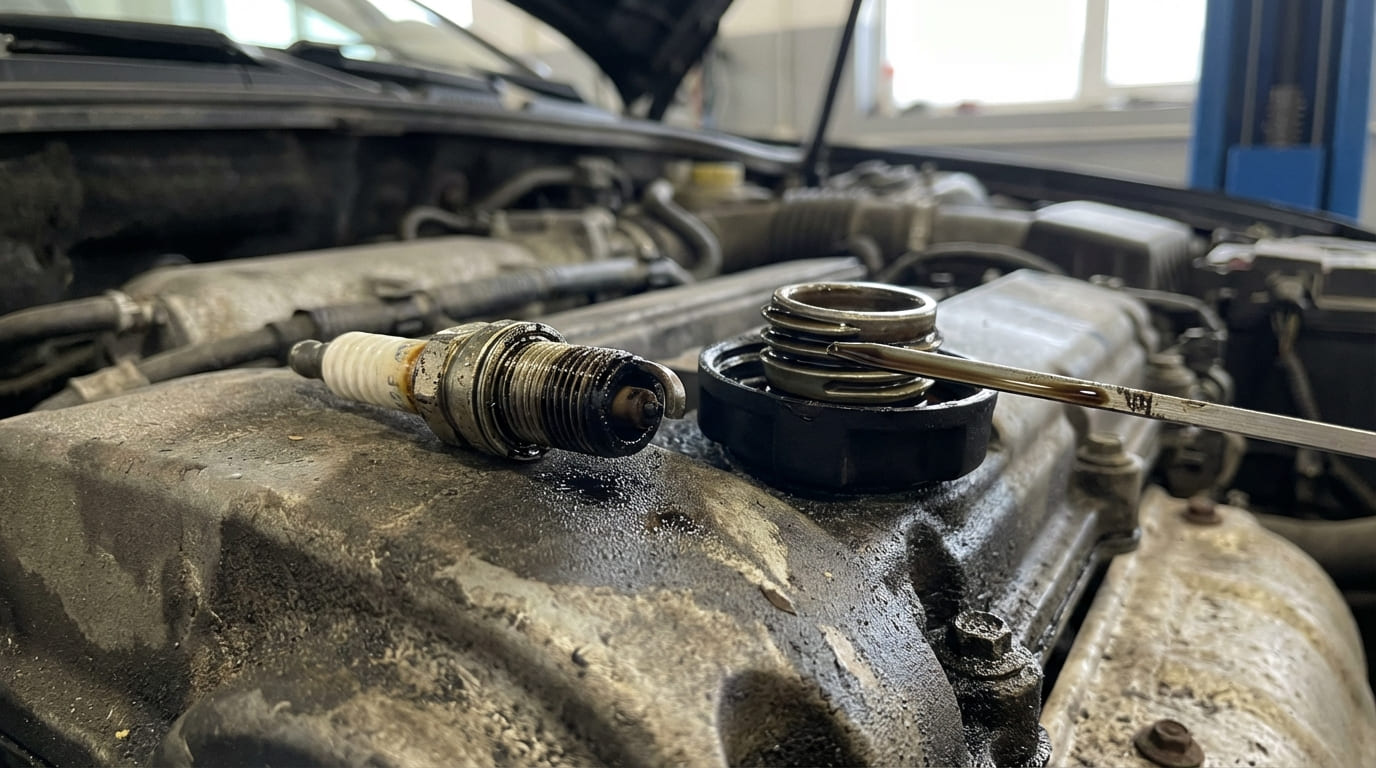
- Spark plugs: $20–$80. On boxer and V6 engines, coils are already removed. $15 now saves $150 later.
- PCV valve and hoses: $15–$40. Often mounted on valve cover. Clogged PCV increases crankcase pressure and causes new leaks.
- Oil and filter change: $40–$80. Expect spillage during the job. Fresh oil ensures no sludge remains.
- Ignition coils (if oil-soaked): $80–$200 each. Oil in spark plug wells damages coils. Inspect before reinstallation.
Shop Foreman Tip: We always replace tube seals and grommets—even on low-mileage engines. Oil breaks down rubber over time. Skipping them saves $12 today but costs a $400 comeback tomorrow.
Hidden Costs That Inflate the Bill
These line items get omitted from basic quotes but are common on high-mileage or complex engines:
- Broken plastic intake clips/fasteners: $20–$80. Brittle on older vehicles; adds 0.5–1 hour labor.
- Seized or stripped bolts: $50–$150. Requires extraction tools, helicoils, or drilling. Common on high-mileage engines.
- Cracked valve cover: $80–$300. Over-tightening or age causes cracks near bolt holes. Gasket won’t fix this.
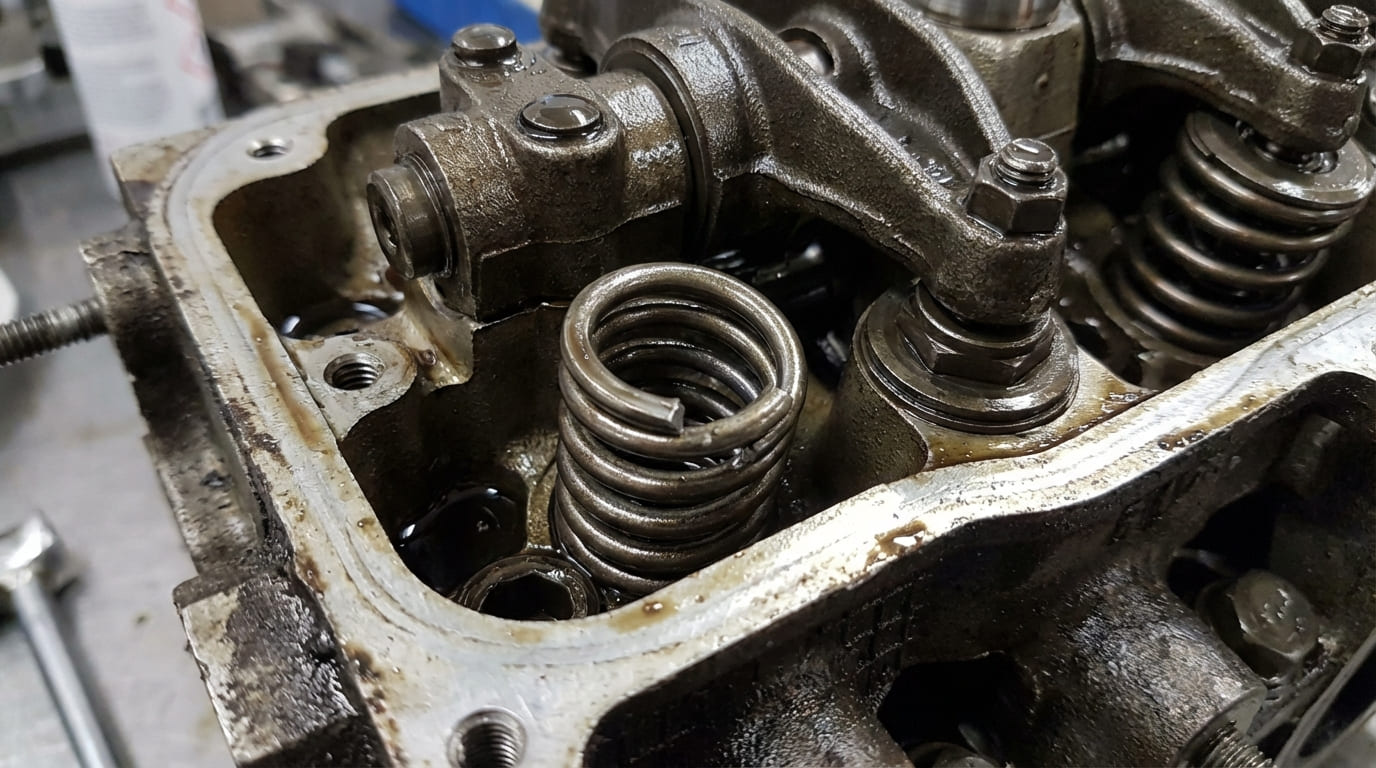
- Warped cylinder head surface: $150–$400 machining. If surface is warped >0.002″, no gasket will seal properly.
- Oil-soaked ignition coils: $80–$200 each. Oil in spark plug wells damages coils, causing misfires.
- Additional leaks discovered: Variable. Oil filter housing, timing cover, or cam sensor seals often leak simultaneously.
Quick Diagnostic: Is It Really the Valve Cover Gasket?
Don’t assume—verify. Other leaks mimic the same symptoms.
3-Step Verification Process
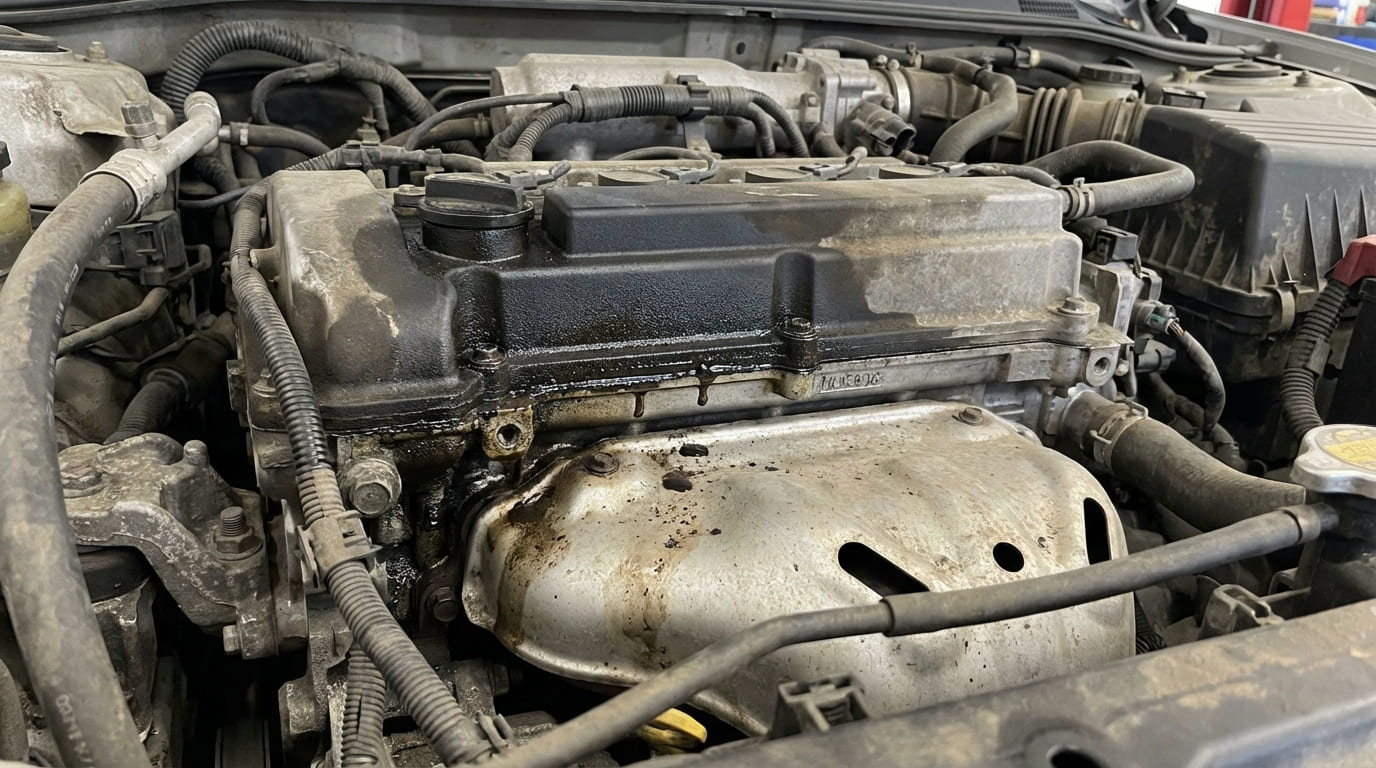
- Clean and inspect: Wash engine, dry thoroughly, run for 10 minutes. Trace oil upward from lowest drip point.
- Check common misdiagnoses: Oil filter housing gasket, timing cover seal, camshaft position sensor O-ring, rear main seal (oil at transmission bellhousing).
- UV dye test (if unclear): Add UV dye to oil, drive 20–30 miles, inspect with blacklight. Fluorescent trail along valve cover seam confirms the leak.
Common Trap: I’ve seen oil filter adapter gaskets leak and drip down the block, fooling shops into replacing the valve cover gasket twice. Always verify before disassembling.
Critical Mistakes That Cause Repeat Leaks
Even experienced DIYers ruin this job with preventable errors. Here’s what separates a one-time fix from a comeback:
✅ Do This
- Clean bolt threads with a tap and compressed air. Dirty threads cause false torque readings and uneven clamping pressure.
- Clean mating surfaces with gasket scraper and brake cleaner. Any residue—old RTV, gasket bits, oil—will break the seal.
- Follow factory torque specs and sequence. Use a torque wrench. Most aluminum heads require 7–11 ft-lbs in a crisscross pattern.
- Apply RTV at gasket corners (if specified). Many engines require a 3–5mm bead where the gasket ends to seal properly.
- Inspect the valve cover for cracks. Hairline cracks near bolt holes are common on high-mileage or over-tightened covers.
⚠️ Never Do This
- Don’t reuse torque-to-yield (TTY) bolts. They stretch during installation and won’t clamp properly if reused. Replace if specified.
- Don’t over-tighten. This warps aluminum covers and cylinder heads—leading to leaks no gasket can fix.
- Don’t skip spark plug tube seals. They’re included in the kit for a reason. Oil in the wells destroys ignition coils.
- Don’t use generic RTV. Use OEM-specified sealant. Wrong type can dissolve or fail under heat.
- Don’t ignore warped surfaces. Check head and cover flatness with a straightedge on high-mileage engines. Warpage is a silent leak killer.
Real Shop Case Studies: What Actually Goes Wrong
Three recent jobs from my bay that show why shortcuts fail.
Case #1: The Phantom Misfire (2012 Subaru Outback)
Symptom: Misfires on cylinders 1 and 3. Owner replaced coils and plugs twice.
Discovery: Oil pooled in spark plug wells. Valve cover gasket looked dry externally, but internal tube seals had failed.
Lesson: On boxer engines, always pull coils and inspect wells when diagnosing misfires. External dryness doesn’t rule out internal leaks. $80 gasket job prevented $400 in coil replacements.
Case #2: The Warped Surface (V6 Luxury SUV)
Symptom: Repeated leaks after two gasket replacements at different shops.
Discovery: Cylinder head surface was warped 0.003″—just over the 0.002″ factory spec. No gasket can seal a warped surface.
Lesson: On high-mileage engines (150k+), check head and cover flatness with a straightedge before installing new gaskets. $200 machining saved a third failed repair.
Case #3: The Over-Tightened Cover (V8 Truck)
Symptom: Owner tightened bolts to stop a leak. Leak got worse.
Discovery: Valve cover was cracked near a bolt hole—caused by over-torquing. Gasket was fine.
Lesson: Inspect the cover for hairline cracks, especially around mounting points. Sometimes the cover is the problem, not the gasket. $180 cover replacement fixed it.
Hidden Risks of Ignoring the Leak
A “small” leak isn’t just messy—it causes real damage:
- Oil on serpentine belt: Causes slippage, premature failure, and can lead to no-start conditions. I’ve seen belts fail within weeks of oil contamination.
- Oil in spark plug wells: Leads to misfires, coil damage, and carbon tracking. Fixing a coil costs $150–$300—more than the gasket job itself.
- Low oil levels: Chronic leaks can lead to engine wear or failure over time if not monitored.
- Catalytic converter damage: Oil dripping onto hot exhaust can smoke, smell, and potentially damage the cat ($800–$2,000 replacement).
Decision Framework: DIY vs. Pro, Repair vs. Replace
When should you tackle this yourself, and when is the car not worth fixing?
DIY is Viable When:
- Engine is Inline-4 or accessible V6 (front bank only)
- You have basic tools, a torque wrench, and 2–4 hours
- Vehicle is under 120k miles with minimal corrosion
- You’re comfortable following factory service manual torque specs
Professional Labor is Worth It When:
- Engine is boxer (Subaru), V8, or requires intake removal
- Vehicle is 150k+ miles with brittle plastics and seized bolts
- European luxury car with integrated sensors and specialized fasteners
- You lack a torque wrench or experience with RTV application
Consider Full Engine Seal Job When:
- Engine has 150k+ miles and multiple leaks (valve cover, oil pan, timing cover, rear main)
- Labor to access one gasket is similar to accessing several
- Vehicle is in excellent condition otherwise and you plan to keep it 5+ years
Walk Away (Sell for Parts) When:
- Repair cost exceeds 50% of vehicle’s market value
- Engine has other major issues (burning oil, low compression, transmission problems)
- Vehicle has frame rust or major body damage
| Scenario | Recommendation | Why |
|---|---|---|
| 2015 Honda Civic, 90k miles, small leak | DIY or indie shop ($300–$450) | Simple job, car worth fixing |
| 2012 Subaru Outback, 140k miles, misfires | Pro shop with tube seals + plugs ($650–$900) | Boxer complexity, oil in wells likely damaged coils |
| 2008 BMW 535i, 130k miles, multiple leaks | Full seal job or sell ($1,500+ repair vs $4k car value) | Euro labor rates, multiple gaskets failing simultaneously |
| 2018 Ford F-150 5.0L, 85k miles, rear bank leak | Indie shop with intake removal ($700–$950) | Access complexity, but truck worth keeping |
| 2005 Toyota Camry, 210k miles, multiple leaks + rust | Sell for parts or drive until it dies | Repair cost exceeds value, other issues likely |
Frequently Asked Questions
How long does a valve cover gasket replacement take?
Inline-4 engines: 1–2 hours. V6 (one bank): 2.5–4 hours. V8 or boxer engines: 4–8 hours. Add 0.5–1 hour for complications like seized bolts or broken plastic clips. Most shops quote 1 day for simple jobs, 2 days for complex engines.
Can I just tighten the bolts to stop the leak?
No. Over-tightening warps aluminum covers and cylinder heads, making the leak worse. Most valve cover bolts are torque-to-yield and require 7–11 ft-lbs in a specific sequence. If it’s leaking, the gasket has failed—tightening won’t fix it.
Do I need to replace the spark plugs too?
If your engine requires coil removal (most V6, V8, and all boxer engines), yes. You’re already paying for the labor to access them. Spark plugs are $10–$20 each and prevent future misfires. On engines where plugs are easily accessible without coil removal, it’s optional but recommended at 100k+ miles.
What if oil is in my spark plug wells?
The spark plug tube seals have failed. This is included in most valve cover gasket kits. You must replace the gasket set, clean the wells thoroughly, and inspect ignition coils for oil damage. Oil-soaked coils often fail within months and cost $150–$300 each to replace.
Can I use RTV instead of a gasket?
No. Modern engines use formed rubber or silicone gaskets designed for specific compression. RTV alone won’t seal properly and can clog oil passages. Some engines require RTV at specific corners in addition to the gasket—follow factory specs exactly.
Will this fix my oil burning problem?
No. Valve cover gaskets seal the top of the engine. Oil burning is caused by worn piston rings, valve stem seals, or PCV system issues—internal problems that require different repairs. A valve cover gasket stops external leaks only.
How often should valve cover gaskets be replaced?
They’re not a maintenance item—they’re replaced only when leaking. Most last 80,000–150,000 miles. Heat, oil exposure, and over-tightening cause failure. If yours isn’t leaking, leave it alone.
Final Takeaway
The real cost of a valve cover gasket job isn’t the $30 part—it’s the knowledge behind it. A proper repair includes tube seals, grommets, correct torque sequence, and verification that the leak isn’t coming from somewhere else. Skip these steps and you’ll pay twice.
For simple Inline-4 engines, this is a manageable DIY job if you have a torque wrench. For V6, V8, boxer, or European engines, professional labor is worth it—one broken plastic tab or stripped bolt can add hours to the job. Always get a detailed quote that breaks out parts, labor, and potential complications. And if your engine has 150k+ miles with multiple leaks, consider whether a full seal job—or a new vehicle—makes more financial sense.