In my shop, when a DIYer or rookie tech asks what the engine block actually does, I don’t just say “it holds everything.” That’s true—but dangerously incomplete. After two decades rebuilding engines from grocery-getter four-cylinders to high-strung performance builds, I’ve learned the block is the structural backbone, thermal regulator, and oil/coolant highway all in one. If the block fails, the engine fails. Let’s cut through the theory and focus on what matters: how it works, how it fails, and how to diagnose and fix real-world problems.
What the Engine Block Actually Does
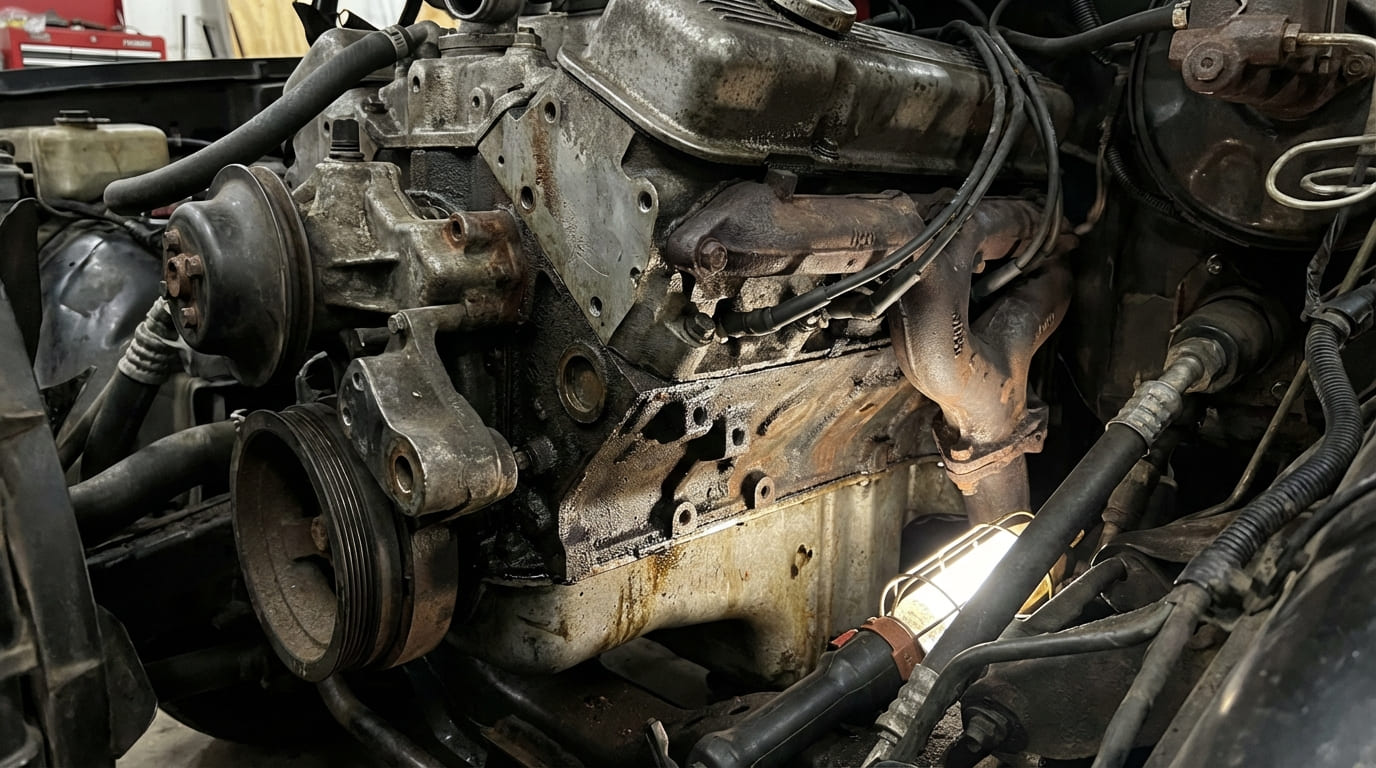
The engine block is the core casting of the internal combustion engine. It’s the foundation—everything mounts to it or spins inside it. But its real job? Maintain precise alignment between the crankshaft, connecting rods, and pistons. Even 0.002 inches of misalignment in the main bearing bores can lead to spun bearings or rod knock under load. If the block flexes, cracks, or warps, compression drops, oil pressure suffers, and catastrophic failure follows.
Beyond structure, the block houses three critical systems:
- Coolant jackets: Surround cylinders and heads to pull heat away. Poor flow causes hot spots and warping.
- Oil galleries: Pressurized passages that feed oil to main bearings, cam bearings, and valvetrain. A burr or debris here can starve a bearing in minutes.
- Mounting points: For cylinder head, oil pan, transmission, motor mounts, and often accessories like the alternator or power steering pump.
In my shop, we always treat the block like a patient before surgery—clean it, measure it, and verify integrity. A dirty or warped block kills even the best rebuild.
Materials and Why They Matter
Two materials dominate: cast iron and aluminum. Your choice affects durability, repair cost, and failure modes.
| Material | Pros | Cons | Typical Use |
|---|---|---|---|
| Cast Iron | Durable, heat-resistant, vibration-damping | Heavy, poor heat transfer | Trucks, diesels, older engines |
| Aluminum Alloy | Lightweight, excellent heat transfer | Less rigid, wears faster, prone to warping | Modern passenger cars, performance builds |
Aluminum blocks almost always use cast iron or steel cylinder liners—or coatings like Nikasil. But Nikasil can fail with sulfur-rich fuel or improper break-in. I’ve seen engines with 5,000-mile failures due to poor prep.
If you’re building a high-boost or high-horsepower engine, I recommend an iron block unless weight is critical. Aluminum distorts under heat; iron holds alignment.
How Blocks Are Built and Machined
Most blocks are sand-cast—molded in sand, then machined. Die-cast aluminum blocks are lighter but risk porosity, which can cause coolant leaks under pressure.
Critical machining steps:
- Cylinder boring: Sets diameter before honing. Must be perfectly round and perpendicular.
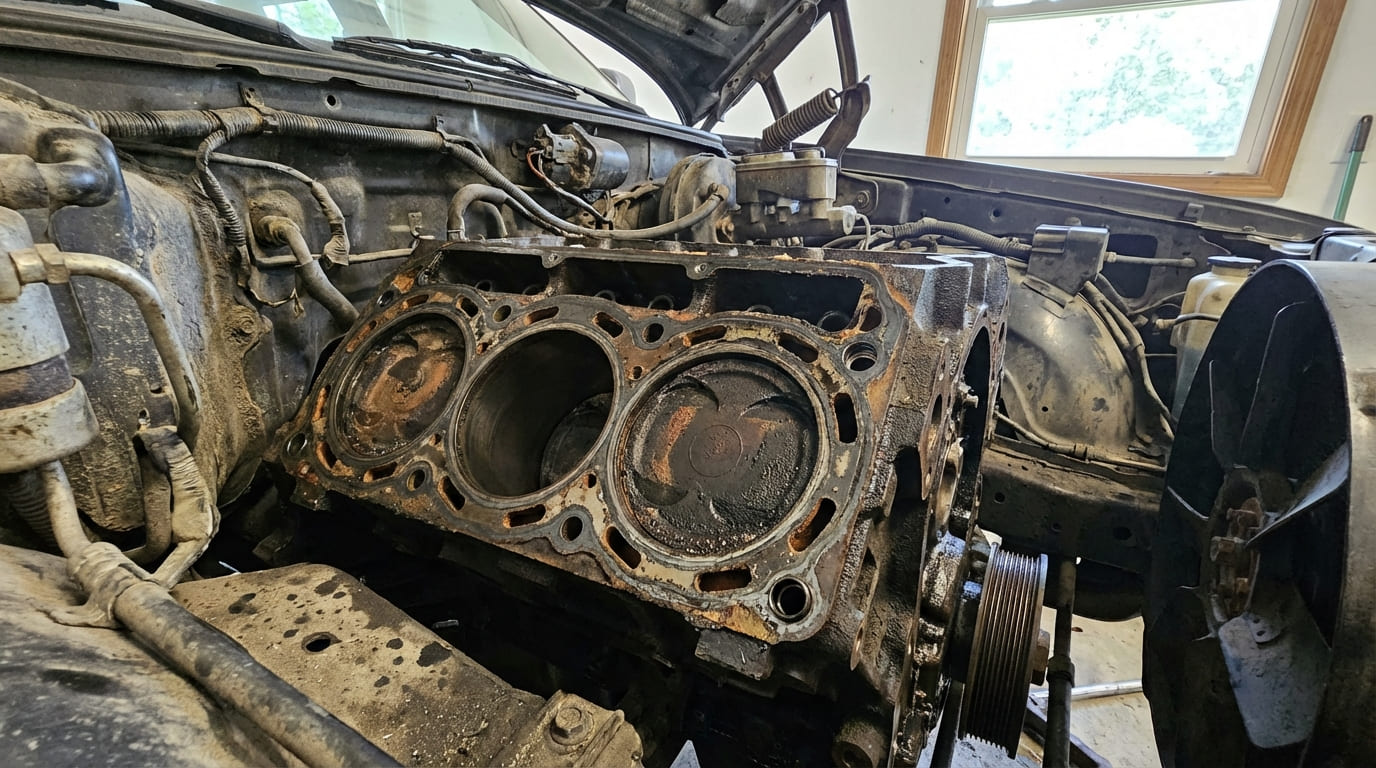
- Deck surfacing: Flatness is critical for head gasket seal. More than 0.002″ deviation over 6 inches is a red flag.
- Line boring: Aligns main bearing bores. If main caps are removed without alignment honing, the crank can bind.
- Honing: Creates cross-hatch pattern in cylinders. Too smooth? Rings won’t seat. Too aggressive? Accelerated wear.
I’ve seen more engines fail from improper honing than bad pistons. Use a plateau hone for modern ring packs—it removes the glaze without tearing the metal.
Design Features That Affect Performance and Durability
Not all blocks are created equal. Design choices impact strength and failure risk.
Open Deck vs. Closed Deck: Open decks have unsupported cylinder tops. They cool well but flex under high boost—common in stock engines. Closed decks fully support cylinder walls, making them stiffer and better for turbo or high-compression builds. Semi-closed is a compromise.
Skirt Design: Deep skirts extend below the crank centerline, adding rigidity. Common in trucks and performance V8s. Short skirts save weight but may need aftermarket bracing in high-output builds.
Key Components Tied to the Block
The block isn’t just metal—it integrates critical parts:
- Cylinder bores/liners: Wear increases oil consumption and reduces compression.
- Main bearing bores: Misalignment causes rapid bearing wear.
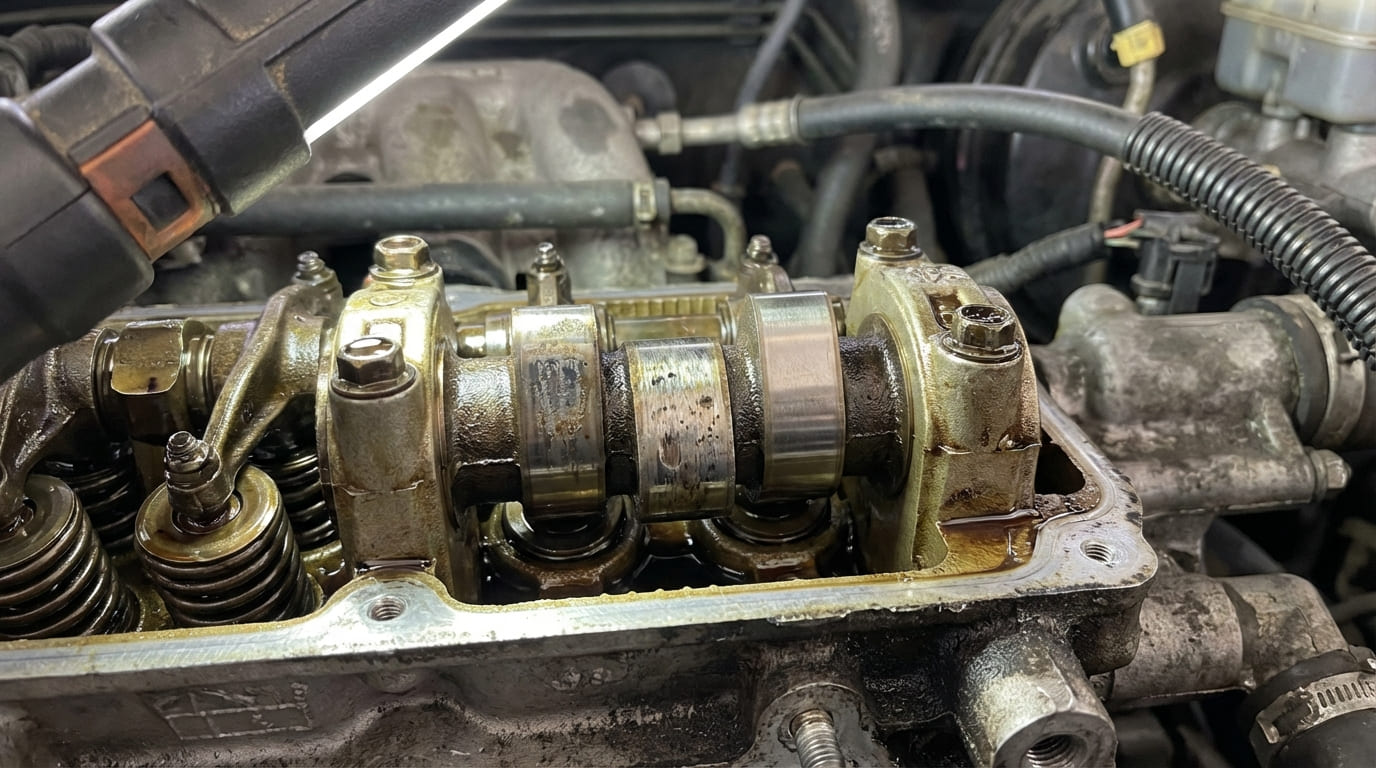
- Cam bearing bores: On pushrod engines, cam rides in block—alignment is critical.
- Coolant jackets: Clogs cause overheating and warping.
- Oil galleries: Must be clean and sealed. I once found a freeze plug blocking a main oil feed.
- Core plugs: “Freeze plugs” seal casting holes. They rust out, but true freeze damage cracks the block.
- Deck surface: Must be flat. Warped decks = blown head gaskets.
What the Block Is NOT
Clarify the confusion:
- The cylinder head bolts on top—it’s separate.
- The oil pan seals the bottom but isn’t structural.
- The crankshaft, pistons, and connecting rods move inside but aren’t part of the block.
- The timing cover bolts to the front and isn’t load-bearing.
Common Failures and How to Diagnose Them
Blocks fail in predictable ways. Here’s how to spot and confirm them.
Cracking
Causes: Overheating, freezing coolant, detonation, or impact. Common in aluminum blocks or high-boost engines.
Check with:
- Visual inspection: Look for stains, weeping, or cracks near coolant passages or between cylinders.
- Coolant pressure test: Pressurize to 15 psi and watch for drops. Hold for 15 minutes.
- Dye penetrant: For surface cracks. Clean, apply, wait, wipe, apply developer.
- Magnaflux: Only for iron blocks. Requires demagnetizing after.
- Combustion leak test: Detects exhaust gases in coolant—sign of crack or blown gasket.
Warping
Almost always from overheating. Aluminum expands more than iron—uneven cooling warps the deck.
How to check: Use a precision straight edge and feeler gauges. More than 0.002″ over 6 inches is usually unacceptable. Always check per factory specs—some aluminum blocks allow less.
Cylinder Bore Wear
Causes: Age, poor maintenance, overheating. Measured with a dial bore gauge.
Acceptable wear: Less than 0.001″ taper or out-of-round. More? Bore and hone, or go oversize.
Scoring or glazing? Light honing may fix it. Deep damage? New sleeves or block.
Best Practices: Do This, Avoid That
- ✅ Clean all passages: Use a brush and solvent on oil and coolant galleries. Debris causes failures months later.
- ✅ Use a torque wrench: Follow factory sequence and specs. Over- or under-torquing ruins blocks.
- ✅ Clean bolt threads: Use a tap. Dry or dirty threads give false torque readings.
- ⚠️ Don’t reuse TTY bolts: Torque-to-yield head bolts stretch. Reusing them risks head gasket failure.
- ⚠️ Don’t skip deck check: On high-mileage or overheated engines, check flatness. Takes 20 minutes, saves a rebuild.
- ⚠️ Don’t assume cracked block: A leaking core plug isn’t a cracked block. Replace plug first, retest.
Diagnostic Table: Symptoms and Causes
| Symptom | Most Likely Causes | Less Common Causes | Verification Method |
|---|---|---|---|
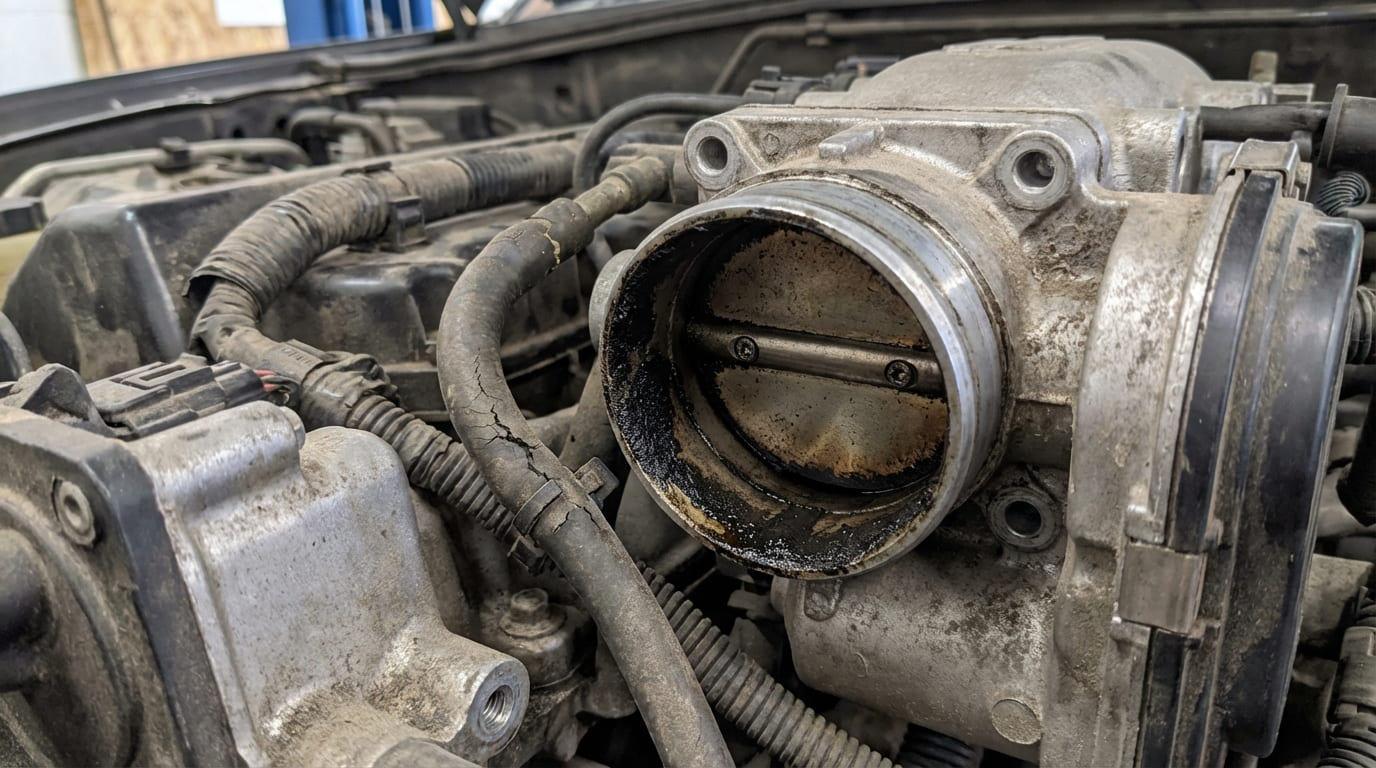
| White smoke + coolant loss | Blown head gasket, cracked block or head | Intake manifold leak (e.g., LS engines), cracked throttle body | Combustion leak test, pressure test, borescope |
| Oil in coolant | Failing oil cooler, cracked block near oil gallery | Failed head gasket with oil breach, transmission cooler leak | Visual inspection, dye test, isolate cooler circuits |
| Low compression in adjacent cylinders | Head gasket failure between cylinders, cracked block | Warped head, valve seat recession | Compression test, leak-down test, borescope |
| Engine overheats, no coolant loss | Thermostat, water pump, air pocket | Cracked block restricting flow, scale in jackets | Flow test, thermal imaging, coolant flush |
Real-World Lessons from the Shop
Situation: 2008 F-150, 4.6L V8, coolant loss, white smoke, low compression in two adjacent cylinders.
Assumption: Blown head gasket—common on high-mileage trucks.
Discovery: Heads and gasket looked fine. Dye test revealed a hairline crack between cylinders—likely from past overheat.
Lesson: Don’t assume it’s the gasket. Always test block and head integrity if the engine ever ran hot.
Situation: Rebuilt 350 small-block Chevy, lost oil pressure after 500 miles.
Assumption: Bad pump or lifters.
Discovery: Main bearing cap misaligned. Line hone done without alignment bar—bores weren’t concentric.
Lesson: Even 0.001″ misalignment collapses oil clearance. Never skip proper alignment honing.
Situation: Aluminum-block turbo engine, recurring head gasket failures.
Assumption: Too much boost, wrong gasket.
Discovery: Deck surface bowed in the center from heat cycles. Block needed resurfacing.
Lesson: Aluminum blocks distort over time—even without overheating. Resurfacing is preventative in high-stress builds.
Engine blocks are tough, but they’re not invincible. I’ve seen good ones last 300,000 miles and bad rebuilds fail in 5,000. The difference? Attention to detail: cleaning, measuring, torquing, and verifying. Always use the factory service manual—specs are sacred. What works for a cast iron 302 won’t save an aluminum 2.0L turbo. Know your block, respect its limits, and it’ll carry you mile after mile.