In my 20 years as a master technician, catalytic converter replacement is one of the most commonly misdiagnosed and prematurely replaced components. Replacing the converter without confirming the root cause almost guarantees a repeat failure—and a repeat bill. This guide breaks down real-world costs, diagnostics you can verify, and critical decisions every car owner should make before authorizing the repair.
Total Replacement Cost Overview
For most vehicles—like a Honda Accord, Toyota Camry, or Ford F-150—expect to pay $800 to $3,000 for a complete catalytic converter replacement. This includes a direct-fit converter, labor, and replacement of one or two oxygen sensors. High-end, performance, or complex vehicles (e.g., V8s, turbocharged engines, or those with integrated exhaust manifolds) can cost $3,000 to $6,000 or more due to extensive labor.
Costs spike when multiple converters are involved or when access requires subframe removal, turbo disassembly, or cradle drops. Always ask for a detailed quote that separates parts, labor, and related components.
Part Costs: What You’re Paying For
The type of converter you choose significantly impacts both price and longevity. Here’s what to expect:
| Type | Cost Range | Best For |
|---|---|---|
| OEM (Original Equipment) | $800–$2,500+ | Vehicles in strict emissions states; long-term reliability |
| Aftermarket Direct-Fit | $300–$1,200 | Common models; verify CARB compliance if required |
| Universal (Weld-In) | $150–$400 | Off-road or pre-OBD2 vehicles; not street-legal in most cases |
| CARB-Compliant | $500–$2,000+ | California, Colorado, and other CARB-adopting states |
OEM and CARB-compliant units contain higher levels of platinum, palladium, and rhodium, which improves efficiency and durability. Cheap aftermarket units may pass inspection initially but often degrade quickly under heavy use or high exhaust temperatures.
In my shop, we always recommend OEM or CARB-certified converters for daily drivers in emissions-regulated states. A $1,000 converter that lasts 120,000 miles beats a $400 unit that fails in 30,000—especially when labor exceeds $1,000.
Labor Costs: Why Prices Vary So Much
Labor is often the largest cost component. Two key factors: hourly rate and access difficulty.
- Hourly Rates: Independent shops charge $80–$150/hour; dealerships and specialty shops charge $150–$220/hour.
- Time Required: Simple mid-pipe replacements take 1.5–2 hours. Complex setups (e.g., BMW N54, Audi 3.0T, or GM LS engines) can take 6–10 hours due to tight packaging or integrated manifolds.
For example, replacing front converters on a twin-turbo V6 may require turbocharger disassembly or front subframe removal—adding 4+ hours of labor. Always ask: “Does this job require removing other major components?”
Additional Repairs to Consider
While not mandatory, these upgrades improve reliability and prevent comebacks:
- Oxygen Sensors: Upstream sensors degrade over time. Replace if over 80,000 miles or showing lazy response in live data. Cost: $80–$250 each.
- Exhaust Gaskets and Hardware: Reuse increases leak risk. New gaskets cost $20–$50; anti-seize and thread repair tools prevent seized bolts.
- Fastener Condition: Rusted bolts may require cutting or torch work. Ask if the shop includes extraction time in the quote.
One trick I teach apprentices: spray penetrating oil on exhaust bolts 24 hours before the job. It cuts disassembly time in half and reduces the chance of breaking a stud.
How to Diagnose a Failing Catalytic Converter
Never replace a converter based on a P0420 code alone. Misfires, fuel trims, and sensor issues can mimic converter failure. A proper diagnosis costs $80–$180 but can save you $2,000. Here’s how to verify:
- Scan Tool Analysis: Check for P0420/P0430 codes, but also review freeze frame data and live O2 sensor readings. The downstream O2 should be stable, not oscillating like the upstream.
- Backpressure Test: Remove the upstream oxygen sensor and install a pressure gauge. At idle, pressure should be under 1.25 PSI; at 2,500 RPM, under 2.5 PSI. Higher readings confirm restriction.
- Infrared Temperature Test: After a 15-minute drive, measure inlet and outlet temps. A working cat shows a 100–200°F rise. No delta? The substrate isn’t reacting.
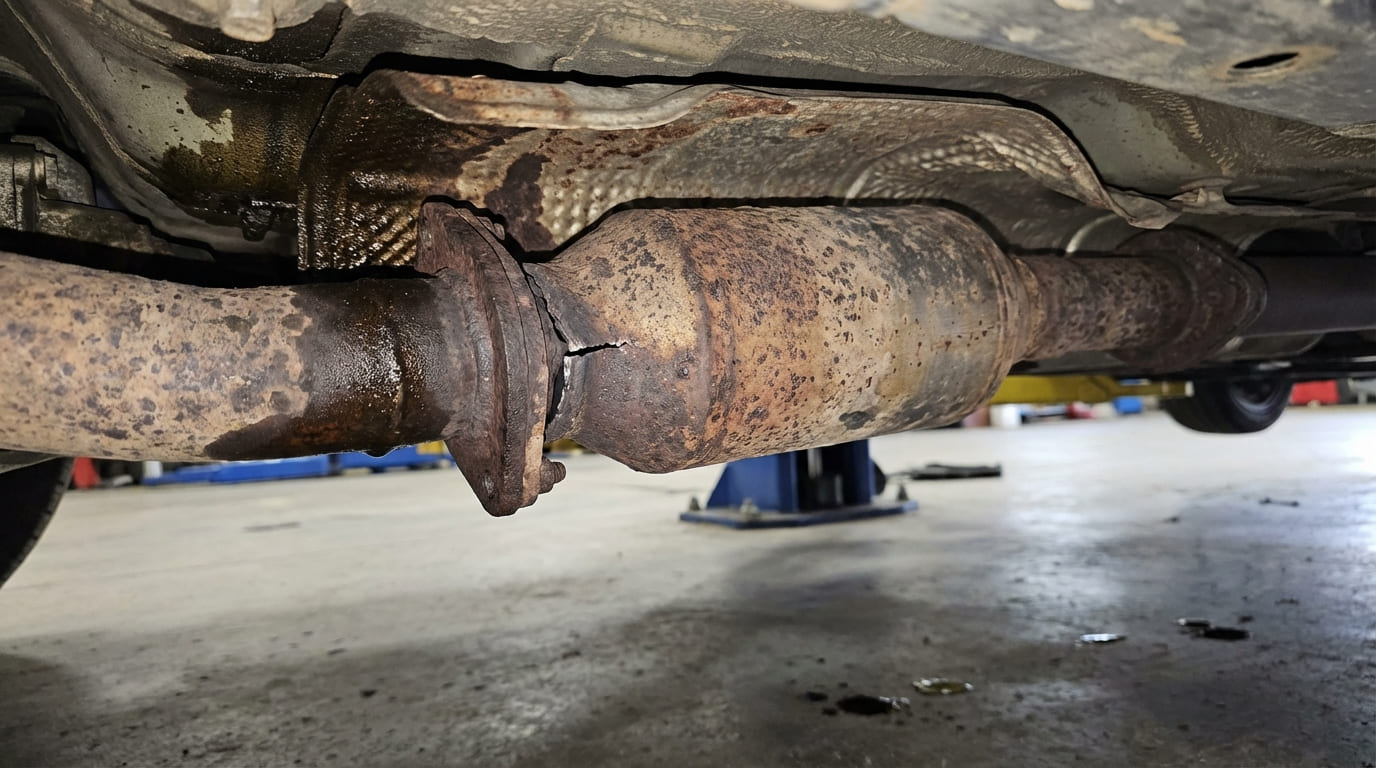
- Visual and Sound Check: Look for dents, discoloration, or oil/coolant residue. Shake the converter gently—if you hear rattling, the substrate is broken.
Root Causes: Fix These First
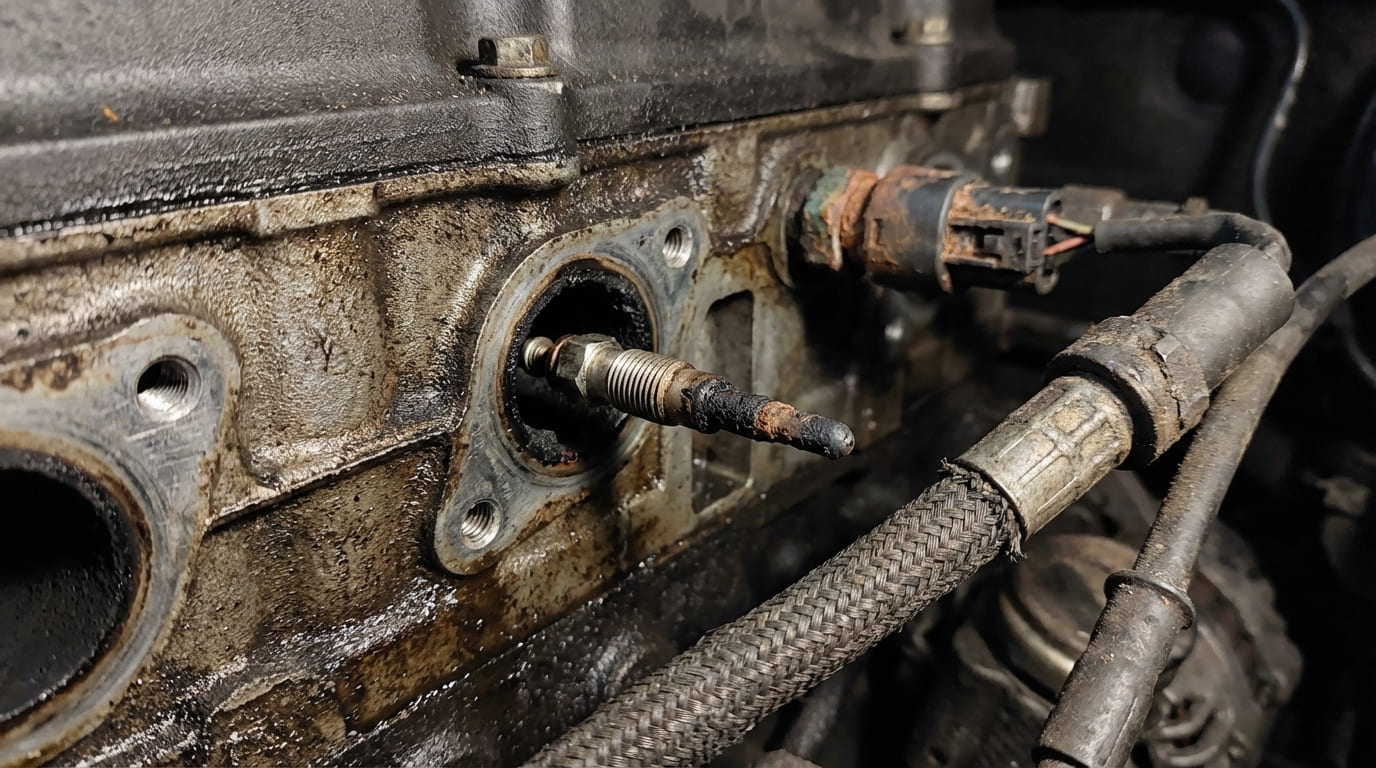
Replacing a converter without fixing the cause is wasted money. Common culprits include:
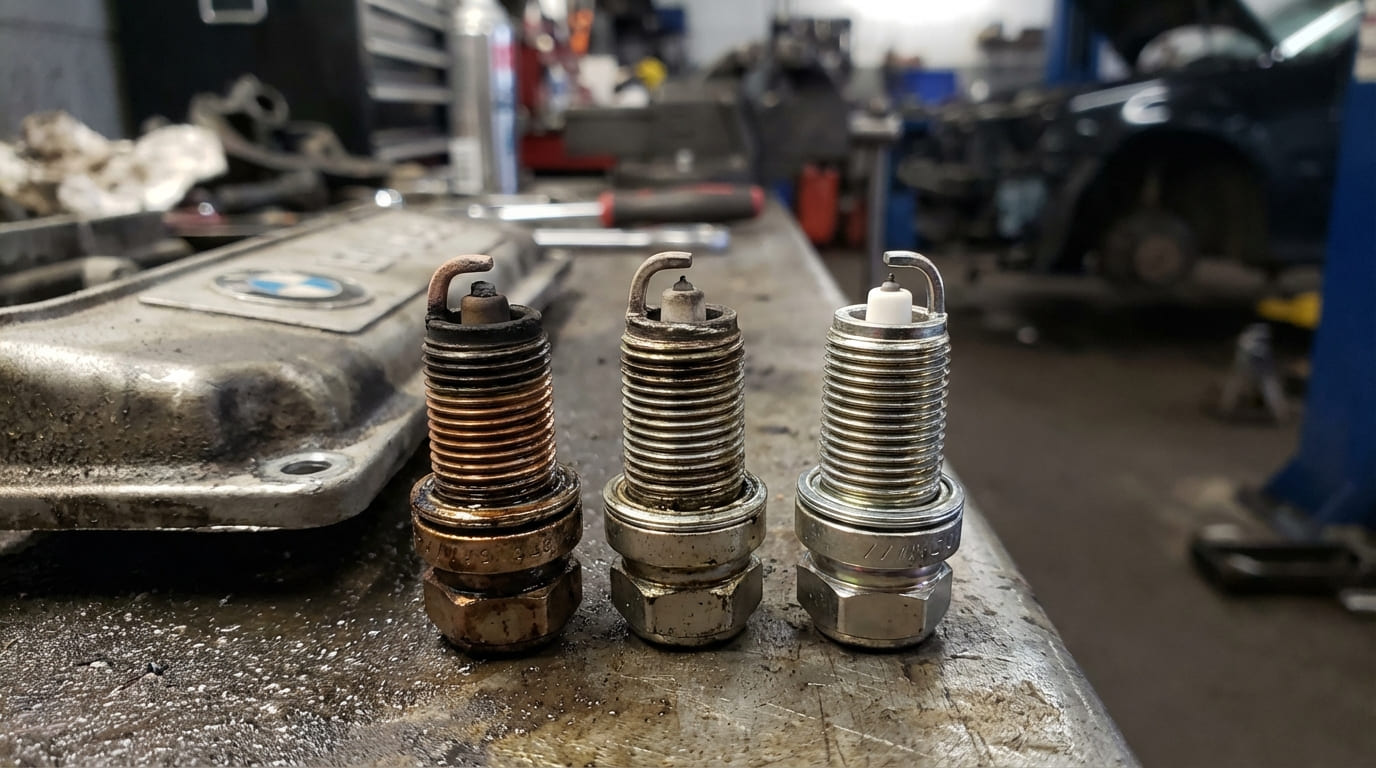
- Engine misfires (burn unburned fuel in the cat)
- Oil consumption (ash clogs the substrate)
- Coolant entering combustion (failed head gasket)
- Rich fuel mixture (faulty MAF, leaking injectors)
- Physical impact or thermal shock
- Normal wear beyond 100,000 miles
I’ve seen too many repeat failures because a misfire wasn’t diagnosed. Always pull fuel trims and check for pending misfire codes—even if no light is flashing.
Risks of Driving with a Failed Converter
A clogged or damaged converter isn’t just an emissions issue. It can:
- Reduce power and fuel economy due to exhaust restriction
- Overheat and ignite undercarriage components
- Damage turbochargers or exhaust valves from backpressure
- Fail state inspections, even if the engine runs fine
After Replacement: How to Verify the Fix
After installation, don’t assume it’s fixed. Follow these steps:
- Clear all codes and complete the manufacturer’s drive cycle to reset readiness monitors.
- Check live data: downstream O2 sensor should stabilize, not mirror upstream.
- Re-test backpressure if restriction was the original issue.
- Take a test drive to listen for exhaust leaks or rattles.
Best Practices: Do This, Avoid That
- ✅ Do: Use a thread chaser or tap on exhaust bolt holes to prevent galling.
- ✅ Do: Replace oxygen sensors over 80,000 miles or showing slow response.
- ✅ Do: Confirm CARB compliance if you live in California, New York, or other adopting states.
- ⚠️ Avoid: Reusing old exhaust gaskets—they rarely seal a second time.
- ⚠️ Avoid: Installing a new converter without checking fuel trims and misfire history.
- ⚠️ Avoid: Using thread sealant on oxygen sensors—most have built-in anti-seize.
Real-World Failure Scenarios and Lessons
| Scenario | Root Cause | Diagnostic Action |
|---|---|---|
| P0420 with no drivability issues | Fuel trim imbalance or lazy upstream O2 sensor | Check live O2 data and long-term fuel trims |
| Exhaust glowing red | Misfire or late ignition timing | Scan for misfire counts and fuel trims |
| Rattling under the car | Broken substrate or impact damage | Visual inspection and cautious shake test |
| Loss of power and poor fuel economy | Severe restriction in converter | Backpressure and temperature test |
| Failed emissions test, no codes | Aging converter or cold-start spike | Run full drive cycle and retest |
A 2014 Subaru Outback came in with a P0420 code. Customer already bought a new converter. I checked fuel trims—long-term was +18%. Found a split PCV hose. Fixed the leak, cleared the code. No converter replaced. Lesson: Diagnose the system, not the code.
A 2008 Toyota Tundra had two converter replacements in 18 months. Third failure prompted a deeper look. Compression test revealed a burnt exhaust valve—causing misfires that weren’t setting codes. Fixed the engine, replaced the cat once. No more issues. Bottom line: Mechanical faults can hide behind emissions codes.
A 2016 BMW 335i had a melted front cat. No boost leaks, but cylinder 5 showed high misfire counts. Weak coil and dripping injector were letting raw fuel into the exhaust. Replaced both, installed new converter. Problem solved. Key takeaway: Intermittent misfires destroy cats—even without constant codes.
There’s no one-size-fits-all price for catalytic converter replacement. But every repair should start with diagnosis, not disassembly. Understand why the converter failed, confirm the fix, and choose parts that match your vehicle’s demands. That’s how you turn an expensive repair into a long-term solution.