In my 20+ years turning wrenches in independent shops and dealerships, I’ve seen catalytic converters go from a mysterious box on the exhaust to one of the most critical—and often misunderstood—components in modern emissions systems. I’ve replaced plenty that were truly dead, but I’ve also seen more than a few swapped out unnecessarily because the root cause wasn’t properly diagnosed. Let’s break it down like we’re standing over a lifted car, wrench in hand.
Primary Function: Cleaning Exhaust Gases
The catalytic converter’s job is to reduce harmful emissions by chemically converting toxic exhaust gases into less harmful substances before they exit the tailpipe. It doesn’t filter or trap pollutants—it transforms them. This only works efficiently when the engine is running correctly and sensors are providing accurate feedback.
Three Pollutants It Targets
Every gasoline engine produces these three harmful byproducts. The converter handles all three—provided it’s in good condition and operating under proper conditions.
- Carbon Monoxide (CO): A poisonous gas formed when fuel burns without enough oxygen. High CO levels usually point to a rich fuel mixture or misfires.
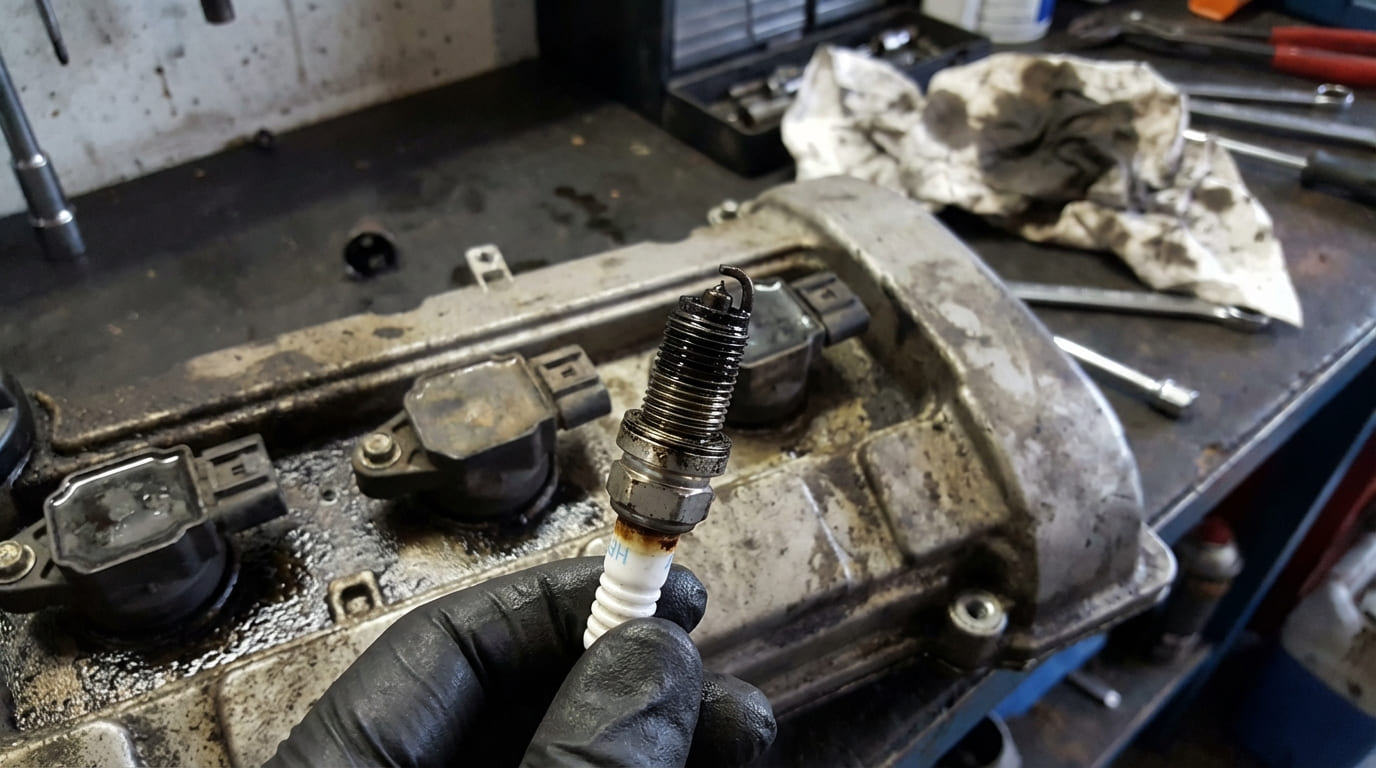
- Unburnt Hydrocarbons (HC): Raw fuel that didn’t ignite. Common causes include faulty spark plugs, leaking injectors, or poor ignition timing.
- Nitrogen Oxides (NOx): Created under high combustion temperatures. Lean mixtures, EGR issues, or excessive ignition timing can spike NOx.
How It Works: Chemistry in Action
The converter uses precious metals and heat to trigger chemical reactions. No moving parts—just science and temperature. If the exhaust isn’t hot enough or the air/fuel ratio is off, the converter can’t do its job.
Oxidation and Reduction Reactions
Modern three-way converters perform two types of reactions simultaneously:
- Oxidation (Pt, Pd): Adds oxygen to convert CO → CO₂ and HC → CO₂ + H₂O. Needs excess oxygen—so a lean condition helps here, but not too lean.
- Reduction (Rh): Removes oxygen from NOx, breaking it into nitrogen (N₂) and oxygen (O₂). Works best when the mixture cycles slightly rich.
These opposing reactions only balance near stoichiometric (14.7:1) air/fuel ratio. That’s why oxygen sensors and fuel trims are critical—if they’re off, the converter becomes inefficient fast.
In my shop, we always check fuel trims and O₂ sensor switching before condemning a converter. A lazy upstream sensor or chronic lean condition will mimic converter failure every time.
Inside the Converter: What You Can’t See
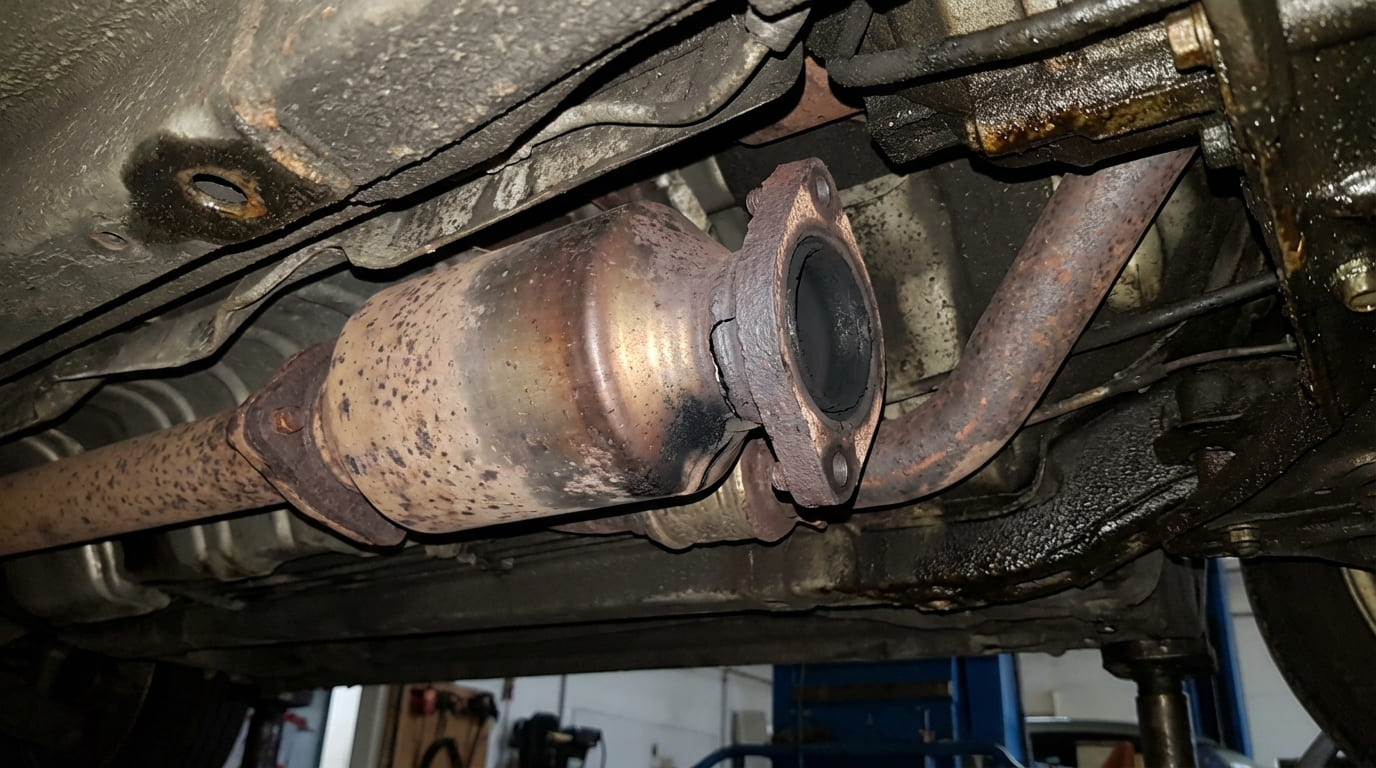
It looks like a muffler, but inside is a precision-engineered reactor. Damage or contamination here kills efficiency.
Substrate Types and Failure Signs
The substrate is a honeycomb structure coated with catalysts. Two main types:
- Ceramic Monolith: Common in OEM units. Lightweight and efficient, but cracks easily from thermal shock or road impact. Tap it—if it rattles, the core is broken.
- Metallic Foil: Used in high-performance or close-coupled applications. Heats up faster and resists vibration better, but costs more.
Washcoat and Precious Metals
The washcoat increases surface area and holds the active catalysts. Contamination or overheating destroys it.
- Alumina: Base layer for catalysts. Can be poisoned by oil, coolant, or silicone.
- Cerium Oxide: Stores and releases oxygen to stabilize reactions during mixture swings.
- Platinum & Palladium: Drive oxidation. Sensitive to oil ash and leaded fuel.
- Rhodium: Handles NOx reduction. Most expensive—often targeted by thieves.
If a converter fails early, ask: Is the engine burning oil? Is coolant leaking into combustion? Internal engine issues are often the real culprit. Fix those first—or the new converter will die too.
Types and Placement: Not All Cats Are the Same
Design and location affect performance and durability. Know what you’re working with.
- Three-Way Converter (Gasoline): Standard on modern cars. Requires tight fuel control and healthy O₂ sensors.
- Diesel Oxidation Catalyst (DOC): On diesels—burns CO and HC, helps oxidize soot. Doesn’t reduce NOx.
- SCR (Selective Catalytic Reduction): Separate system using DEF fluid to reduce NOx. Not part of the main converter.
Placement Matters
- Close-Coupled: Mounted near the manifold. Lights off quickly—critical for cold-start emissions. But runs hotter, so more prone to thermal fatigue.
- Underfloor: Further downstream. Larger, handles more flow, but slower to heat. Often paired with a close-coupled unit.
On turbocharged engines, I’ve seen close-coupled cats melt from lean tuning. If you’re modifying boost or fuel maps, verify exhaust temps stay under 900°C. Consider a high-temp aftermarket unit if needed.
Operating Conditions: When It Works (and When It Doesn’t)
The converter is temperature-sensitive and mixture-dependent. It’s not a plug-and-play part—it’s part of a system.
- Light-Off Temp: 250–300°C. Below this, it’s inactive. Short trips prevent full light-off, degrading efficiency over time.
- Optimal Range: 400–800°C. Outside this, performance drops. Over 900°C risks melting the substrate.
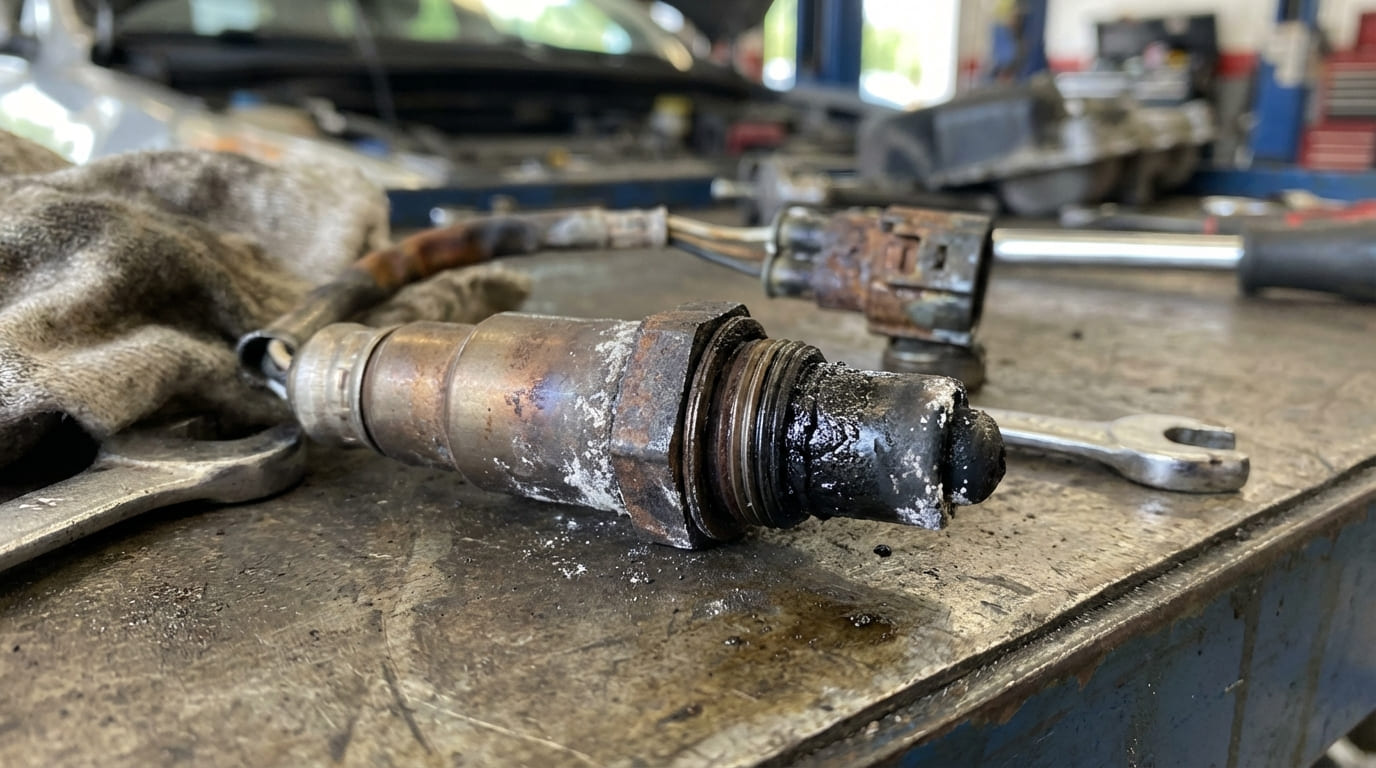
- O₂ Sensor Role: The upstream sensor controls fuel mixture. The downstream sensor monitors converter efficiency. If both sensors switch together, the cat isn’t storing oxygen—likely failed.
How to Diagnose Converter Issues
Don’t assume a P0420 means a bad converter. Test first.
Step-by-Step Diagnostic Approach
Here’s how I check for real vs. false failure:
- Scan for codes: P0420/P0430 = low efficiency. But also check for misfires, fuel trims, or O₂ sensor codes.
- Check fuel trims: Long-term trims over ±10% indicate mixture problems starving the converter.
- Monitor O₂ sensors: Use live data. A healthy post-cat sensor should be stable. If it switches rapidly like the pre-cat, the converter isn’t working.
- Inspect for exhaust leaks: Even small leaks upstream can let in oxygen, fooling the downstream sensor.
- Smoke test: Reveals vacuum or exhaust leaks that might not trigger a code but hurt efficiency.
- Check for restrictions: Perform a backpressure test. Remove the upstream O₂ sensor and insert a gauge. Over 1.25 psi at 2500 RPM suggests blockage.
- Inspect for damage: Tap the converter—rattling means broken substrate. Look for discoloration or warping from overheating.
Common Misdiagnoses
- Rotten egg smell: Often mistaken for a bad cat. Could be sulfur in fuel, a rich condition, or a failing O₂ sensor.
- Red-hot exhaust: Not a converter issue—it’s unburned fuel from misfires or timing problems.
- Loss of power: Could be a collapsed substrate, but also check for clogged mufflers or DPFs.
Repair vs Replace: Cost and Viability
Original equipment converters cost $700–$2,500 installed. Aftermarket units run $300–$900. Universal replacements are cheaper but risk fit and performance issues.
Before replacing:
- Confirm engine is healthy—no oil burning, coolant leaks, or misfires.
- Verify O₂ sensors are responsive and not lazy.
- Ensure no exhaust leaks upstream.
If the engine has underlying issues, a new converter will fail quickly. In most cases, fixing the root cause costs less than a new cat.
I’ve saved customers hundreds by fixing a $50 vacuum leak instead of replacing an $800 converter. Always test before you replace.
Best Practices: Do and Avoid
| Action | Recommendation | Why It Matters |
|---|---|---|
| ✅ Recommended | Verify engine health before replacing converter | Oil consumption, coolant leaks, or misfires can poison or overheat the catalyst. |
| ✅ Recommended | Inspect for exhaust leaks upstream | Leaked air can skew O₂ sensor readings and reduce converter efficiency. |
| ✅ Recommended | Use factory-specified fasteners and torque specs | Over-torquing flange bolts can crack ceramic substrates or warp mating surfaces. |
| ⚠️ Avoid | Replacing converter without checking fuel trim and misfire history | Chronic rich or lean conditions will kill a new converter just as fast. |
| ⚠️ Avoid | Installing a universal converter without verifying fit and thermal protection | Poor placement or lack of heat shielding can lead to premature failure. |
| ⚠️ Avoid | Ignoring downstream O₂ sensor health | A slow or stuck post-cat sensor can falsely indicate converter failure. |