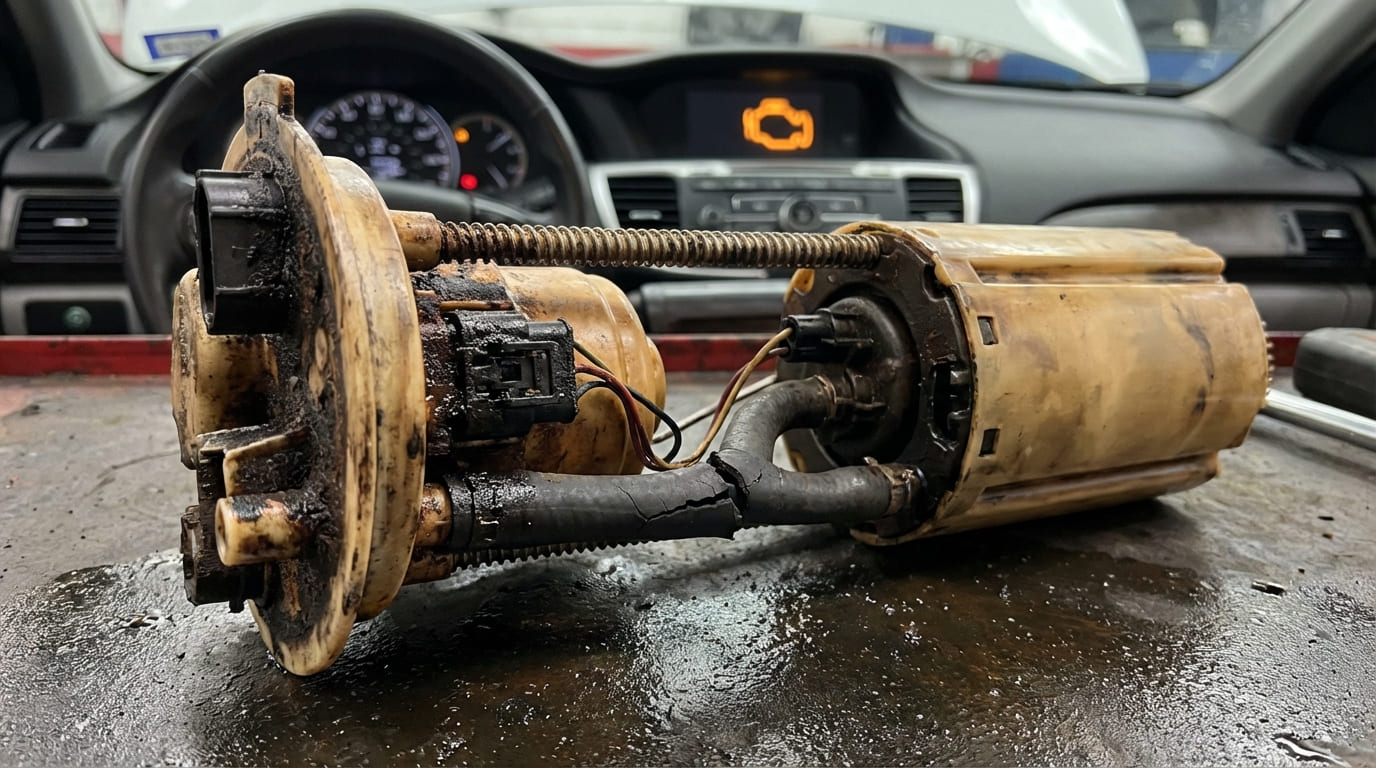
In my experience, a failing fuel pump is not a “maybe” issue—it’s a ticking clock. The vehicle will eventually stop running, and when that happens could put you or others at risk. While some drivers try to push through with poor performance, the reality is that continued driving often leads to breakdowns, safety hazards, and damage beyond the pump itself. This guide will help you recognize the signs, test accurately, and make a smart call on repair or replacement.
Immediate Risks of Driving with a Failing Fuel Pump
A compromised fuel pump doesn’t just cause inconvenience—it introduces real safety and mechanical risks. The longer you drive with one, the higher the chances of a roadside failure or secondary engine damage.
Operational and Safety Hazards
- Unexpected stalling: I’ve seen vehicles shut down at highway speeds due to fuel pressure drop. Losing power in traffic dramatically increases rear-end collision risk.
- Power loss during acceleration: Merging or passing becomes dangerous when the engine can’t deliver. Turbocharged engines are especially vulnerable—low fuel pressure causes lean conditions that trigger limp mode or severe knock.
- Erratic engine behavior: Surging or hesitation often gets blamed on spark plugs or sensors. In truth, I’ve traced more than half of these cases to inconsistent fuel delivery from a failing pump.
- Catalytic converter damage: Lean combustion spikes exhaust temperatures. Over time, this can melt the catalytic substrate—a $1,000+ repair that’s completely avoidable.
- Potential engine damage: Prolonged lean running increases cylinder heat. Modern knock sensors help, but they can’t prevent all damage. I’ve seen melted pistons on high-compression engines after extended operation with low fuel pressure.
- Stranding in unsafe locations: A breakdown on a dark rural road, highway shoulder, or busy intersection isn’t just inconvenient—it’s dangerous. I once towed a sedan from a blind curve where the driver had no room to pull over.
In my shop, we never recommend driving more than necessary with a suspected fuel pump issue. If you must move the vehicle, do it during daylight, in light traffic, and only to the nearest repair facility.
How to Recognize a Failing Fuel Pump
Early detection saves money and prevents breakdowns. Look for patterns—not isolated symptoms. Many of these signs mimic ignition or sensor problems, so testing is essential.
Key Symptoms to Watch For
- High-pitched whine from the fuel tank: A healthy pump hums steadily. A loud whine or screech, especially under load, usually means worn bearings or impeller damage.
- Engine cranks but won’t start (especially after sitting): This often points to a failed check valve inside the pump, causing loss of fuel pressure overnight.
- Intermittent misfires under load: If the problem worsens when the tank is below 1/4 full, the pump may be sucking in debris or losing prime.
- Reduced fuel economy: The ECU may enrich the mixture to compensate for lean conditions, increasing fuel consumption.
- Check engine light with relevant codes: P0087 (low fuel pressure), P0171/P0174 (system too lean). But don’t assume the pump is at fault—these can also stem from vacuum leaks or sensor issues.
How to Diagnose a Failing Fuel Pump
Never replace a fuel pump based on symptoms alone. Many “bad pump” diagnoses turn out to be wiring, relay, or contamination issues. Here’s how I confirm it in the shop.
Fuel Pressure and Flow Test
Connect a gauge to the fuel rail test port. Idle pressure should match factory specs—typically 40–60 psi for port injection, 500–2,500 psi for direct injection.
The real test is stability under load. If pressure drops during acceleration or hard throttle, the pump is failing or starving. Also, perform a flow test: measure fuel volume delivered in 30 seconds. Most pumps should deliver 1–2 cups. Low volume with good pressure suggests a clogged inlet sock.
Current Draw Test
Use an inductive amp clamp on the pump’s power wire. A healthy pump draws 5–10 amps at startup and running. Over 12 amps indicates internal wear or binding. Less than 4 amps with low pressure suggests a weak motor or high circuit resistance.
I once diagnosed a “dead pump” that actually had perfect current draw—turned out the relay wasn’t sending power. Always test the circuit before condemning the pump.
Electrical Circuit Check
Verify power and ground at the pump connector using a multimeter. Check for:
- 12V at the power wire when the key is on (or during cranking)
- Less than 0.2V drop on the ground side
- No voltage drop across the relay or fuse
Corroded connectors, especially on older Toyotas and Fords, are a common culprit. I’ve seen melted wiring harnesses cause repeated pump failures.
Diagnostic Decision Table
| Symptom | Most Likely Causes | Less Common but Possible Causes | Recommended Next Step |
|---|---|---|---|
| Whining noise + hesitation under load | Failing fuel pump, low fuel level | Contaminated fuel, restricted fuel filter | Perform pressure and flow test |
| Engine cranks but no start | Fuel pump failure, blown fuse, bad relay | Security lockout, crank sensor failure | Check power, ground, and fuel pressure |
| Lean codes (P0171/P0174) | Vacuum leak, failing pump, MAF sensor issue | Exhaust leak, fuel pressure regulator | Smoke test, verify fuel pressure |
| Stalling at idle or low speed | Weak pump, clogged inlet sock | Idle air control fault, EGR issue | Monitor fuel pressure at idle and under load |
Real-World Diagnostics: Lessons from the Bay
Situation: 2014 F-150 with P0087 and intermittent stalling. Fuel filter recently replaced.
Discovery: Pressure dropped under load. Current draw was high. Tank inspection revealed rust-clogged inlet sock.
Lesson: The pump wasn’t worn—it was starving. Replacing it without cleaning the tank would have caused repeat failure. Always inspect tank condition.
Situation: 2008 Camry won’t start in the morning, runs fine later.
Discovery: Pressure bled down overnight. Pump check valve was leaking. But the connector was melted and corroded.
Lesson: The root cause was high resistance in the wiring. I now inspect every fuel pump connector—especially on high-mileage Toyotas.
Situation: BMW 335i with lean code and power loss. Coils and injectors already replaced.
Discovery: Low rail pressure at high RPM. HPFP current draw was normal. Found a split low-pressure feed line.
Lesson: On direct-injection engines, check both low- and high-pressure sides. Don’t assume the HPFP is faulty.
Repair vs. Replace: Cost and Practical Advice
Replacing a fuel pump isn’t just about the part—it’s labor, access, and potential hidden issues. Here’s what you need to know.
Most in-tank pumps require dropping the fuel tank. Labor can take 3–6 hours, depending on the vehicle. Some models (like certain Hondas and Fords) have access panels under the rear seat—cutting labor in half.
Parts cost varies:
| Component | Cost Range |
|---|---|
| Aftermarket fuel pump module | $150–$350 |
| OEM fuel pump module | $300–$600 |
| High-pressure fuel pump (HPFP) | $400–$900 |
| Basic fuel pressure test (DIY gauge) | $50–$100 |
I recommend replacing the entire module, including the strainer and fuel level sender. It costs more upfront but reduces comeback risk. Also, replace the in-line filter if your vehicle has one—many don’t on modern models.
In my shop, we always clean the fuel tank if it shows rust or debris. And we inspect the wiring harness. A new $500 pump won’t last if the connector is melted or corroded.
Final Recommendations
- ✅ Test before replacing: Always verify pressure, flow, and current draw. Many pumps are replaced unnecessarily.
- ✅ Inspect the tank and wiring: Contamination and bad connectors are leading causes of repeat failure.
- ✅ Don’t run low on fuel: Keeping the tank above 1/4 helps cool and lubricate the pump. Chronic low fuel levels shorten pump life.
- ⚠️ Avoid cheap aftermarket pumps: I’ve seen some fail in under 6 months. Stick with OEM or top-tier brands like Bosch or Denso.
- ⚠️ Don’t ignore lean codes: They may point to a vacuum leak, but always rule out fuel delivery issues first.
After replacement, clear codes, perform a drive cycle, and recheck fuel trims. If long-term trims are still high, the engine may have adapted to lean conditions—further diagnosis may be needed.
And always consult the factory service manual. Specifications and procedures vary widely. What works for a Camry won’t apply to a Ram.