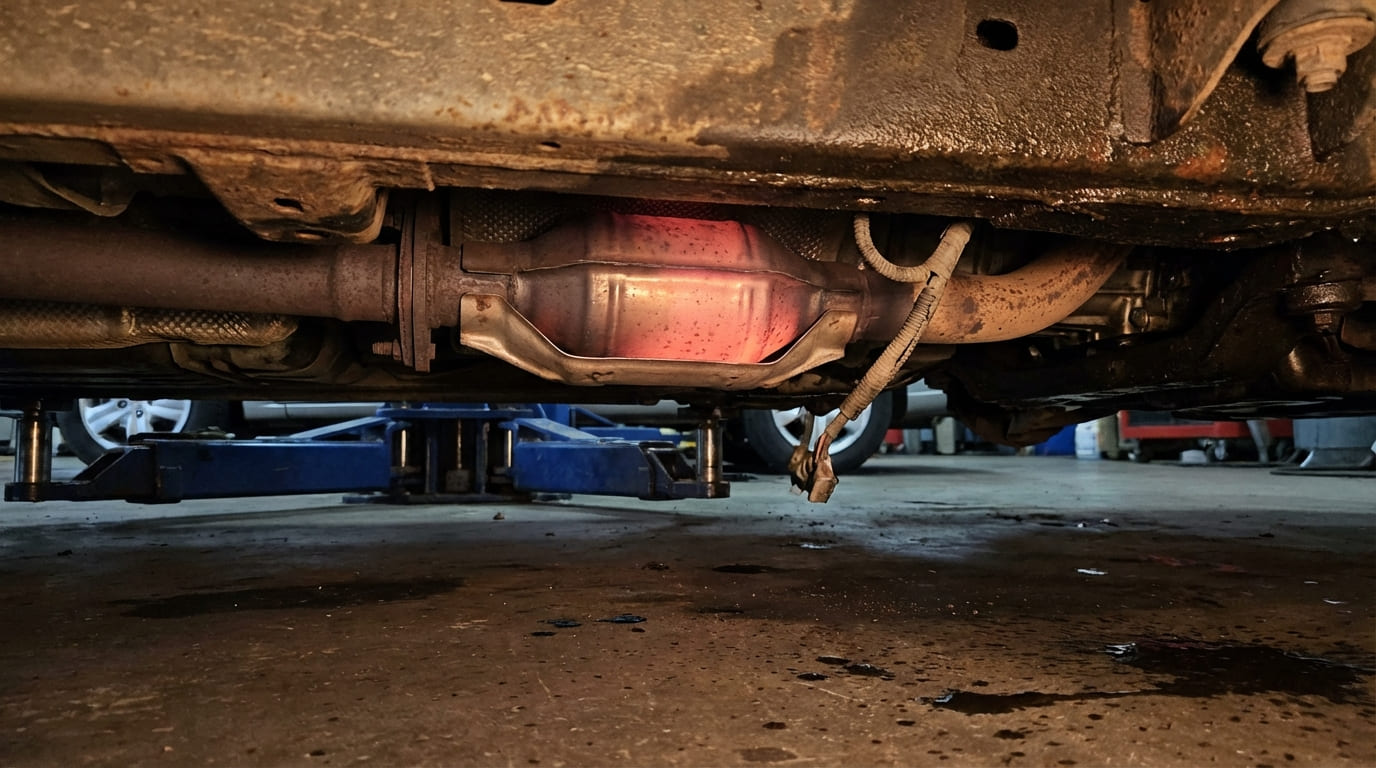
In my shop, I’ve seen more than a few catalytic converters come in glowing like red-hot stove burners, some with melted substrates that resemble slag from a foundry. While the symptoms can look dramatic, the root causes are almost always upstream—hidden in engine management, combustion inefficiency, or exhaust flow. This guide cuts through theory and delivers what matters: how to diagnose, fix, and avoid repeat failures.
Why Catalytic Converters Overheat
The catalytic converter operates at high temperatures by design—typically 1200–1600°F under load. But when internal temps exceed 2000°F, the ceramic substrate begins to melt. This extreme heat doesn’t happen without cause. Two primary mechanisms drive it: unburned fuel igniting inside the converter, and exhaust gases entering too hot due to combustion timing or mixture issues.
Unburned Fuel Igniting Inside the Converter
Raw fuel (hydrocarbons) passing into the exhaust will ignite when it hits the hot catalyst surface. This secondary combustion spikes internal temperatures beyond structural limits.
Common Sources of Unburned Fuel
- Engine misfires—especially persistent ones—dump raw fuel into the exhaust. Even brief misfires under load can be enough.
- Fouled or cracked spark plugs, failing ignition coils, or damaged plug wires disrupt spark delivery.
- Leaking fuel injectors drip fuel after shutdown or during idle, creating rich misfires.
- Low fuel pressure may seem like it would cause a lean condition, but it can lead to unstable combustion and partial misfires.
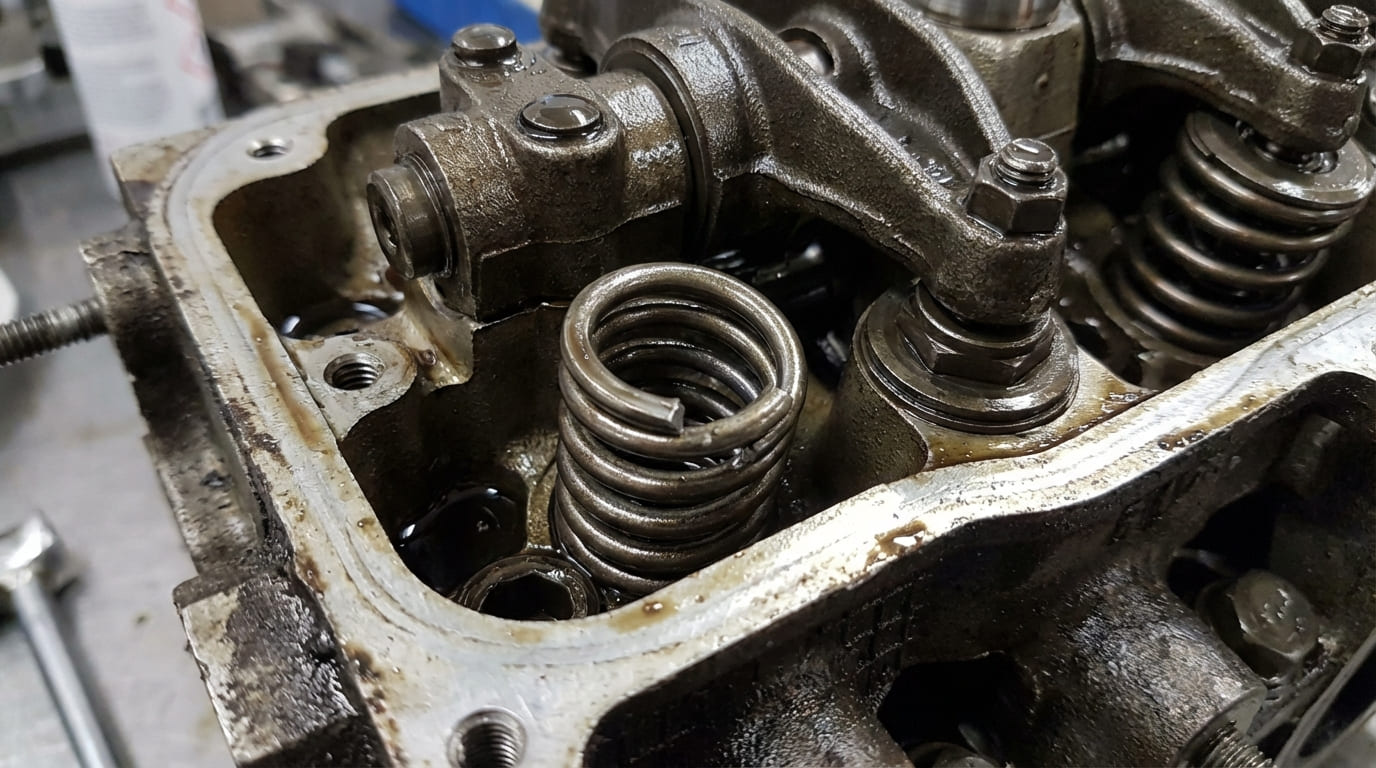
- Compression loss from worn rings, bent valves, or head gasket leaks prevents proper combustion.
How to Check for Misfires
- Use an OBD2 scanner to pull live misfire counts per cylinder. Don’t rely only on stored codes—Mode 6 data shows developing patterns.
- Perform an ignition waveform test with an oscilloscope. Look for short spark duration or low peak voltage, signs of coil failure.
- Run compression and leak-down tests. On most engines, compression below 100 PSI or leak-down over 10% indicates a problem.
- Verify fuel rail pressure with a mechanical gauge. Electronic readings can be misleading if the sensor is faulty.
In my shop, we always swap coils and plugs between cylinders when diagnosing misfires. If the misfire follows the coil, it’s the culprit. If not, dig deeper—valve train or fuel delivery may be to blame.
Excessively Rich Air/Fuel Mixture (System-Wide)
A consistently rich mixture floods the converter with hydrocarbons. The catalyst works harder to oxidize them, generating excess heat.
- Faulty oxygen sensors stuck high (e.g., 0.8V+) trick the ECU into adding more fuel.
- Failed fuel pressure regulator (stuck high) increases fuel pressure and delivery.
- Stuck-open purge valve pulls raw fuel vapor from the charcoal canister into the intake.
- Contaminated MAF sensor under-reads airflow, causing over-fueling.
- ECT sensor reading too cold keeps the engine in open-loop mode with enrichment fueling.
How to Diagnose a Rich Condition
- Monitor STFT and LTFT: sustained negative trims (e.g., -15% or more) confirm richness.
- Use a 5-gas analyzer: high CO and HC levels point to incomplete combustion.
- Test O2 sensor response with a scope. A lazy or flatlined signal means poor feedback control.
Exhaust Gases Too Hot Before Reaching Converter
Even with complete combustion, exhaust gases can overheat the converter if the burn happens late or under lean conditions.
Lean Air/Fuel Mixture
Lean mixtures burn hotter and faster. The flame front can extend into the exhaust manifold, raising gas temps significantly.
- Vacuum leaks from intake gaskets, brake booster lines, or PCV hoses introduce unmetered air.
- O2 sensors failing low cause the ECU to over-lean the mixture.
- Clogged fuel filters, weak fuel pumps, or low system pressure reduce fuel delivery.
- MAF sensors that over-read airflow may trigger excess fueling in some systems, but others interpret it as lean and react incorrectly.
How to Diagnose a Lean Condition
- Check fuel trims: STFT and LTFT consistently above +10% indicate a lean state.
- Use a 5-gas analyzer: elevated O2 and NOx levels confirm lean combustion.
- Smoke test the intake system. Many vacuum leaks only appear under load and won’t show up during idle inspection.
Retarded Ignition Timing
Late spark timing causes combustion to finish during the exhaust stroke, sending extremely hot gases into the exhaust system.
- Faulty CKP or CMP sensors can force the ECU into fallback timing mode, often retarded.
- Rare ECU software glitches or corrupted timing maps can cause incorrect spark advance.
How to Check Ignition Timing
- Use an OBD2 scanner to monitor actual ignition timing. At idle, most engines run 10–15° BTDC. If it’s near 0° or negative, investigate further.
- On older distributor-equipped engines, use a timing light to verify base timing. On modern engines, scan tool data is primary.
Exhaust Restriction Upstream of Converter
A blockage before the converter causes exhaust gases to back up, increasing residence time and heat in the manifold.
- Collapsed muffler baffles, dented pipes, or failed resonators can restrict flow.
How to Test for Exhaust Restriction
- Measure back pressure at the upstream O2 sensor port. Above 1.5 PSI at idle or 2.5 PSI at 2500 RPM suggests a blockage.
- Use an infrared thermometer to compare temps before and after suspected restriction. A drop downstream indicates flow loss.
In my shop, we never replace a glowing converter without testing back pressure first. I’ve seen more than one case where a crushed resonator—hidden under insulation—was the real culprit.
Secondary and Contributing Factors
Physical Damage or Internal Catalyst Failure
Impact, thermal shock, or contamination can degrade the converter independently or worsen heat issues.
- Road debris can crack the ceramic monolith.
- Driving through deep water after highway runs causes thermal shock and fracture.
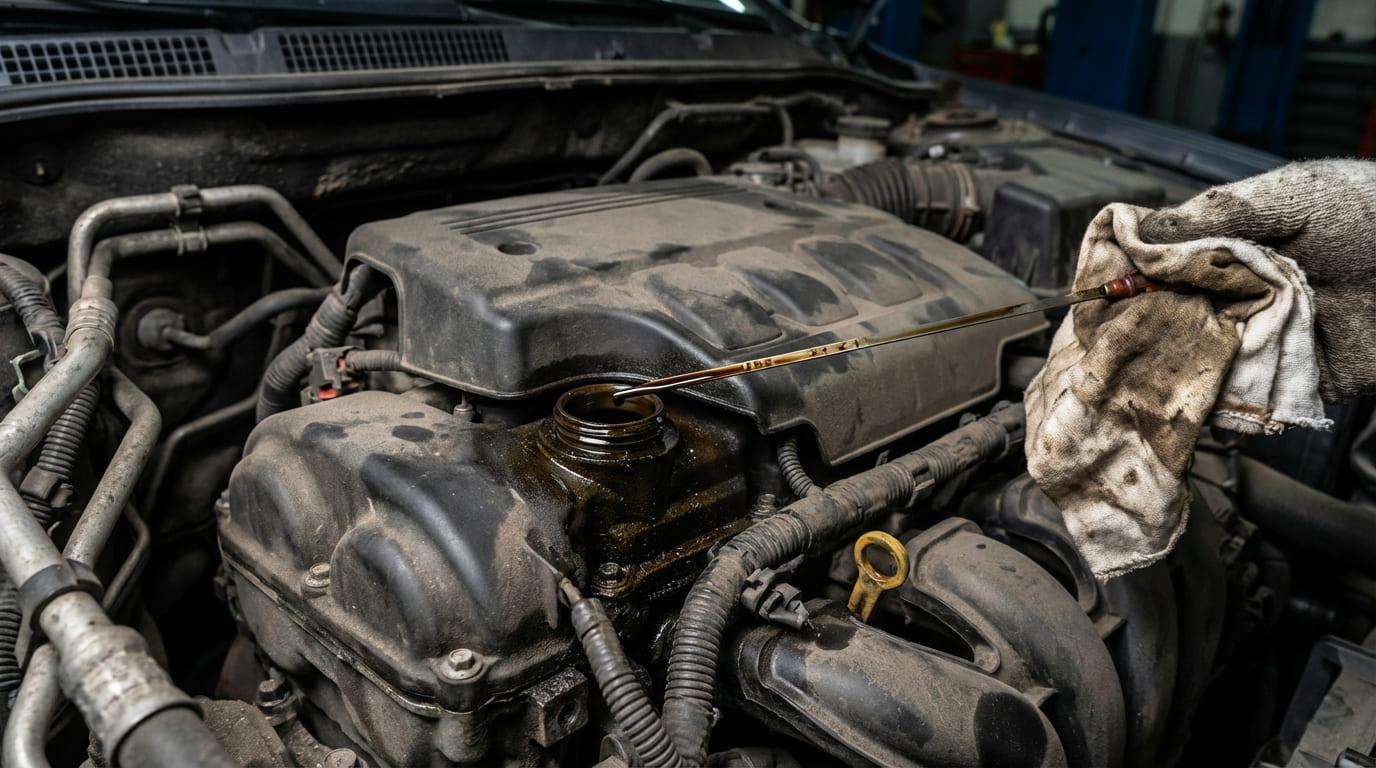
- Oil or coolant entering combustion coats the catalyst, reducing efficiency and creating hot spots.
How to Inspect for Physical Damage
- Use a borescope through the O2 sensor ports to view the substrate. Look for missing sections, warping, or debris.
- Perform a rattle test—gently shake the converter. A loose rattle may indicate broken material, but absence doesn’t rule out damage.
Aftermarket or Incorrectly Sized Converter
Some aftermarket units run hotter due to design compromises.
- Lower precious metal loading reduces light-off efficiency, requiring higher temps to function.
- Incorrect cell density (too few cells per square inch) reduces surface area and heat dissipation.
How to Verify Proper Converter Fit
- Cross-reference the part number with OEM specifications. I keep a log of common fitment errors for models I see often.
- Compare inlet/outlet diameter, substrate length, and flange type. Even small mismatches affect flow and heat.
I recommend OEM or OEM-equivalent converters. I’ve seen budget units fail in under 12 months—especially on trucks and performance vehicles where exhaust temps run high.
Consequences of a Melted or Glowing Converter
- Increased back pressure causes power loss, often described as “driving with the parking brake on.”
- Sustained restriction can lead to burnt exhaust valves or cracked manifolds over time.
- External casing temperatures can exceed 1200°F—enough to ignite dry grass or underhood materials.
- Once the substrate melts, the converter is permanently damaged and cannot be repaired.
Repair Strategy and Verification
Replacing the Converter
- Replacement is the only option after internal damage.
- Always fix the root cause first—replacing without diagnosis leads to repeat failure.
- OEM or high-grade aftermarket units cost $400–$1,200 depending on vehicle. Avoid the cheapest options—they often fail within a year.
Verifying the Repair
- Clear codes and drive through multiple warm-up cycles. Watch for return of P0420/P0430.
- Use an infrared thermometer: a 100–200°F drop from inlet to outlet under load confirms proper operation.
- Run a 5-gas analyzer test to confirm tailpipe emissions are within spec—this verifies combustion is clean.
Do’s and Don’ts
- ✅ Diagnose fuel trims and misfire data before replacing the converter. Over 60% of glowing cats I see stem from engine issues.
- ✅ Inspect ignition, fuel, and compression on any vehicle with repeated converter failures—even without codes.
- ✅ Perform a back pressure test when performance is down. It takes 10 minutes and can save you from a wrong diagnosis.
- ⚠️ Never replace a converter without finding the root cause. It’s a temporary fix and a waste of money.
- ⚠️ Don’t assume age is the problem. Heat damage doesn’t happen without a reason.
- ⚠️ Don’t skip the borescope. You can’t tell substrate condition from the outside.
Common Scenarios and Likely Causes
| Symptom / Condition | Most Likely Causes | Less Common But Possible |
|---|---|---|
| Converter glowing red, strong fuel smell | Active misfire (ignition or fuel), leaking injectors | Stuck purge valve, ECU fault |
| Converter melted, no misfire codes | Lean condition (vacuum leak, low fuel pressure), retarded timing | Thermal shock history, previous undiagnosed misfire |
| Converter rattles, performance loss | Physical impact, thermal fracture | Manufacturing defect, poor substrate bonding |
| Repeated converter failures | Oil/coolant contamination (burning oil), improper converter type | ECU programming issue, aftermarket tuning mismatch |
Situation: A 2012 Camry came in with a glowing mid-pipe converter and a P0302 code. Owner had replaced the coil and plug twice.
Discovery: Compression was low on cylinder 2. Leak-down test showed air escaping into the intake manifold—bent intake valve, likely from a past timing chain skip.
Nuanced Lesson Learned: Misfires aren’t always ignition-related. Even a small valve leak can dump enough fuel to melt a converter. Always verify cylinder sealing.
Situation: A truck with no check engine light, but the converter glowed after highway driving. No misfire data, trims normal.
Discovery: Back pressure test read 3.8 PSI at 2500 RPM. Found a collapsed resonator downstream. The restriction trapped heat.
Nuanced Lesson Learned: Not all glowing converters are from bad combustion. Mechanical restrictions can create extreme heat—don’t ignore flow.
Situation: A high-mileage Accord kept melting converters every 18 months. Previous shops kept replacing them.
Discovery: Exhaust analysis showed high HC and CO. Compression was even, but oil consumption test revealed 1 qt per 1,000 miles. Oil was poisoning the catalyst.
Nuanced Lesson Learned: Chronic oil consumption silently degrades converter efficiency. It’s not always a “burned-out” part—it may be slow internal contamination.
In my experience, glowing or melted catalytic converters are never isolated failures. They’re symptoms of upstream problems—often visible in scan data or hidden in mechanical wear. Before cutting out another converter, ask: what’s feeding it bad exhaust? The answer is almost always in the combustion process. And always consult your vehicle’s service manual—specs vary, and what’s normal for one engine can be a warning sign on another.