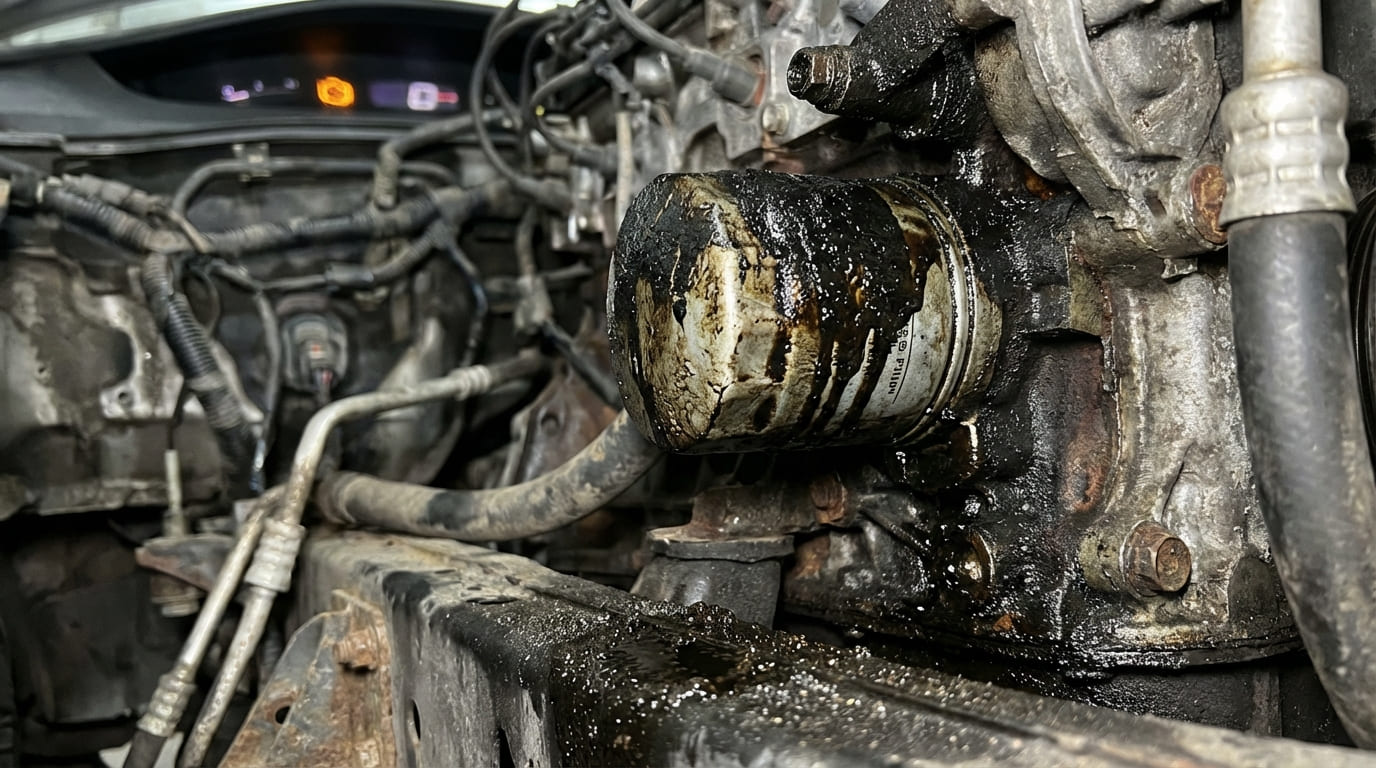
As a master mechanic, I’ve seen engines destroyed by something as small and inexpensive as a neglected oil filter. While oil gets the spotlight, the filter plays an equally critical role in protecting your engine. Skipping or delaying filter changes—even with fresh oil—can lead to accelerated wear, system failures, and costly repairs. This article breaks down exactly what happens when you ignore the filter, how to spot the damage, and how to avoid it.
How a Clogged Oil Filter Damages Your Engine
The oil filter’s job is to remove contaminants like soot, metal particles, dust, and sludge from circulating through the engine. Over time, the filter media becomes saturated. Once it can’t pass oil efficiently, the bypass valve opens—allowing unfiltered oil to flow to critical components. There’s no warning light for this. The engine may run fine on the surface, but internal damage is accumulating with every mile.
Key Consequences of Not Changing the Oil Filter
- Unfiltered oil circulates – Once the bypass valve opens, dirty oil flows directly to main bearings, camshafts, and turbos.
- Increased abrasive wear – Metal particles and dirt score bearings, cylinder walls, and oil pump internals.
- VVT system failure – Small oil passages in variable valve timing solenoids and phasers clog easily.
- Turbocharger damage – High-speed turbo bearings fail quickly when fed contaminated oil.
- Reduced oil pressure – Worn bearings and oil pump damage lead to low pressure, especially at idle.
- Engine seizure – In severe cases, spun bearings or oil starvation due to sludge buildup can destroy the engine.
In my shop, we’ve torn down engines with clean-looking oil but catastrophic internal wear—all because the filter was never changed. Oil analysis told the real story: sky-high iron and silicon levels. Never assume fresh oil means clean oil flow.
How to Check for Damage from a Neglected Oil Filter
Symptoms can be subtle at first. Use these diagnostic steps to catch problems early:
- Check oil condition – Pull the dipstick. Sludge, grit, or a thick, dark consistency can indicate poor filtration.
- Test oil pressure mechanically – Use a calibrated gauge at idle and 2,000 RPM. A drop at idle suggests bearing wear.
- Run an oil analysis – Labs can detect elevated iron (crank/rod wear), copper (bearings), aluminum (pistons), and silicon (dirt ingestion).
- Inspect the old filter – Cut it open. Heavy sludge or visible metal flakes confirm long-term neglect.
- Scan for VVT codes – P0016, P0017, or P0022 may point to oil flow restrictions in the timing system.
- Listen for knocks – Use an automotive stethoscope on the block to isolate rod or main bearing knock.
- Perform compression and leak-down tests – Helps assess ring and valve wear from contaminated oil.
Component-Specific Failures and Repair Costs
Dirty oil doesn’t damage all parts equally. Here’s what wears first, signs to watch for, and typical repair costs:
| Component | Symptoms | Repair Cost (USD) | Repair vs Replace? |
|---|---|---|---|
| Main/rod bearings | Low oil pressure at idle, knocking under load | $1,800–$3,500 (rebuild) | Rebuild or replace engine |
| Camshaft and lifters | Valve train ticking, power loss, poor idle | $800–$1,800 | Replace cam and lifters |
| Piston rings/cylinders | Blue smoke, oil consumption, blow-by | $2,500–$4,500 | Rebuild or replace |
| Turbocharger | Whining noise, oil in intake, power loss | $1,200–$3,000 | Replace turbo |
| VVT solenoid/phaser | Check engine light, rough idle, poor performance | $300–$900 | Replace solenoid; phaser may require timing job |
| Oil pump | Low pressure, noise from front of engine | $600–$1,200 | Replace pump; often requires timing cover removal |
A $10 oil filter can prevent $3,000 in repairs. I tell every customer: if you’re changing the oil, you must change the filter. No exceptions. Reusing a filter cuts the life of fresh oil in half—sometimes less under dirty conditions.
Best Practices for Oil Filter Maintenance
Prevention is simple and cheap. Follow these field-tested guidelines:
- ✅ Always replace the filter with every oil change – Even if using synthetic oil or extended intervals.
- ✅ Lubricate the rubber gasket – Dab clean oil on the seal to prevent leaks and make future removal easier.
- ✅ Clean the mounting surface – Remove old gasket residue and sludge to ensure a proper seal.
- ✅ Hand-tighten plus 3/4 turn – Or follow manufacturer torque specs. Over-tightening strips threads, especially on aluminum blocks.
- ✅ Use quality filters – Stick with OEM or reputable brands (e.g., Wix, Purolator, Mann, Bosch). Avoid cheap store-brand filters—they often have weak media or bypass valves.
- ⚠️ Avoid reusing filters – Some claim it’s safe, but real-world debris load makes this a gamble.
- ⚠️ Don’t skip the filter during top-offs – If you’re extending oil life, the filter is likely exhausted too.
Real-World Cases: What Happens When You Skip the Filter
Case: 2015 Ford F-150, 85,000 miles – Owner changed oil regularly but reused the filter every other time. Developed P0016 code and rough idle. Found clogged VVT solenoids and sludge in the oil system. Filter media was collapsed. Lesson: Clean oil doesn’t help if the filter can’t deliver it.
Case: 2012 Subaru WRX, 92,000 miles – Low oil pressure at idle, no knocking. Pan inspection revealed rod bearings with embedded grit. Filter had been reused—media was compacted. Oil analysis showed high iron and copper. Lesson: Bearing wear starts silently. Pressure tests are essential.
Case: Diesel Pickup, 110,000 miles – Turbo failed suddenly. Shaft had scoring and play. Old filter was packed with metal debris. Oil analysis showed copper and iron levels 10x normal. Lesson: Turbos rely on clean oil. Extended oil intervals demand stricter filter discipline.
Final Verdict: Don’t Gamble on the Filter
Changing the oil filter takes minutes and costs little. The risk of skipping it far outweighs any perceived savings. Whether you drive a daily commuter or a high-performance vehicle, treat the filter as a critical wear item—because it is. Follow your owner’s manual, use quality parts, and never separate an oil change from a filter change.
I’ve never seen an engine fail from changing the filter too often. But I’ve seen dozens die from never changing it. When in doubt, change it. Your engine’s life depends on it.