Over two decades in the shop, I’ve learned that misfires are rarely about a single failed part. They’re symptoms—often pointing to ignition, fuel, or mechanical issues. The real skill lies in methodically ruling things out. Let’s walk through how to diagnose rough running and misfires under specific conditions: cold, warm, idle, and load.
Step 1: Confirm and Isolate the Misfire
Before grabbing tools, clarify what the driver is experiencing. Is it a true combustion misfire or vibration from another source? Use OBD2 data to confirm, then isolate the pattern.
OBD2 Scan Tool Data Analysis
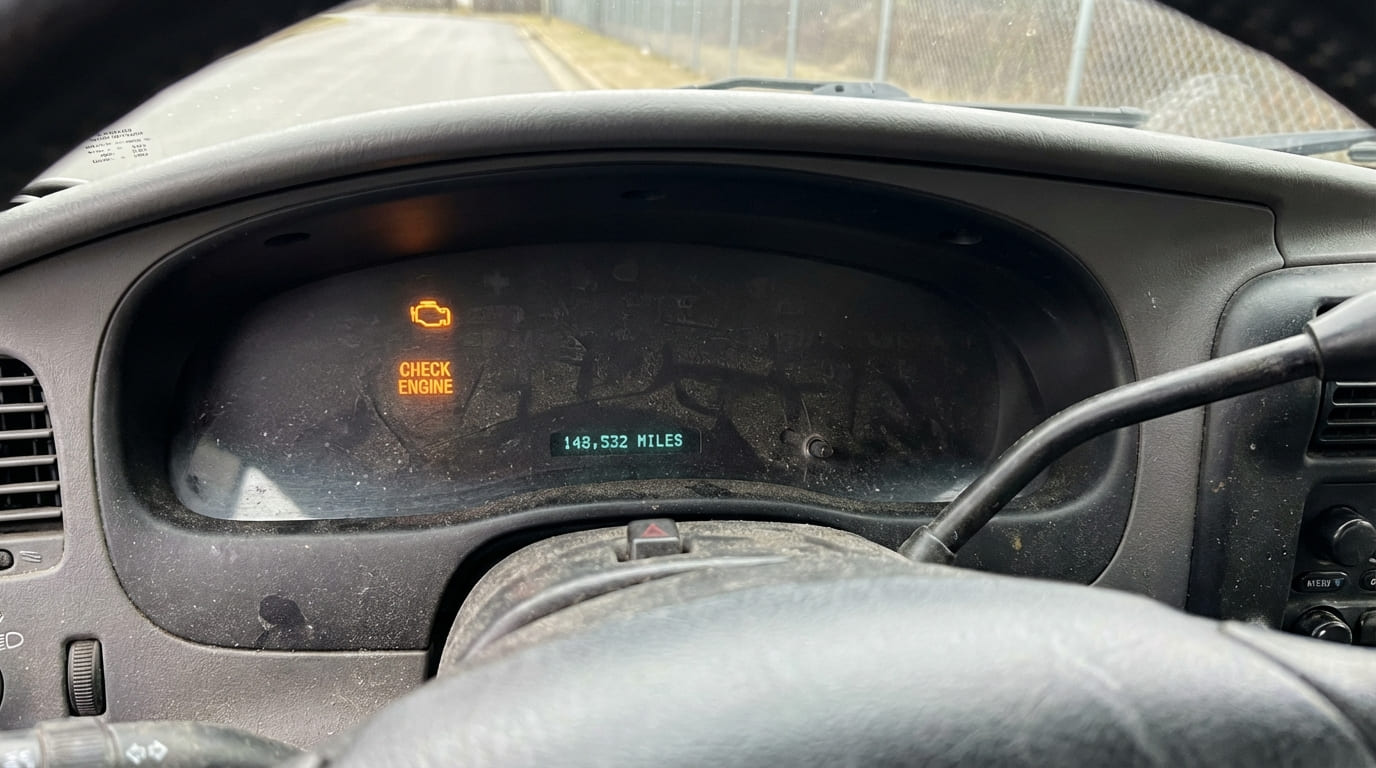
Start with misfire codes (P030X). A P0303 means cylinder 3 is misfiring, but not why. Check live misfire counters—do they spike at idle, under load, or randomly? This helps narrow timing.
Fuel trims are critical. LTFT over +10% indicates a lean condition. If both banks are high, suspect shared issues: vacuum leak, MAF, or fuel delivery. If only one bank is high, focus on that side: intake gasket, injector, or exhaust leak pre-cat.
Use Mode 6 data if available. It shows misfire counts per thousand cycles—useful for catching intermittent issues before a code sets.
Cylinder Contribution and Visual Inspection
On older systems, a power balance test (disabling cylinders one by one) can reveal weak performers. But on modern engines, this risks setting false codes. Better: use a lab scope to monitor coil primary current. Subtle changes in burn time or saturation can flag weak coils before full failure.
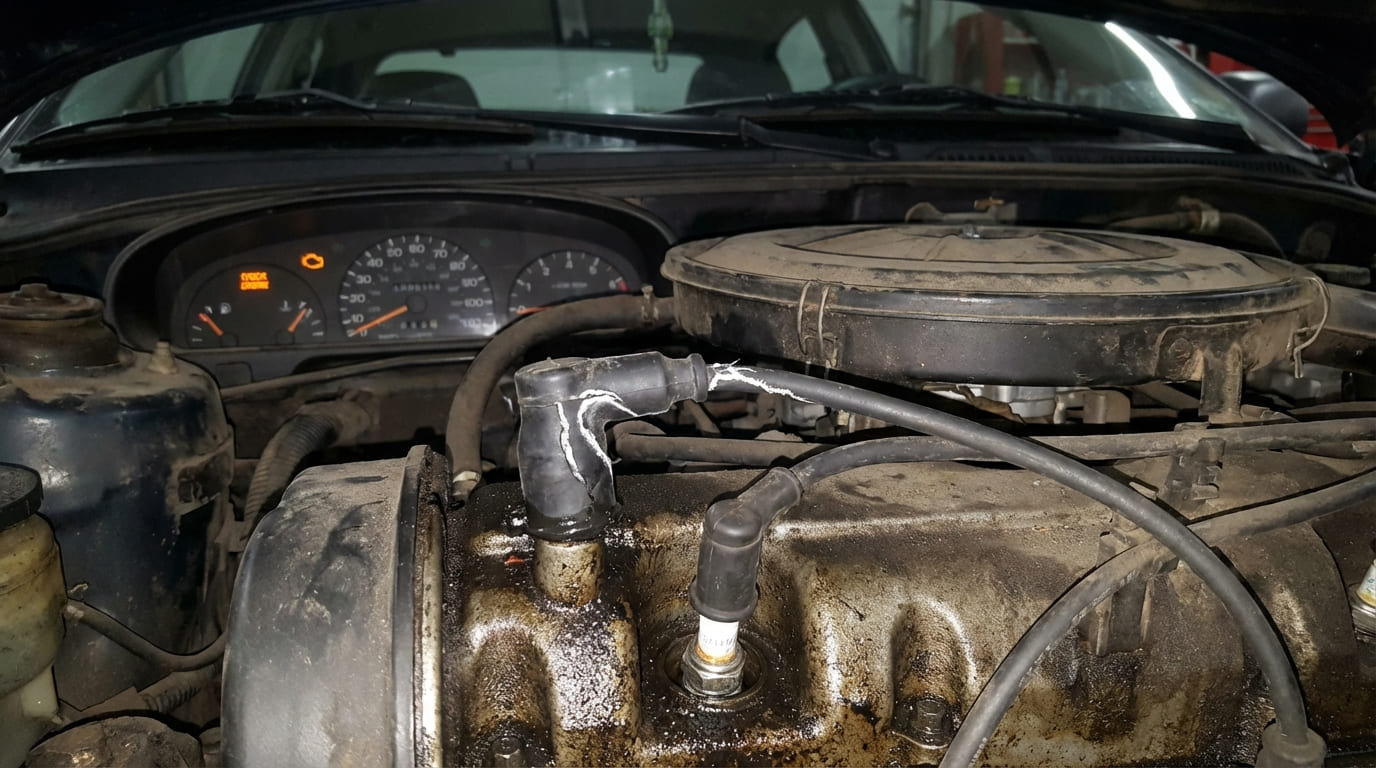
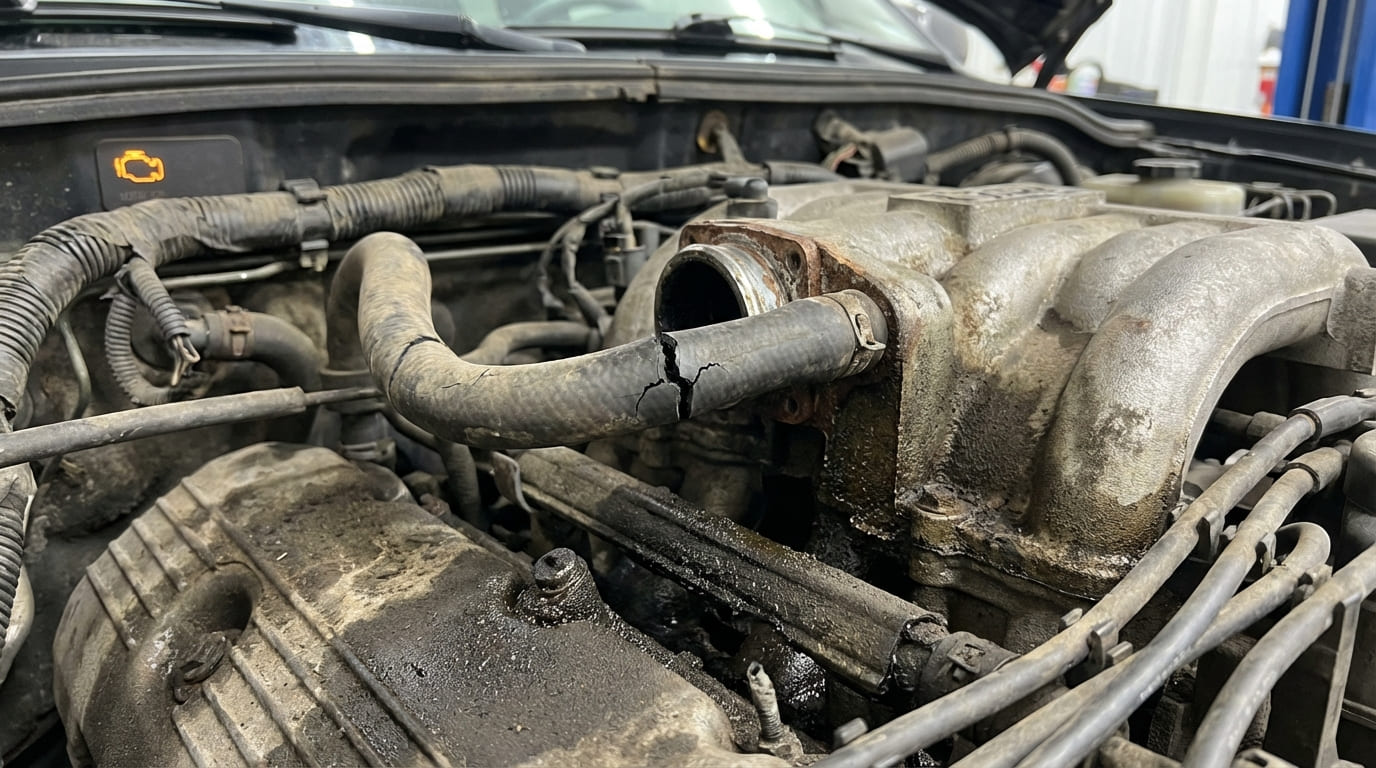
Always inspect physically. Look for cracked vacuum lines, oil on spark plugs, or damaged wiring. A cracked brake booster line once wasted two days of diagnostics. Pull a plug—oil fouling suggests valve seals; wet and black means rich fuel mixture.
Step 2: Diagnose by Symptom Pattern
Misfires behave differently based on engine state. Use the pattern to guide your diagnosis.
| Symptom | Most Likely Causes | Less Common but Possible | Diagnostic Priority |
|---|---|---|---|
| Misfire at idle, smooths out with RPM | Vacuum leak, EGR stuck open, dirty throttle body | Weak coil, lazy O2 sensor, intake manifold gasket (coolant) | Check fuel trims, smoke test, inspect EGR operation |
| Misfire under load | Fuel pump (volume), clogged injector, ignition coil breakdown | Exhaust restriction, VVT issue, low compression | Test fuel pressure/volume under load, scope ignition, check backpressure |
| Cold-start misfire, clears when warm | Leaking injector, faulty ECT sensor, worn valve seals | Intake gasket (coolant), carbon-fouled plugs, low oil viscosity | Check injector leak-down, live ECT data, inspect plugs |
| Intermittent misfire, no pattern | Wiring harness issue, failing CKP/CMP sensor, ECU driver fault | Fuel contamination, intermittent vacuum leak, rodent damage | Scope sensors, wiggle test harness, check for rodent signs |
Step 3: System-by-System Diagnosis
Ignition System
Most misfires are assumed to be ignition-related—but verify before replacing parts.
Spark Plugs: Check condition. Oil fouling on one cylinder? Likely valve guide seals. Carbon buildup? Rich mixture or short trips. Always verify gap with a wire gauge—modern fine-wire plugs are sensitive. Typical gap: 0.032”–0.040”, but consult the manual.
Ignition Coils: Heat-related failure is common. Perform a swap test: move the coil to another cylinder. If the misfire follows, replace it. If not, the coil isn’t the issue. Use a scope to check secondary waveform: sharp spike, clean burn line. A weak spike or erratic burn indicates failure.
Wires and Distributor (older vehicles): Check resistance—up to 10k ohms per foot is typical. But test under load: run the engine in the dark and look for arcing. Even wires that test fine can break down under high voltage.
Fuel System
Fuel issues often show under load. Always test pressure AND volume.
Fuel Injectors: Clogged injectors cause lean misfires under load. Use a balance test: measure pressure drop over 15 seconds. Normal drop: 2–3 psi. Less than 1 psi? Likely restricted. Leaking injectors cause rich misfires at idle—fuel washes down cylinder walls. Test by cranking with fuel rail pressurized but injectors disabled—fuel in the intake? Leaking injectors.
Fuel Pressure Regulator: If vacuum line smells like gas, the diaphragm is ruptured. Test pressure at idle, under load, and after shutdown. Pressure should hold for 5+ minutes. A quick drop points to leaking injector or failed pump check valve.
Fuel Pump and Filter: Test volume: 1 pint in 15 seconds is typical. A weak pump may hold pressure at idle but fail under acceleration. Cost to replace: $150–$400. If the filter is clogged, it won’t show at idle—only under high flow.
In my shop, we always test fuel volume under simulated load. A pressure-only test misses failing pumps 30% of the time. Use a fuel pressure gauge and drive at wide-open throttle in third gear—watch for pressure drop.
Air Induction System
Unmetered air causes lean conditions—especially at idle.
Vacuum Leaks: Best diagnosed with a smoke test. Propane enrichment works but is risky near hot parts. Even small leaks in PCV hoses or brake boosters can trigger high fuel trims. Smoke reveals what eyes miss.
MAF Sensor: A dirty or failing MAF reads low airflow, causing the ECU to reduce fuel—lean misfire. Clean with MAF-safe spray, but don’t assume it’s fixed. Check live data: grams per second at idle and snap-throttle. Compare to factory specs. If response is slow, replace it. Cost: $80–$250.
EGR System: A valve stuck open at idle introduces exhaust gas when it shouldn’t—causing rough idle. Use a scan tool to check EGR position. Verify operation with a hand vacuum pump. If it doesn’t hold vacuum, replace the valve or clean the passage.
Mechanical Engine Issues
When ignition, fuel, and air check out, go mechanical.
Compression Test: Dry test first. Low on one cylinder? Perform a wet test—add a teaspoon of oil and retest. If compression rises, rings are worn. If not, valves or head gasket are likely. Normal: 150+ psi, less than 10% variation between cylinders.
Leak-Down Test: More accurate than compression. 5–10% loss is normal. Over 20% is a problem. Air escaping through:
- Tailpipe → exhaust valve
- Oil cap → piston/rings
- Coolant → head gasket or cracked head
Valve Train and VVT: Ticking noise with misfire under load? Check oil pressure—low pressure collapses hydraulic lifters. For VVT, inspect solenoid screens for sludge. Use dirty oil? That’s likely the cause. Clean or replace solenoid ($50–$120).
Engine Control and Sensors
Sensors feed false data—ECU reacts wrong.
ECT Sensor: If it reads -40°F, ECU floods engine with fuel. Check live data and compare to actual coolant temp. Faulty ECT causes hard starts, rough idle, fouled plugs. Replacement: $20–$50.
O2 Sensors: Slow response causes wild fuel trims. At 2,500 RPM, voltage should swing 0.1V to 0.9V multiple times per second. Less than 1 Hz? Replace. Upstream sensors fail more often than downstream.
CKP and CMP Sensors: Critical for timing. A cracked reluctor wheel may only interrupt signal at certain RPMs. Scope the waveform—look for missing or distorted pulses. A dirty cam signal can mimic random misfire. Clean the tone ring before replacing the sensor.
Exhaust System
Clogged catalytic converter chokes engine under load. Test with a vacuum gauge: vacuum should drop when accelerating. If it drops and doesn’t recover, restriction is likely. Confirm with backpressure test—more than 3 psi pre-cat at 2,500 RPM means clog.
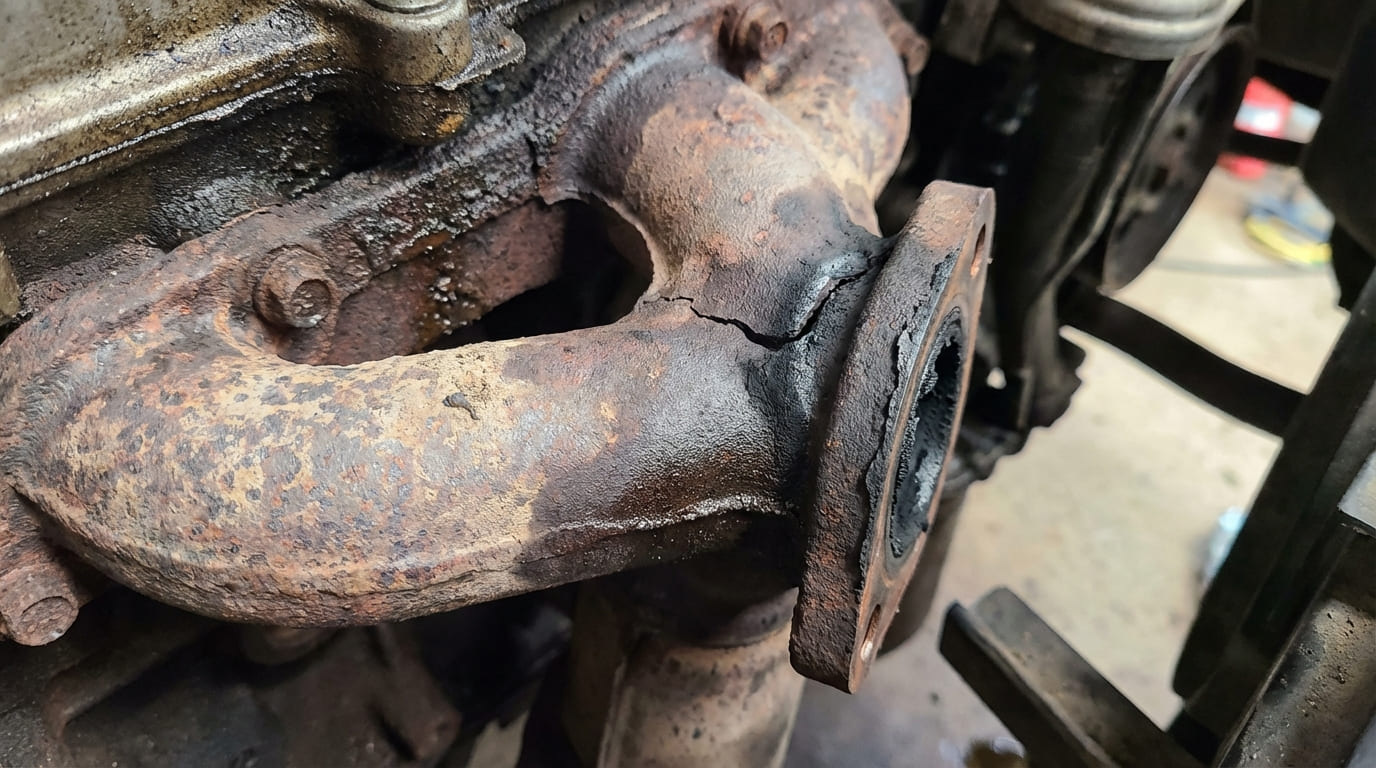
Exhaust Leaks: A leak before the upstream O2 sensor introduces air, making the sensor read lean. ECU adds fuel—creates rich condition. Diagnose by checking fuel trims and inspecting for leaks near the manifold. Weld or replace as needed.
Non-Engine Related Causes
Not every “misfire” is combustion-related.
Torque converter shudder feels like a misfire at 45–55 mph. Check transmission data—TCC slip confirms it. A seized A/C compressor can load the engine enough to cause bogging. Disconnect the compressor clutch—if the symptom disappears, replace the compressor.
Engine Mounts: Failed mounts don’t cause misfires but amplify vibration. Use a pry bar to check for excessive movement. Replacement: $100–$300 per mount. Rule this out before deep engine work.
On a 2012 Accord with P0301, the customer replaced plug and coil. Misfire remained. Compression was low. Leak-down showed 35% loss—air out the intake. Needed a valve job. Lesson: A low-compression cylinder can mimic ignition failure. Always test mechanical health first.
A truck had P0300 only at highway speeds. Fuel pressure was 58 psi at idle. On road test, it dropped to 42 psi under load. Volume test showed only 0.4 pints in 15 seconds. Pump was weak. Lesson: Static pressure can lie. Always test under real-world demand.
An SUV had lean misfire on bank 1. STFT +22%. MAF, O2 sensors, and pump replaced—no fix. Smoke test found a split in the rear intake gasket. Lesson: High trims often mean unmetered air—not bad sensors. Look for leaks, not just parts.
Best Practices: Do This, Not That
- ✅ Recommended: Use a smoke machine for vacuum leaks. Faster and safer than propane.
- ✅ Recommended: Clean spark plug hole threads before removal. Prevents debris from falling in.
- ✅ Recommended: Check oil level and condition first. Sludge kills VVT and lifters.
- ⚠️ Avoid: Replacing coils or injectors based only on DTCs. Verify with testing.
- ⚠️ Avoid: Using fuel injector cleaner as a fix. It masks issues—it doesn’t diagnose.
- ⚠️ Avoid: Assuming a clean MAF is good. Internal contamination degrades performance.
Too many techs replace plugs, coils, and injectors only to find a $15 hose or clogged oil passage was the real issue. The fastest fix isn’t always the right one. Test, don’t guess. And always consult the factory manual—specs vary by engine.