Yes, faulty fuel injectors are a common yet often overlooked cause of engine misfires. In my 20 years as a master technician, I’ve seen countless misfire cases where ignition parts were replaced unnecessarily—only to find the real issue was a compromised injector. This guide cuts through the noise and gives you the diagnostic steps, tools, and real-world insights to identify and fix injector-related misfires correctly.
How Bad Injectors Cause Misfires
Fuel injectors deliver precise amounts of atomized fuel into each cylinder. When they fail, combustion suffers. The type of misfire usually points to the specific failure mode. Here’s what to look for:
Lean Misfire (Too Little Fuel)
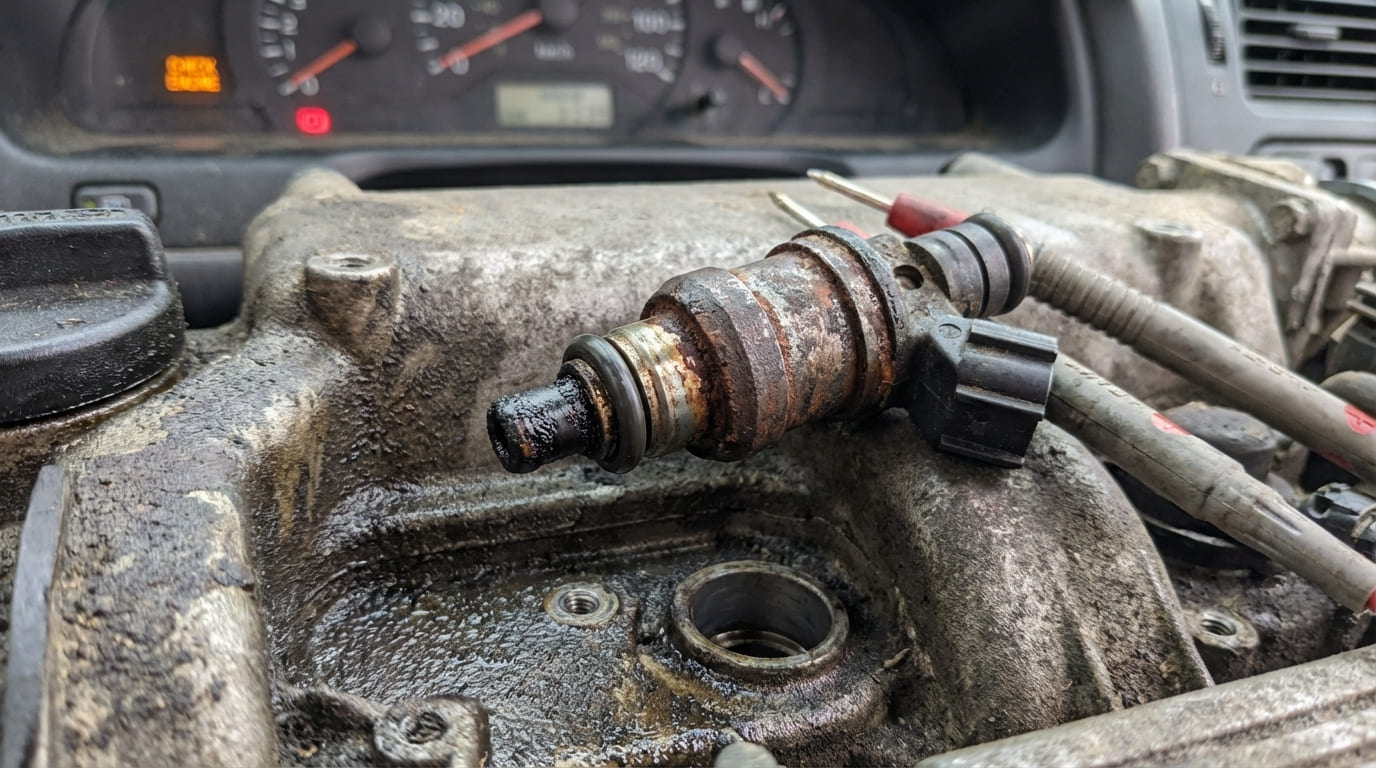
A clogged or restricted injector delivers less fuel than needed, creating a lean air-fuel mixture. This leads to weak or incomplete combustion, especially under load. Common causes:
- Fuel varnish and debris from poor-quality gasoline
- Blocked internal filter baskets
- Sticky pintle due to carbon buildup
In my shop, we always check fuel quality history. Vehicles fueled at discount stations often show early clogging. Ask the owner where they refuel—it’s a diagnostic clue.
Rich Misfire (Too Much Fuel)
A leaking or stuck-open injector floods its cylinder. Excess fuel can quench the spark plug or wash down cylinder walls, reducing compression seal and causing misfires. These often occur after hot restarts and come with a strong fuel smell.
Poor Spray Pattern
Even if fuel volume is correct, improper atomization causes misfires. Fuel that sprays unevenly or hits the piston crown doesn’t burn efficiently. This is common with carbon buildup on the nozzle tip or physical damage during service.
Common Injector Failures That Cause Misfires
| Failure Type | Symptoms | How to Check | Repair vs Replace |
|---|---|---|---|
| Clogged nozzle or filter | Lean misfire, rough idle, high STFT | Injector balance test, flow test | Replace if flow is down >15%; cleaning rarely restores full performance |
| Leaking injector | Hard hot starts, fuel odor, rich misfire | Leak-down test, sniff fuel rail after shutdown | Replace—cleaning won’t fix worn seals |
| Electrical failure (open/short) | Dead cylinder, P020X code | Ohmmeter test, scope current ramp | Replace—internal coil damage is irreversible |
| Stuck pintle (mechanical) | Intermittent misfire, delayed response | Scope test for pintle hump | Replace—mechanical binding won’t clear with cleaner |
| Flow rate drift | Subtle imbalance, no code | Dynamic balance test, fuel trims under load | Replace in pairs or set if imbalance exceeds 5% |
Step-by-Step Diagnostic Process
Never assume the injector is bad. Follow this proven sequence to avoid wasted time and money.
1. Confirm the Misfire and Isolate the Cylinder
Use an OBD2 scanner to check for P030X codes (e.g., P0302 = cylinder 2 misfire). Then monitor live misfire counters in Mode 6. A consistent count on one cylinder gives you a target.
2. Rule Out Ignition and Mechanical Issues First
Ignition problems are more common than fuel issues. Do this:
- Swap the coil and spark plug from the misfiring cylinder to another.
- Drive or idle and check if the misfire moves.
- If it moves, the problem is ignition-related.
- If it stays, move to compression testing.
Perform dry and wet compression tests. Low numbers that improve with oil suggest worn rings; consistent low numbers point to valves or head gasket. Only proceed to fuel if compression is good.
3. Verify Fuel System Health
Check fuel pressure and volume using a gauge. A weak pump or clogged filter can mimic injector problems. On returnless systems, ensure pressure holds for 5 minutes after shutdown. A rapid drop suggests a leaking injector or regulator.
4. Test the Injector Directly
Now focus on the suspect injector:
- Resistance check: Use a multimeter. High-impedance injectors typically read 12–16 ohms. Out of range? Replace it.
- Injector balance test: Use a scan tool to disable each injector one at a time. A healthy cylinder drops RPM by 100–200. A clogged injector causes a smaller drop; a leaking one may cause a larger drop due to enrichment.
- Current ramp test (best method): Use a lab scope with a current clamp. Look for the pintle opening “hump” and consistent coil saturation. Differences between injectors reveal mechanical lag or weak solenoids.
Situation: 2014 F-150 with P0303 after new coil and plug. Compression and fuel pressure good.
Diagnosis: Balance test showed minimal RPM drop. Resistance normal. Scope revealed delayed pintle hump—injector opening late.
Fix: Replaced injector. Misfire gone.
Master Tip: Electrical specs can pass while mechanical response fails. Always use dynamic testing when in doubt.
Situation: High-mileage Camry, P0301 returned after injector replacement.
Diagnosis: New injector was leaking. Intake port full of carbon from EGR/PCV issues.
Fix: Cleaned intake, replaced PCV valve, installed new injector with updated seal.
Master Tip: Address root causes. Carboned intakes overwhelm even new injectors.
Situation: Turbo VW stumbling under boost, no misfire code.
Diagnosis: STFT hit +25% under load. Flow test showed one injector 30% low.
Fix: Replaced weak injector.
Master Tip: Not all misfires trigger codes. Watch fuel trims—they tell the real story under load.
Best Practices for Injector Service
Proper installation prevents comebacks. Follow these field-tested tips:
- ✅ Clean injector bores and fuel rail before reassembly. Dirt causes leaks and flow issues.
- ✅ Replace all O-rings and seals. Reusing them risks leaks, especially on GDI systems with 2,000+ psi pressure.
- ✅ Torque fuel rail bolts to spec. Over-tightening warps rails and damages injectors.
- ⚠️ Avoid generic fuel additives for clogs. Some damage internal seals or leave gummy residue.
- ⚠️ Never swap injectors without logging positions. Modern ECUs adapt to individual injector flow.
- ⚠️ Don’t assume new injectors are identical. Flow can vary ±5%. For critical applications, request matched sets.
Repair Options and Cost Guide
Deciding whether to clean or replace depends on severity and cost:
| Option | Cost Range | Effectiveness | Best Use Case |
|---|---|---|---|
| On-car cleaning kit | $50–$150 (DIY to shop) | Fair for mild deposits | Early symptoms, no misfire code |
| Off-car ultrasonic cleaning | $100–$200 | Good, but inconsistent | Moderate clogs, budget constraint |
| Injector replacement (OEM) | $300–$800 (parts + labor) | Excellent | Leaking, stuck, or electrically failed |
| Aftermarket injectors (quality brands) | $200–$600 | Very good | High-mileage replacements, verified flow data |
In my shop, we rarely clean injectors anymore. Labor is the same for clean or replace. For less than $100 more, new units offer reliability and come with warranty. It’s the smarter long-term fix.
Final Verification After Repair
Clearing codes isn’t enough. Verify the fix:
- Clear DTCs and drive through a full cycle (city, highway, hot restart).
- Recheck Mode 6 misfire counters—should show zero or near-zero counts.
- Monitor STFT and LTFT. Values should stabilize within ±10%. Sustained trims beyond that mean another issue remains.
Faulty fuel injectors absolutely cause engine misfires—but they’re not the first suspect. Use a systematic approach: confirm the misfire, rule out ignition and mechanical faults, verify fuel system health, then test the injector dynamically. With the right tools and mindset, you’ll fix it right the first time.