Replacing a timing belt isn’t just about the belt. On most engines, it’s a system job. Skip a worn tensioner or idler, and you risk early failure. Skip the water pump, and you might pay double labor later. This guide breaks down exactly what’s in a typical kit, what you should replace, and why—based on real-world comebacks and shop experience.
What’s Actually in a Timing Belt Kit?
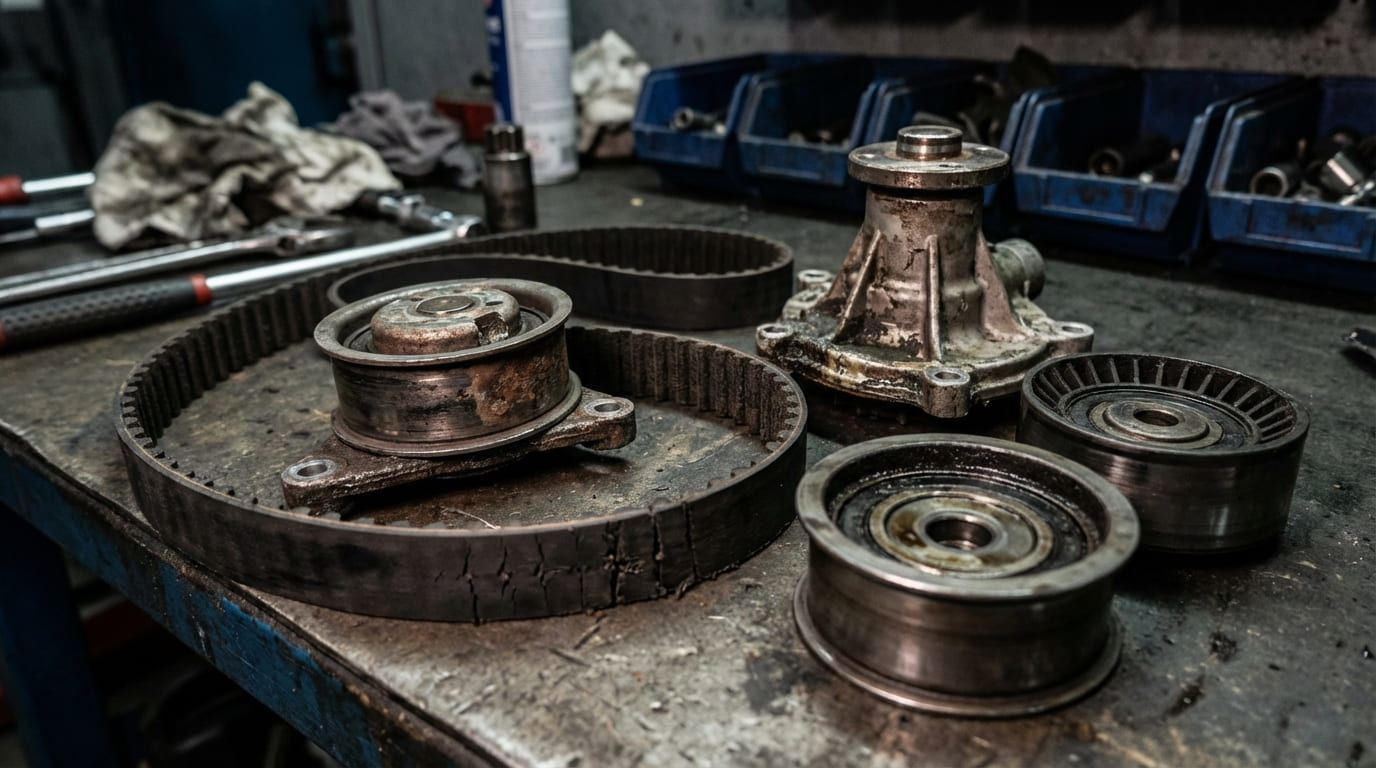
A complete timing belt kit includes more than just the belt. The exact contents depend on the engine, but here’s what you’ll typically find—and what you should expect to replace.
Core Components (Always Included)
These are the essentials every kit must have. Failure in any one can lead to engine damage, especially on interference engines.
| Component | Function | Replacement Recommended? | Cost Range (Part Only) |
|---|---|---|---|
| Timing Belt | Synchronizes crankshaft and camshaft rotation. Keeps valves and pistons from colliding. | Always | $40–$120 |
| Tensioner | Maintains correct belt tension. Prevents slippage and flutter. | Always | $30–$90 |
| Idler Pulley(s) | Guides belt path, increases wrap angle, prevents misalignment. | Always | $20–$60 each |
Commonly Included (But Not Always)
These parts aren’t always in basic kits, but they should be replaced during service due to labor access and wear patterns.
Water Pump
On most timing-belt-driven engines, the water pump is buried behind the timing cover. If it’s driven by the timing belt, replace it now—even if it seems fine.
How to Check: Spin the pulley by hand. Any roughness, grinding, or play means the bearing is failing. Look for coolant stains or rust at the weep hole.
Cost: $60–$150 (OEM), $30–$90 (aftermarket). Labor to replace later: 3–6 hours.
In my shop, we always replace the water pump on belt-driven engines. The labor overlap is too big to ignore. One seized bearing can destroy a new belt and engine.
Camshaft and Crankshaft Front Seals
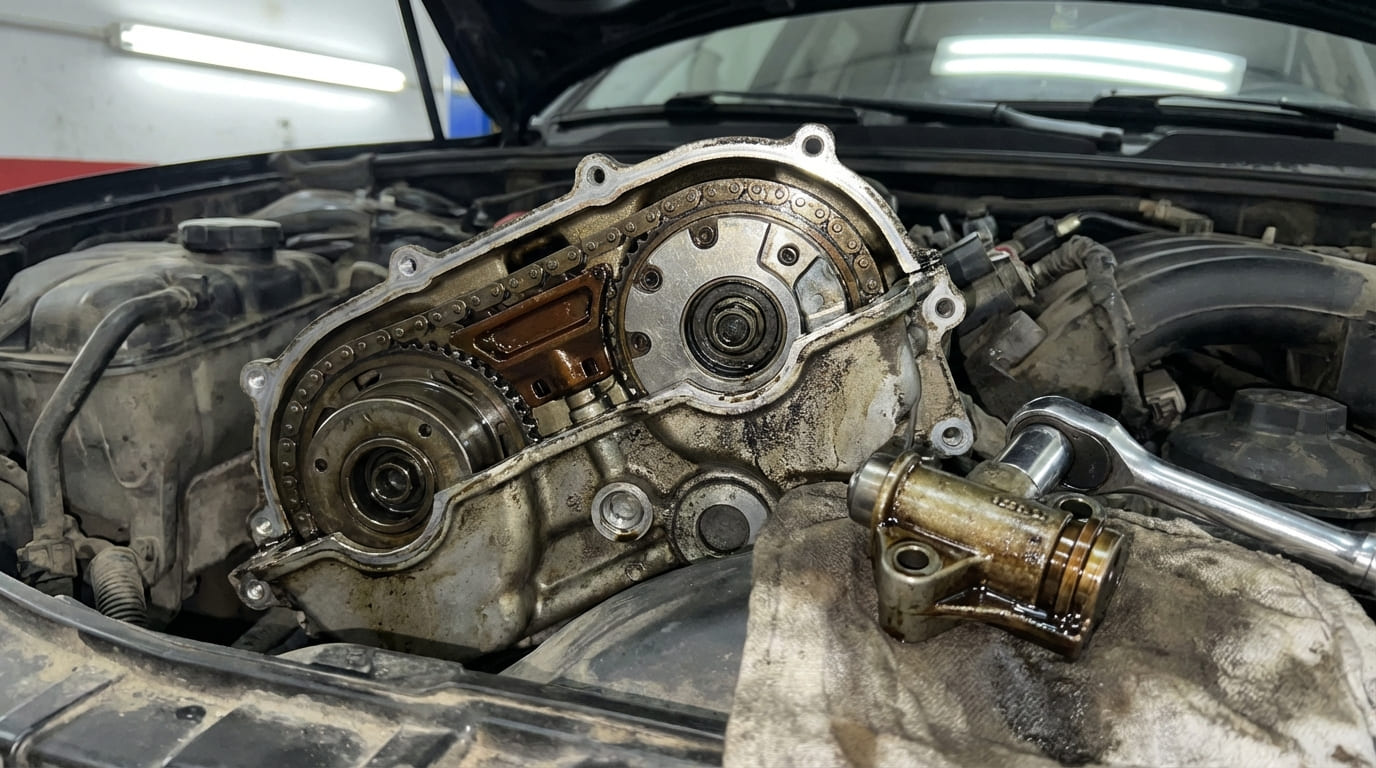
These oil seals are right behind the timing cover. They’re cheap and fail over time due to heat and age.
How to Check: Look for oil seepage at the front of the engine. A damp or oily timing cover is a red flag. Even a small leak can contaminate the belt.
Cost: $10–$25 each. Not worth reusing.
I’ve seen belts fail in 10,000 miles because a reused cam seal wept oil. The belt didn’t break—it slipped. Diagnosed as a “jumped timing,” but the real culprit was a $15 seal.
Hardware and Gaskets
Some kits include new bolts for the tensioner, idlers, or water pump. These are often torque-to-yield (TTY) fasteners and should never be reused.
Also included: water pump gaskets, O-rings, or timing cover gaskets. Always replace these—reusing old gaskets is a leak waiting to happen.
Should You Replace All Components?
Short answer: Yes, replace everything in the kit—and the water pump if it’s belt-driven.
The labor to access the timing belt is 80–90% of the job. The incremental cost of replacing wear-prone parts is minimal compared to the risk of a repeat teardown—or engine damage.
Failure Risk vs. Replacement Logic
Here’s a breakdown of what happens if you skip components:
| Component | Likelihood of Failure if Reused | Consequence | Repair vs Replace? |
|---|---|---|---|
| Timing Belt | High at interval | Engine damage (interference engines) | Replace—non-negotiable |
| Tensioner | Medium-High | Belt slip, jump, or failure | Replace—internal wear is invisible |
| Idler Pulley | Medium | Bearing seizure, belt misalignment | Replace—cheap insurance |
| Water Pump | Medium | Overheating, belt stoppage, engine damage | Replace if belt-driven |
| Cam/Crank Seals | Low-Medium | Oil leak, belt contamination | Replace—easy access, low cost |
Situation: A 2012 Subaru Outback came in with a jumped timing belt. The owner said the belt and tensioner were replaced 18 months prior—just not the water pump.
Discovery: The water pump bearing had seized enough to drag the belt. The shop skipped it to save $80.
Lesson: On belt-driven pumps, replacement isn’t optional. The labor justifies it, and the risk is too high.
Situation: A 2008 Honda Accord developed a chirping noise 5,000 miles after a timing belt job.
Discovery: An idler pulley was slightly misaligned due to over-torqued bolt. Belt wasn’t failing—yet—but flexing abnormally.
Lesson: Correct installation matters. Clean threads, use thread locker if specified, and torque to spec. Aluminum housings strip easily.
Best Practices for Timing Belt Service
Follow these steps to avoid comebacks and ensure a long-lasting repair.
- ✅ Replace the timing belt, tensioner, and all idler pulleys—always.
- ✅ Replace the water pump if it’s driven by the timing belt. Don’t gamble.
- ✅ Replace cam and crank front seals. They’re in the way—replace them.
- ✅ Use new hardware. Never reuse torque-to-yield (TTY) bolts.
- ✅ Clean all threaded holes with a tap and compressed air. Debris alters torque values.
- ⚠️ Don’t assume timing marks are correct. Some engines require specific cam positions (e.g., lobes up). Consult the factory manual.
- ⚠️ Don’t over-tighten tensioner or idler bolts. Specs are often 15–22 ft-lbs—exceeding them can strip aluminum mounts.
- ⚠️ Don’t skip post-installation checks. Rotate the engine two full turns by hand and recheck timing alignment.
Post-Installation Verification
Before starting the engine, do these checks:
- Rotate the crankshaft two full revolutions by hand. It should turn smoothly. Recheck timing marks—cams can shift slightly under spring load.
- Verify belt tension using the manufacturer’s method: deflection gauge, torque wrench, or stethoscope for hum.
- Pressure-test the cooling system to at least 15 psi. Hold for 15 minutes. Check for leaks at the water pump, housing, and hoses.
- After startup, listen carefully. A faint whine may settle, but grinding, chirping, or squealing means trouble.
Timing belt intervals vary: 60,000 to 100,000 miles or 7 years, whichever comes first. Check your factory manual. In hot climates or with frequent short trips, inspect early. I’ve seen belts fail at 50,000 miles and others last 120,000—condition matters more than mileage alone.
When in doubt, inspect. Pull the inspection cover and look for cracks, missing teeth, or glazing. If the belt looks shiny or has small cracks on the ribs, it’s done. Don’t wait for the interval if the car’s been overheating or driven hard.