Diagnosing a failing fuel pump starts with recognizing the real symptoms—not assumptions. Many issues mimic fuel pump failure, but costly mistakes happen when you skip testing. As a master mechanic, I rely on direct diagnostics: pressure, volume, electrical checks, and live data. Here’s exactly what to look for, how to test it, and when to repair or replace.
How to Diagnose a Failing Fuel Pump
Don’t guess—test. A proper diagnosis combines symptom analysis with hard data. Below are the key signs of fuel pump failure, paired with actionable diagnostic steps.
1. Engine Cranks But Won’t Start
This is often the first red flag. The starter turns the engine, but no combustion occurs—usually due to insufficient fuel pressure.
How to Check:
- Turn the key to “ON” (do not start). Listen near the fuel tank for a 2–3 second hum from the pump.
- No noise? Test for power and ground at the fuel pump connector using a multimeter.
- Use a fuel pressure gauge at the fuel rail. Compare reading to factory specs (typically 40–60 psi for port-injected engines).
If pressure is zero and no power reaches the pump, check the fuse, relay, and fuel pump driver module (if equipped). A failed relay is far more common—and cheaper—than a dead pump.
2. Engine Stalls or Hesitates Under Load
Power drops during acceleration or uphill driving indicate the pump can’t maintain pressure when demand spikes.
How to Check:
- Perform a live fuel pressure test while driving. Pressure should stay within 5–10 psi of base spec under full throttle.
- If pressure drops below 30 psi on a typical system, suspect the pump or a restriction.
- Run a fuel volume test: collect fuel output in a graduated container over 30 seconds (usually 0.5–1 pint). Low volume confirms pump wear.
In my shop, we always road-test with a gauge clamped in view. A pump that reads fine at idle but collapses under load is a ticking time bomb—replace it before it strands the driver.
3. Misfires or Rough Idling
Lean misfires at idle or light load can stem from inconsistent fuel delivery, even if pressure appears normal.
How to Check:
- Scan for fuel trim values. Long-term fuel trim (LTFT) consistently above +10% indicates a lean condition.
- Monitor fuel pressure while idling. Fluctuations suggest pump wear or clogged inlet sock.
- Perform an injector balance test. If all cylinders misfire equally, the issue is system-wide—pointing to fuel, not spark or injectors.
A failing pump may deliver adequate pressure but lack consistent flow at low demand, causing idle hiccups.
4. Loud Whining or Buzzing from the Fuel Tank
A high-pitched noise from the rear of the vehicle often signals internal pump wear—especially if it’s new or worsening.
How to Check:
- Use a mechanic’s stethoscope or long screwdriver to pinpoint the sound at the fuel tank.
- Compare noise level to a known-good vehicle of the same model.
- Check fuel level—low fuel reduces cooling and increases pump noise.
I’ve seen pumps go noisy after 100k miles and keep working for years. Noise alone isn’t a death sentence—test pressure and volume first.
5. Reduced Fuel Economy
A gradual MPG drop can stem from incorrect fuel pressure. Low pressure causes lean mixtures; high pressure causes rich conditions—both hurt efficiency.
How to Check:
- Scan for oxygen sensor readings. Consistently lean O2 values paired with high fuel trims suggest delivery issues.
- Confirm with a fuel pressure test. Out-of-spec pressure requires correction.
Don’t rely on MPG alone—it’s a clue, not a diagnosis.
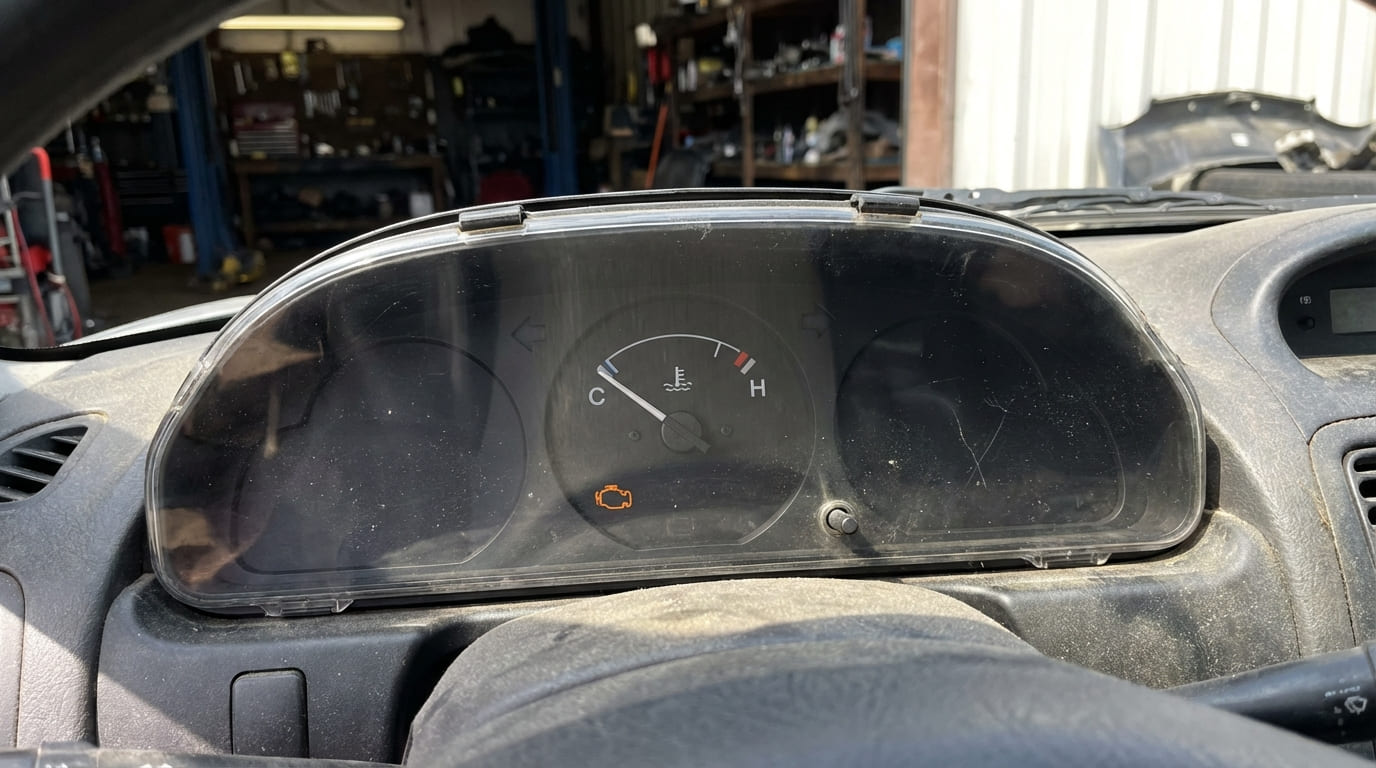
6. Check Engine Light with Fuel-Related Codes
Modern ECUs detect fuel delivery problems. Common codes include:
- P0087 – Fuel Rail Pressure Too Low
- P0171/P0174 – System Too Lean (Bank 1/Bank 2)
- P0300 – Random Misfire
How to Check:
- Retrieve freeze frame data: Was the code set under load, idle, or deceleration?
- Test fuel pressure under the same conditions.
- Inspect vacuum lines to the fuel pressure regulator—a leak can mimic low pressure.
I once fixed a P0087 with a $12 vacuum hose. Always rule out regulators, leaks, and sensors before blaming the pump.
Differentiating Fuel Pump Failure From Other Issues
Replacing the pump without testing leads to comebacks. Use this diagnostic roadmap to avoid costly errors.
| Symptom | Most Likely Causes | Diagnostic Priority | Notes |
|---|---|---|---|
| No start, no fuel pressure | Blown fuse, failed relay, wiring fault, dead pump | Electrical first, then pump | Verify power and ground at the pump connector—don’t assume |
| Hesitation under load | Weak pump, clogged filter, restricted line, inlet sock blockage | Pressure/volume test, inspect filter | Check tank for debris; clean or replace inlet sock |
| Rough idle, high fuel trims | Clogged injectors, vacuum leak, failing pump | Scan data, balance test, pressure test | Look for cylinder-specific patterns in trims |
| Loud whine from tank | Aging pump, low fuel, clogged inlet sock | Listen and test pressure | Some pumps are naturally noisier—compare to known good |
| P0087 code | Pump, regulator, leak, ECU command issue | Check pressure, regulator, freeze frame | Don’t assume pump—verify system behavior under load |
Repair vs. Replace: Cost and Viability
Fuel pumps range from $70 to $300+ for the part. Labor varies widely:
- In-tank pumps: $300–$800+ (requires fuel tank drop)
- External pumps: $150–$400 (easier access)
Repair vs. Replace Logic:
- If electrical fault (fuse, relay, wiring): repair—costs under $50.
- If pump is weak but functional: replace pump and filter (if accessible).
- If pump failed due to contamination: clean tank, replace sock, and install new pump.
In my shop, we always replace the fuel filter with a new pump—even if it’s “non-serviceable.” A clogged filter is the #1 cause of premature pump failure.
Best Practices for Diagnosis and Replacement
- ✅ Test pressure and volume: Pressure alone doesn’t tell the full story. Volume confirms sustained flow.
- ✅ Check electrical supply: Verify 12V and ground at the pump connector before replacement.
- ✅ Inspect the fuel tank: Remove and check for rust, debris, or clogged inlet sock.
- ✅ Use OEM specs: Factory service manuals provide correct test procedures and torque values.
- ⚠️ Avoid pump replacement without testing: Electrical issues cause 30% of no-starts blamed on pumps.
- ⚠️ Don’t ignore fuel trims: They reveal long-term delivery trends better than any scan tool.
- ⚠️ Don’t skip the volume test: A pump can hold pressure but fail under demand.
Real-World Lessons from the Shop
Situation: 2012 F-150, no start. No fuel pressure, no pump noise.
Assumption: Failed fuel pump.
Diagnosis: No power at pump connector. Fuse appeared good but tested open.
Fix: Replaced fuse—engine started immediately.
Lesson: Always test electrical supply. A $5 fuse beats a $300 pump job.
Situation: 2008 Camry, hesitation at highway speed, P0171 code.
Assumption: Vacuum leak or MAF issue.
Diagnosis: Fuel pressure dropped under load. Pump tested weak—but inlet sock was clogged with sediment.
Fix: Cleaned tank, replaced pump and sock.
Lesson: Contamination kills pumps. Always inspect the tank.
Situation: 2015 Honda Accord, rough idle, whining noise, high fuel trims.
Assumption: Failing fuel pump.
Diagnosis: Pressure dropped on throttle snap. Found cracked vacuum hose to fuel pressure regulator.
Fix: Replaced hose—pressure stabilized, noise unchanged but harmless.
Lesson: Regulator issues mimic pump failure. Test the entire system.
Accurate fuel pump diagnosis comes down to data, not noise or codes alone. Test pressure, volume, and electrical supply. Use live data to confirm lean conditions. And always rule out cheaper fixes first. When replacement is needed, clean the tank, replace the filter, and use quality parts. Your wallet—and your car—will thank you.