In my experience, a clogged catalytic converter often shows up as a gradual decline in performance rather than a sudden failure. Many technicians jump straight to replacing the converter when they see a P0420 code, but I’ve found that doing so without proper diagnosis can lead to recurring issues—and unhappy customers. Let’s walk through what I’ve learned over two decades of diagnosing exhaust system problems, starting with the symptoms and moving into verification and root causes.
Common Symptoms of a Clogged Catalytic Converter
A restricted catalytic converter increases exhaust backpressure, which directly impacts engine efficiency and drivability. These symptoms typically develop gradually but become severe as the blockage worsens. Recognizing them early can prevent misdiagnosis and unnecessary repairs.
Performance and Drivability Issues
The most noticeable sign of a clogged converter is reduced engine performance. Drivers often describe it as a constant drag or lack of power, especially under load. This happens because exhaust gases can’t escape efficiently, reducing the engine’s ability to take in fresh air and fuel.
- Sluggish acceleration, particularly uphill or during merging
- Difficulty maintaining highway speeds
- Engine feels “loaded” or like the parking brake is engaged
Fuel economy often drops by 10–20% due to increased pumping losses. The engine control module (ECM) may try to compensate, masking symptoms temporarily.
Check Engine Light and Diagnostic Trouble Codes
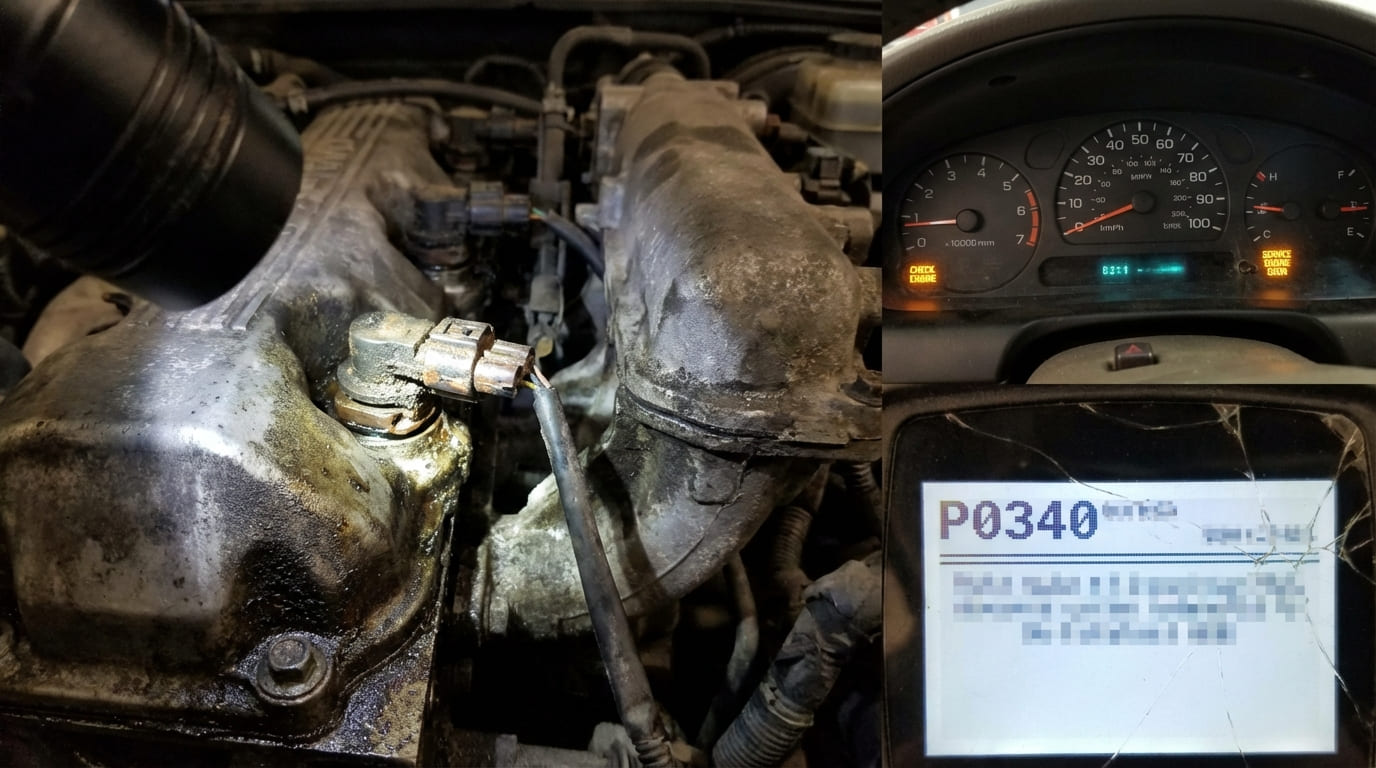
The most common codes are P0420 and P0430, indicating low catalyst efficiency. However, these codes do not confirm a clogged converter—they only indicate the downstream oxygen sensor sees unstable oxygen levels.
- P0420: Catalyst System Efficiency Below Threshold (Bank 1)
- P0430: Catalyst System Efficiency Below Threshold (Bank 2)
- Secondary codes like P0171 (System Too Lean) or P0172 (System Too Rich) may appear due to exhaust backpressure affecting combustion
In my shop, we never replace a catalytic converter based solely on a P0420 code. Always check fuel trims, misfire counters, and live O2 sensor data first. More than half the time, the real issue is upstream—like a vacuum leak or misfiring cylinder.
Unusual Exhaust Odors and Engine Behavior
A strong sulfur or rotten egg smell usually means the converter is overwhelmed by excess fuel or coolant contamination. The catalyst can’t fully process hydrogen sulfide, allowing it to pass through.
Rough idling or stalling occurs because exhaust gases can’t clear the cylinders efficiently at low RPM. This is often mistaken for a faulty idle air control valve or vacuum leak.
- Engine stalls at idle or low speeds
- Hard start or no-start condition in extreme cases
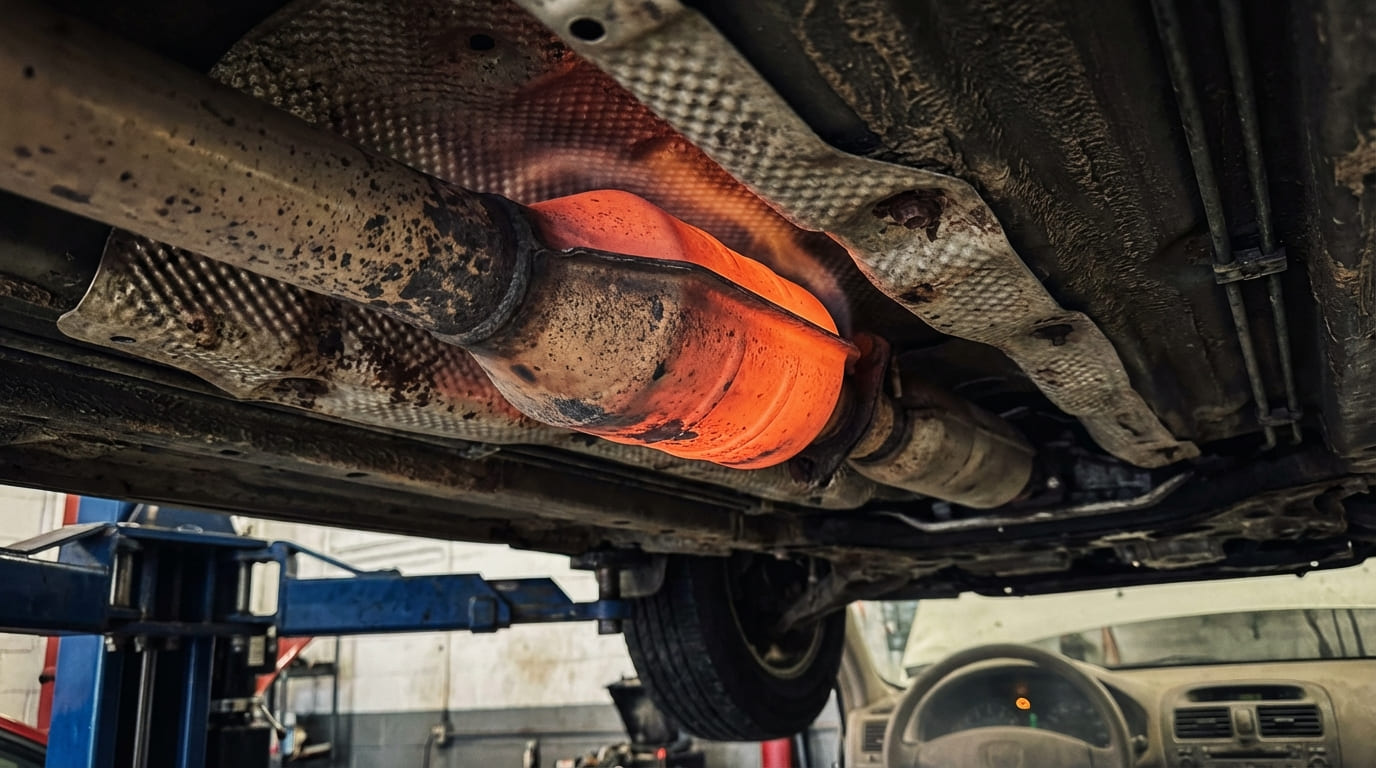
- Red-hot exhaust manifold or catalytic converter under load—visible in dark conditions
If the exhaust glows red, shut the engine off immediately. This indicates severe restriction or repeated misfires. It’s a fire risk and means the converter is likely destroyed.
Diagnostic Verification Steps
Before replacing a catalytic converter—often a $500–$2,000 part—verify the restriction with objective tests. Always rule out engine issues first.
Exhaust Backpressure Test
This is the most reliable way to confirm a clog. Use a backpressure gauge inserted into the upstream oxygen sensor port.
- Warm engine to operating temperature
- Remove upstream O2 sensor and install gauge
- Record pressure at idle and 2,500 RPM
Typical thresholds:
| Condition | Acceptable Pressure |
|---|---|
| Idle | Less than 1.25 PSI |
| 2,500 RPM | Less than 2.5 PSI |
If readings exceed these values, restriction is likely. Confirm the sensor port is clean and the gauge is calibrated.
Oxygen Sensor Data Analysis
Use an OBD2 scanner to view live data from upstream and downstream O2 sensors.
- Healthy converter: Downstream O2 sensor should be stable (little fluctuation)
- Failing converter: Downstream sensor mimics upstream sensor (high activity)
But caution: a rich-running engine can cause similar patterns. Always check fuel trims:
- Long-term fuel trim above +10%: likely chronic rich condition
- Long-term fuel trim below -10%: possible vacuum leak or lean condition
Infrared Temperature Test
A working converter generates heat as it burns unburned hydrocarbons. Use an infrared thermometer on the inlet and outlet.
- Test at operating temperature, under light throttle (2,000 RPM in park/neutral)
- Healthy converter: outlet should be 50–100°F hotter than inlet
If the outlet is cooler, the catalyst isn’t lit off—indicating inefficiency or blockage.
Visual and Physical Inspection
Check the converter housing for:
- Dents, crushing, or impact damage
- Blue or purple discoloration (sign of extreme heat)
- Rattling noise when shaken (broken substrate)
A damaged substrate can break loose and cause intermittent or complete blockage.
Exhaust Disconnection Test (Last Resort)
If other tests are inconclusive, loosen the exhaust flange downstream of the converter and briefly run the engine.
- Significant power recovery = restriction confirmed
- Do not perform in enclosed areas—exhaust fumes are deadly
- Wear hearing protection—exhaust will be extremely loud
I only use this test when other diagnostics are ambiguous. It’s effective but risky. Always place the vehicle on ramps, not jack stands, and ensure no flammable debris is underneath.
Root Causes and Repair Viability
Replacing a clogged converter without fixing the root cause leads to repeat failure. Most clogs are caused by engine problems that dump harmful substances into the exhaust.
- Misfires: Unburned fuel ignites in the converter, melting the substrate
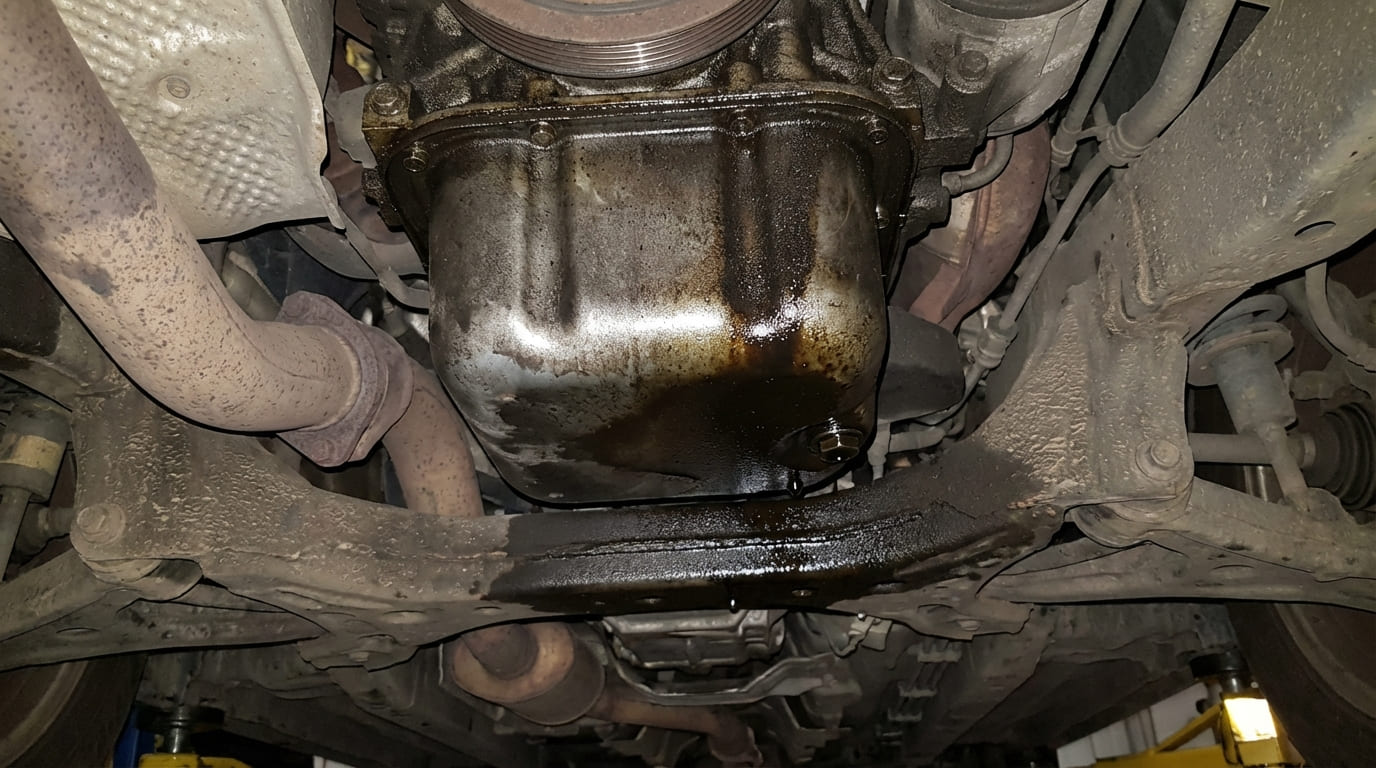
- Oil consumption: Ash from burning oil coats and blocks the catalyst (common in high-mileage engines)
- Rich fuel mixture: Overloads converter, causing overheating and meltdown
- Coolant leak (blown head gasket): Silicates poison the catalyst
- Contaminated fuel: Leaded or high-silicon fuels destroy the washcoat
- Physical damage: Road debris can crack the ceramic core
- Normal aging: Converters degrade after 100,000–150,000 miles
Repair vs. Replace: Cost and Longevity
Original equipment (OE) converters cost $700–$2,000 installed. Aftermarket units range from $300–$800. But replacement is only viable if:
- Engine is mechanically sound (no oil/coolant burning)
- No active misfires or fuel system faults
- Exhaust system is intact and leak-free
If engine issues persist, even a new converter will fail within months.
In my shop, we always inspect spark plugs, check compression, and scan for oil consumption before approving a converter replacement. A $200 diagnostic saves a $1,500 comeback.
Diagnostic Scenarios and Likely Causes
| Symptom | Most Likely Causes | Less Common But Possible Causes |
|---|---|---|
| P0420 + reduced power | Misfire history, rich fuel condition, converter age | Exhaust leak before downstream O2 sensor, faulty O2 sensor |
| Rotten egg smell | Rich fuel mixture, high sulfur fuel | Coolant contamination, low-quality converter |
| Engine stalls at idle | Severe exhaust restriction, clogged converter | Collapsed muffler, EGR valve stuck open, restricted exhaust pipe |
| Red-hot exhaust manifold | Repeated misfires, melted converter substrate | Ignition timing too far advanced, lean misfire |
Situation: A 2012 V6 SUV came in with P0420 and poor fuel economy. The owner had replaced the upstream O2 sensor twice.
Initial Assumption: Bad catalytic converter.
Deep Dive/Discovery: Live data showed long-term fuel trims at +14%. A smoke test revealed a vacuum leak at the intake manifold gasket. After repair, the code cleared and didn’t return.
The Nuanced Lesson Learned: Not every P0420 means a bad converter. Small, chronic issues like vacuum leaks can shift combustion enough to fool the system. Always validate engine health first.
Situation: A turbocharged sedan had sudden power loss and a red-hot downpipe after a hard launch.
Initial Assumption: Blown turbo or boost leak.
Deep Dive/Discovery: Backpressure test showed 8 PSI at 3,000 RPM. Removal revealed the converter substrate had melted into a solid block. Inspection found a history of ignored misfire codes.
The Nuanced Lesson Learned: Turbo engines run hotter. A single severe misfire can destroy the catalyst. Never dismiss misfire codes—even if intermittent.
Situation: A pickup truck wouldn’t start after sitting overnight. Cranked strongly but no ignition.
Initial Assumption: Fuel pump or ignition failure.
Deep Dive/Discovery: Removing the upstream O2 sensor released built-up pressure. Engine started immediately. Backpressure gauge read over 15 PSI during cranking—complete blockage.
The Nuanced Lesson Learned: Full exhaust blockage mimics no-fuel or no-spark conditions. Always consider exhaust flow in no-start diagnostics—especially on high-mileage vehicles.
The catalytic converter is a symptom recorder, not a failure point. It rarely fails without help from elsewhere in the engine. Before recommending replacement, verify restriction with multiple tests and confirm engine health. Consult the factory service manual for vehicle-specific backpressure and temperature specs—what’s normal for a diesel truck isn’t the same as for a hybrid sedan.