The engine thermostat is a temperature-sensitive valve in the cooling system, usually placed at the engine’s outlet to the radiator. It controls coolant flow to maintain optimal engine temperature—typically between 85–105°C (185–221°F). Its job isn’t just preventing overheating; it ensures the engine reaches operating temperature quickly and stays there. This affects fuel efficiency, emissions, heater performance, and engine longevity. When the thermostat fails, symptoms often mimic other cooling system issues, so accurate diagnosis is critical before replacement.
How the Thermostat Works
Most thermostats use a wax pellet that expands as the engine warms. This expansion pushes a piston to open the valve, allowing coolant to flow through the radiator. The process is gradual, not binary—think of it as a throttle for heat. As temperatures drop, a spring closes the valve, restricting flow and helping the engine retain heat.
Coolant Flow Control
- Cold engine: Valve remains closed. Coolant circulates only within the engine (short-loop), speeding up warm-up.
- Approaching operating temp: Wax expands, opening the valve gradually. Coolant begins flowing through the radiator.
- At operating temperature: Thermostat modulates to maintain stability—partially open or closed as needed.
- Overheating: Valve opens fully. If temps remain high, the root cause (like a clogged radiator or failed water pump) must be addressed.
Why Temperature Regulation Matters
Proper engine temperature isn’t just about avoiding overheating. It directly impacts performance, emissions, and comfort.
- Fuel efficiency: Cold engines burn fuel inefficiently. The thermostat helps reach optimal combustion temps faster.
- Emissions: Catalytic converters need high exhaust temps to function. A slow warm-up increases hydrocarbon and CO emissions.
- Engine protection: Stable temps reduce thermal stress on aluminum heads and gaskets, preventing warpage and leaks.
- Cabin heat: A stuck-open thermostat delays heater output, especially in cold weather.
Types of Thermostats
- Mechanical (wax pellet): Opens at a set temperature (e.g., 88°C). Reliable, inexpensive ($20–$50), and widely used.
- Electronically controlled (map-controlled): Includes a heating element activated by the ECU. Allows advanced strategies like delayed warm-up or aggressive cooling under load. More expensive ($80–$150) and requires circuit testing.
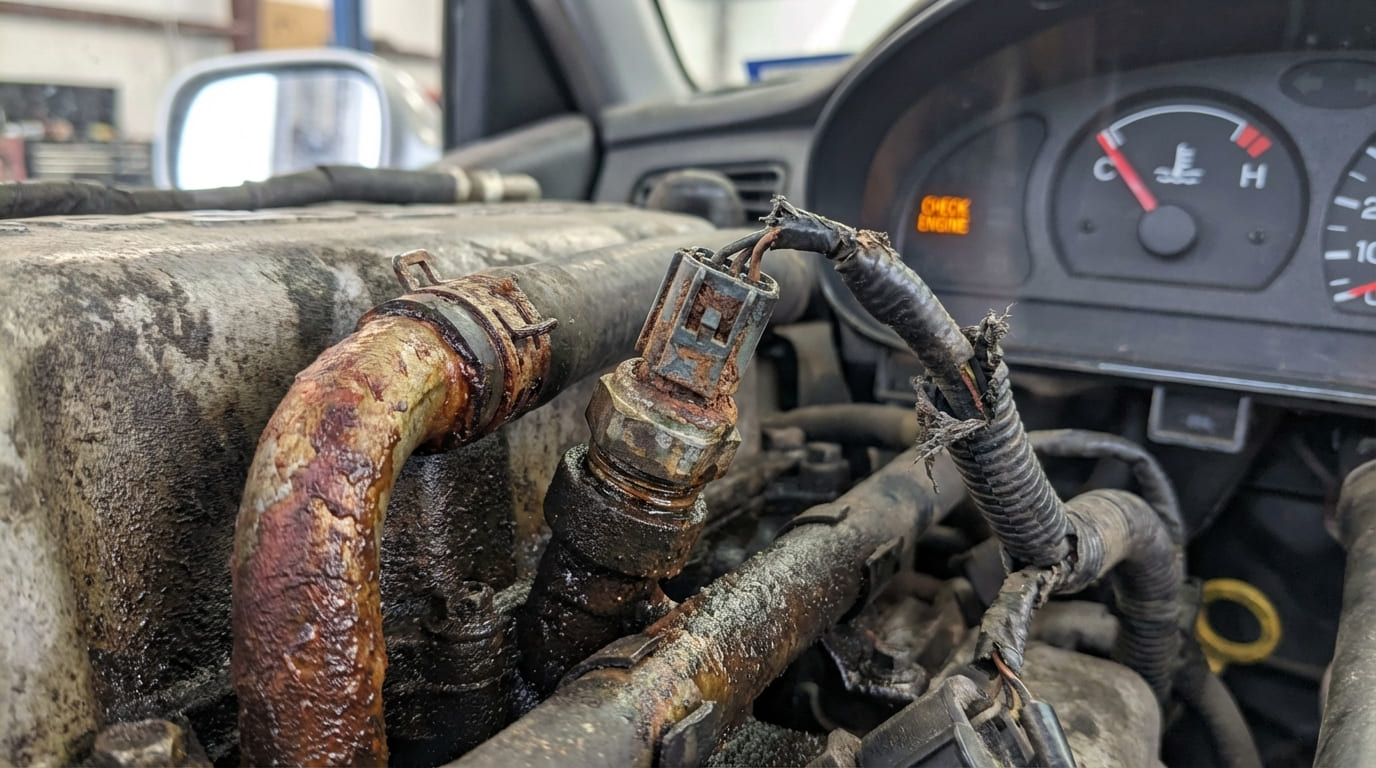
In my shop, we always test both mechanical and electrical function on electronic thermostats. A P0128 code might point to the thermostat, but a corroded connector or failed heater circuit can mimic failure. Never replace it blindly.
Common Failures and How to Diagnose Them
Thermostats typically fail in three ways: stuck closed, stuck open, or sluggish. Each has distinct symptoms and diagnostic paths.
Stuck Closed
Most dangerous failure—can lead to rapid overheating.
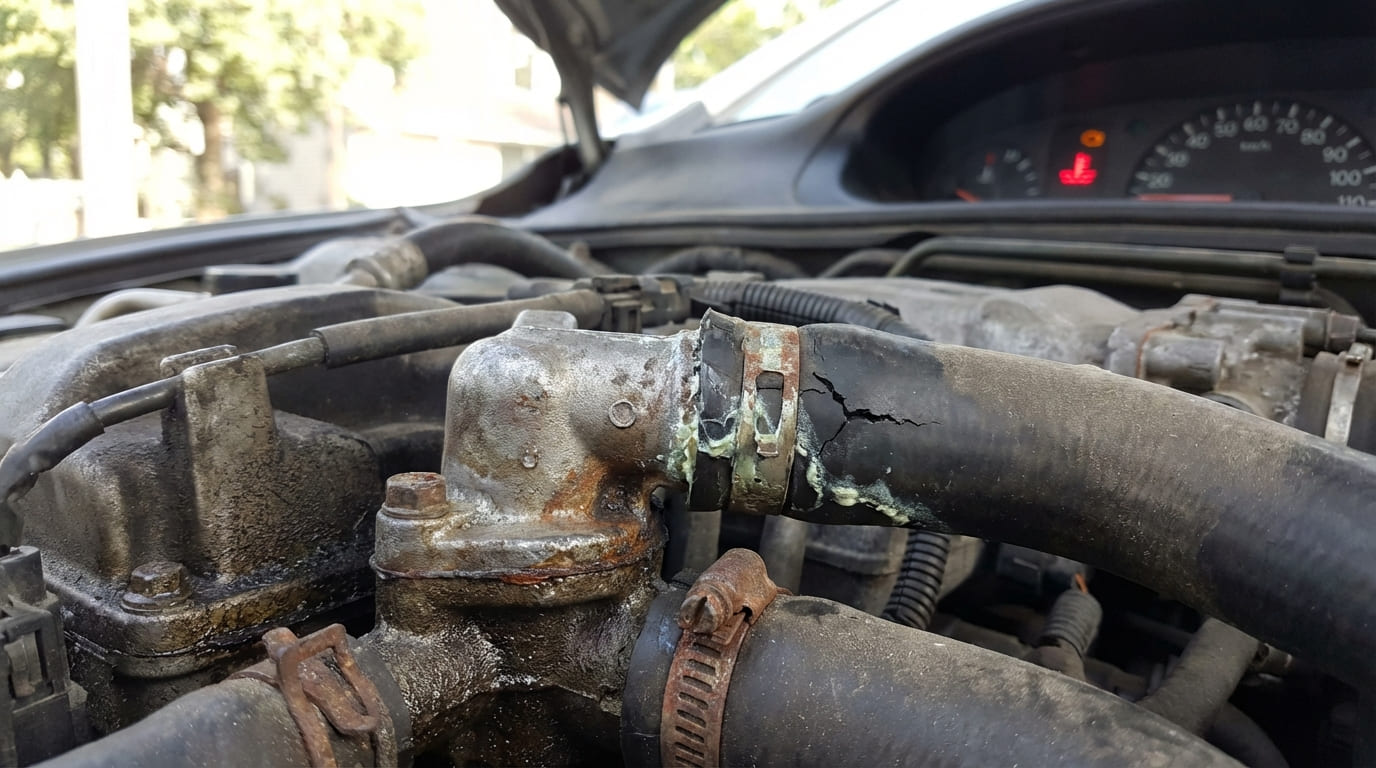
- Symptoms: Fast-rising temp gauge, steam from hood, coolant boil-over.
- How to check: Start engine cold. Use an infrared thermometer on the upper radiator hose. It should stay cool for 5–10 minutes. If engine overheats and hose remains cold, thermostat isn’t opening.
- Caution: Rule out a collapsed radiator hose or blockage. Internal liner collapse can block flow even with a good thermostat.
Stuck Open
Engine runs too cold, hurting efficiency and comfort.
- Symptoms: Temp gauge below normal, weak heater, increased fuel consumption, P0128 code.
- How to check: Drive 15–20 minutes. Use OBD2 scanner to read live ECT (engine coolant temperature). Should reach 85–105°C. If stuck below 80°C, suspect thermostat—but first verify ECT sensor accuracy with infrared comparison.
- Cost note: Replacement usually $50–$120 including coolant. Consider flushing system if old coolant is present.
Sluggish or Inconsistent Response
Wax pellet degrades over time, causing delayed or erratic opening.
- Symptoms: Fluctuating temp gauge, intermittent heater, intermittent P0128.
- How to check: Log ECT data over multiple drive cycles. A healthy thermostat shows smooth rise and stable plateau. Hesitation or sudden jumps indicate failure.
- Master tip: Remove thermostat and test in a pot of water with a thermometer. Watch for smooth opening starting near rated temp (e.g., 85°C for an 88°C stat). If it sticks or jumps, replace it.
Repair vs Replace: Practical Advice
Thermostats are wear items. Replace every 100,000 miles or with cooling system work. Replacing a failed unit is cheaper and easier than repairing engine damage from overheating.
On high-mileage vehicles, I replace the thermostat preventively during water pump or radiator service. Labor is already there, and a $40 part can save a $2,000 head gasket job.
Best Practices for Replacement
- ✅ Replace the gasket or O-ring every time. Aged seals are a common leak source.
- ✅ Clean housing surfaces and bolt threads. Old gasket material or debris can cause leaks or misalignment.
- ✅ Position the jiggle valve (if present) at the highest point to help purge air.
- ⚠️ Never reuse torque-to-yield bolts. They stretch and lose clamping force. Reuse risks leaks.
- ⚠️ Match OEM specs exactly. Not all 88°C thermostats are interchangeable—flow rate and housing shape vary.
- ⚠️ Follow bleed procedure. Some systems require a scan tool to cycle electric bleed valves or the thermostat itself.
Real-World Diagnostic Table
| Symptom | Most Likely Cause | Less Common But Possible | Diagnostic Next Step |
|---|---|---|---|
| Engine overheats, upper hose cold | Thermostat stuck closed | Collapsed radiator hose, blockage in outlet | Inspect hose for internal collapse, check for debris |
| Engine runs cold, no heat | Thermostat stuck open | Faulty ECT sensor, programming issue (electronic stat) | Verify with OBD2 live data and infrared thermometer |
| Erratic temperature gauge | Sluggish or degrading thermostat | Air in system, failing water pump, bad radiator cap | Bleed cooling system, monitor ECT over multiple drives |
| P0128 code, slow warm-up | Failed or incorrect thermostat | Low coolant, cold ambient, ECU strategy | Check fill level, review freeze frame data, test stat in water |
Case Studies from the Bay
Situation: 2014 Toyota Camry with P0128. Heater took 15 minutes to warm up. ECT peaked at 78°C.
Assumption: Stuck-open thermostat.
Fix: Replaced thermostat—no change. Discovered corroded connector on electronic stat. Cleaned it, cleared codes, and system regulated normally.
Lesson: On electronic thermostats, test the circuit and connector before replacing the part.
Situation: 2007 Ford F-150 overheating at idle, fine at speed. No leaks.
Assumption: Water pump or radiator clog.
Fix: Thermostat looked good, but jiggle valve clogged with silicate gel from old coolant. Cleaned system, replaced coolant, problem resolved.
Lesson: Poor coolant maintenance can disable a functional thermostat. Flush old coolant, especially in aluminum engines.
Situation: 2012 VW Passat with fluctuating temps and P0128 six months after thermostat replacement.
Assumption: Bad new part.
Fix: Found over-torqued housing bolts warped the aluminum flange. Replaced housing, used correct torque (10 Nm), problem solved.
Lesson: Over-tightening can mimic thermostat failure. Always use a torque wrench and follow factory specs.
The thermostat is often blamed, but rarely the root cause. It’s usually a symptom of deeper issues—coolant neglect, electrical faults, or improper installation. Always diagnose before replacing. Test the system, not just the part. And remember: a well-maintained cooling system doesn’t just protect the engine—it ensures efficiency, comfort, and reliability. Consult the factory service manual for your specific vehicle. What works on one engine may ruin another.