In my shop, I’ve seen fuel injectors blamed for everything from hard starts to misfires—sometimes correctly, sometimes not. Over two decades, I’ve learned that understanding what injectors actually do, and how they do it, separates a guess from a diagnosis. This isn’t just about spraying fuel. It’s about precision, timing, and integration with the engine’s entire control system. If your car runs rough, misfires, or fails emissions, a faulty injector could be the culprit—but so could dozens of other issues. The key is knowing how to test, not assume.
Fuel Injector Primary Function
Fuel injectors deliver a precise amount of fuel at the right time and in the right form to support clean, efficient combustion. They’re not just on/off switches—they’re high-speed, computer-controlled valves calibrated to millisecond accuracy. When they fail, performance, fuel economy, and emissions suffer.
Fuel Delivery and Atomization
The injector’s job starts with metering fuel based on engine demand. The ECU calculates how much fuel is needed and sends a pulse signal to open the injector. The longer the pulse (pulse width), the more fuel flows. But it’s not just about volume—how the fuel is delivered matters just as much.
Injectors must also atomize fuel into a fine mist. Poor atomization leads to incomplete combustion, misfires, and carbon buildup. A clean injector produces a uniform cone-shaped spray. Clogged or worn nozzles dribble or spray unevenly, which hurts performance even if flow volume seems normal.
Combustion efficiency depends on a proper air-fuel mixture. Gasoline burns best near a 14.7:1 air-to-fuel ratio (stoichiometric), but the ECU adjusts this dynamically. Acceleration demands richer mixtures; cruising allows leaner ones. A malfunctioning injector can’t respond quickly or accurately, throwing off the balance and triggering oxygen sensor codes like P0171 or P0174.
In my shop, we always flow-test injectors when diagnosing misfires—even if they seem to click. I’ve seen injectors pass resistance checks but still deliver 30% less fuel due to internal varnish buildup. Don’t trust sound—measure flow.
How to Check Fuel Delivery and Atomization
Start with fuel pressure. Use a gauge to verify pressure at idle and under load. Port fuel injection (PFI) systems typically run 40–60 psi; direct injection (GDI) can exceed 2,000 psi. Low pressure under load points to a failing pump, clogged filter, or faulty regulator—not necessarily bad injectors.
Next, check pulse width using a scan tool or lab scope. Compare values across cylinders. A cylinder with consistently longer pulse width may have a weak injector. Perform an injector balance test: the ECU fires each injector briefly while monitoring RPM drop. Uneven drops indicate flow problems.
To inspect spray pattern, remove injectors and use a spray pattern tester. Look for even cone shapes, no dribbling, and no side-shooting streams. Clogged nozzles often appear clear to the naked eye—use magnification if possible.
| Symptom | Most Likely Cause | Diagnostic Tip |
|---|---|---|
| Misfire on cold start | Cold-start enrichment failure (stuck pintle or weak coil) | Test injector response time with scope; check for delayed opening |
| Engine runs rich, black smoke | Leaking injector (failed seal or weak spring) | Shut off engine and check for fuel seepage at injector tips |
| Lean misfire under load | Clogged nozzle or low fuel pressure | Flow-test injector under pressure; verify rail pressure under load |
Mechanism of Operation
Fuel injectors are solenoid-operated valves. When the ECU sends a ground signal, current flows through the coil, creating a magnetic field that lifts the pintle or disc valve. Fuel under pressure then sprays through the nozzle. When the signal stops, a spring closes the valve.
The entire cycle happens in milliseconds. Any delay—due to high coil resistance, sticky pintles, or weak springs—disrupts timing and fueling. I’ve measured response delays as small as 0.5 ms that caused noticeable hesitation.
How to Check Electrical Operation
First, verify power and ground. With the key on, check for 12V at the injector connector (power side). Then use a noid light or lab scope to confirm the ECU is sending a ground pulse. No pulse? Check wiring, fuses, and ECU drivers.
Test coil resistance with a multimeter. Most PFI injectors read 12–16 ohms (high-impedance); GDI injectors may be lower (2–6 ohms). A reading more than 10% outside spec indicates a failing coil. Also check for shorts to ground or open circuits.
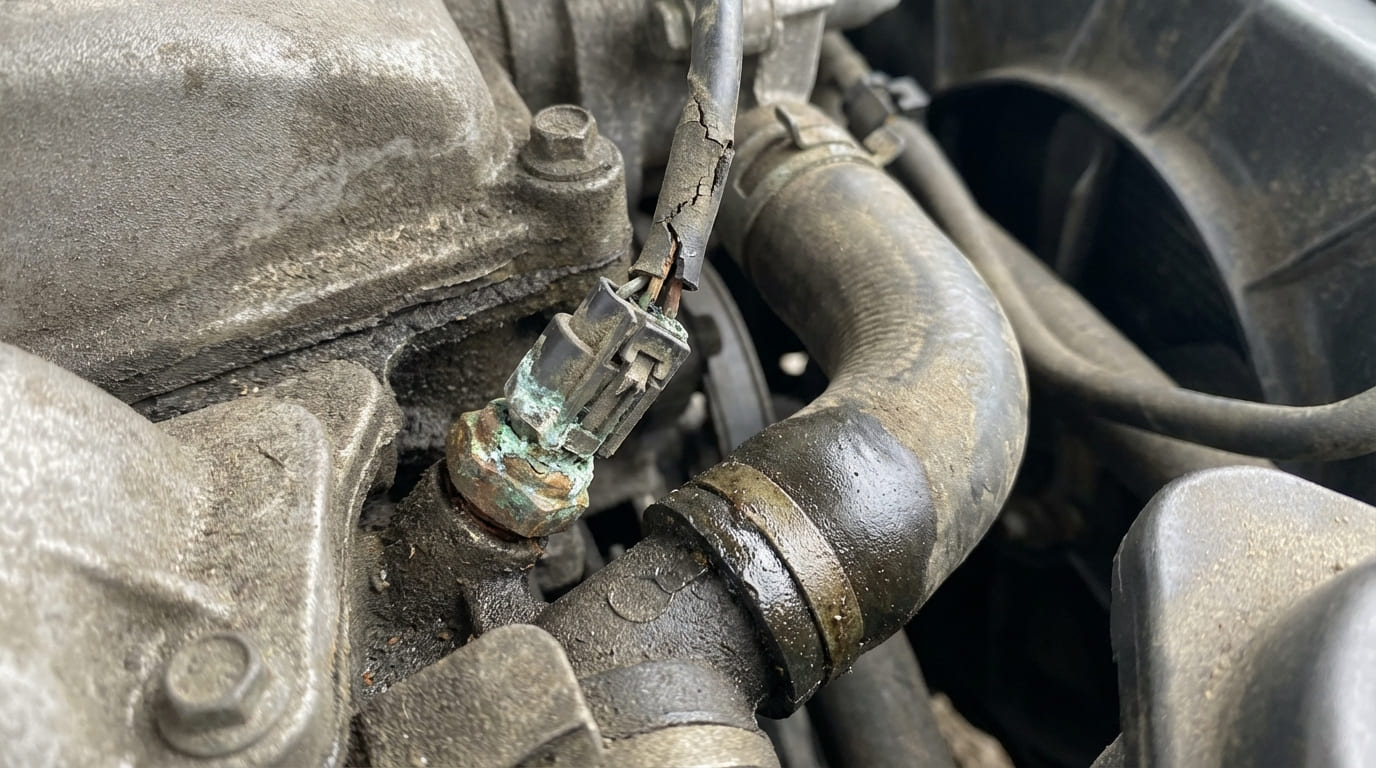
Inspect the connector for corrosion or bent pins. I’ve fixed “dead” injectors just by cleaning corroded terminals. Use dielectric grease when reconnecting to prevent future issues.
In my shop, we always test resistance and pulse response before replacing injectors. I’ve saved customers hundreds by finding a broken wire in the harness instead of selling them four new injectors.
Types of Fuel Injection Systems
The two main types are Port Fuel Injection (PFI) and Gasoline Direct Injection (GDI). They differ in location, pressure, and complexity.
Port Fuel Injection (PFI)
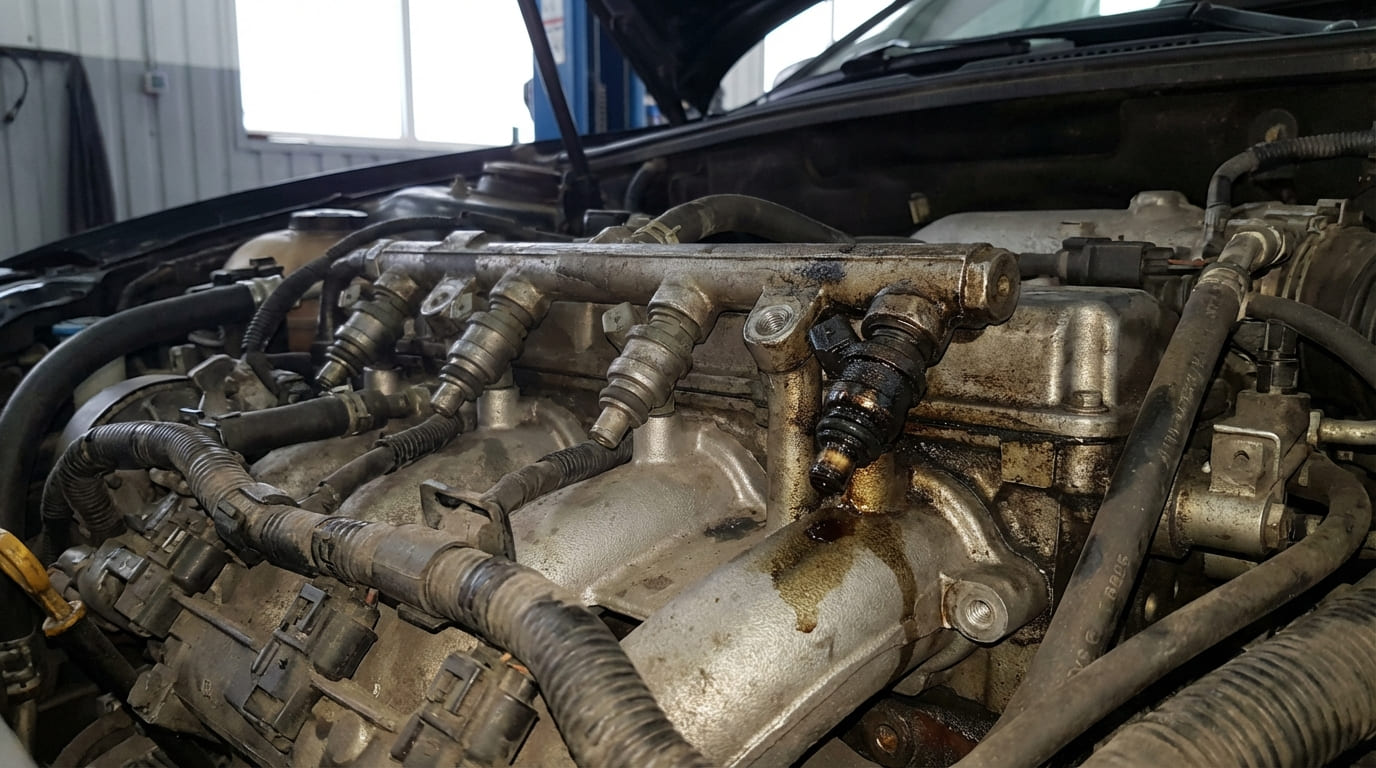
PFI injectors spray fuel into the intake manifold, just upstream of the intake valve. Fuel mixes with air before entering the cylinder. This design helps keep intake valves clean, as fuel washes over them.
PFI systems run at lower pressure (40–60 psi) and are generally more forgiving of fuel quality. They’re common on older vehicles and budget models. Replacement injectors typically cost $50–$120 each. Used or rebuilt units are available but risky—stick with OEM or reputable brands.
Gasoline Direct Injection (GDI)
GDI injectors spray fuel directly into the combustion chamber. This allows precise control over combustion, enabling lean-burn modes and better efficiency. But it comes at a cost: higher pressure (up to 2,500 psi), hotter operating environment, and carbon buildup on intake valves (since no fuel passes over them).
GDI injectors are more expensive—$150–$300 each—and often require programming or coding when replaced. The high-pressure fuel pump, driven by the camshaft, must also be tested. A failing pump or control valve can mimic injector problems.
On GDI systems, I always check the high-pressure pump’s control solenoid before condemning injectors. A sticky valve causes low rail pressure that looks identical to clogged injectors. Save time and money—test the whole system.
Repair vs Replace: Cost and Viability
Cleaning injectors can restore performance if the issue is varnish or minor deposits. Professional cleaning with ultrasonic baths and flow testing costs $15–$25 per injector. Add a bottle of quality cleaner (like Techron or ISO-Heet) to fuel every 5,000 miles as maintenance.
But cleaning won’t fix mechanical wear, cracked nozzles, or failed coils. If flow is below 85% of spec or spray pattern is distorted, replacement is the only real fix.
Replacing injectors: labor is usually 1–2 hours, depending on intake removal. On GDI engines, you may also need to replace fuel rail seals or relearn fuel pressure. Always use new O-rings and lubricate them with clean oil before installation. Reusing old ones is a common cause of vacuum leaks and hard starts.
| Service | Cost Range | Viability |
|---|---|---|
| Injector cleaning (professional) | $60–$100 | Good for flow loss due to deposits; not for mechanical failure |
| Injector replacement (PFI) | $200–$500 (parts and labor) | Best for clogged, leaking, or electrically failed units |
| Injector replacement (GDI) | $600–$1,200+ | High cost due to complexity; often requires coding |
Recommended and Avoid Practices
- ✅ Always test fuel pressure and electrical signals before replacing injectors. Many “bad injectors” are actually wiring or pump issues.
- ✅ Use a lab scope to check injector response time and pulse width. It’s the best way to catch slow or inconsistent operation.
- ✅ Replace O-rings and filter baskets when reinstalling injectors. A $2 part can prevent a fuel leak or fire.
- ⚠️ Avoid off-brand fuel additives. Some contain harsh solvents that degrade internal injector seals, especially in GDI systems.
- ⚠️ Don’t assume fuel pressure is good just because the engine runs. Test under load—many pumps fail only when demand increases.
- ⚠️ Never ignore fuel trim data. Long-term trims over ±10% indicate a problem—could be injectors, MAF, or vacuum leaks.
Diagnostic Scenarios and Real-World Lessons
Injectors rarely fail catastrophically. More often, they degrade slowly, causing subtle drivability issues that frustrate owners and mislead DIYers. Here’s what I’ve learned from real cases:
Situation: 2014 F-150, 120k miles, P0302 misfire. Coil and plug replaced—misfire returned.
Discovery: Cylinder balance test showed weak contribution. Flow test revealed 30% lower output. Injector was clogged with varnish from long-term fuel degradation.
Lesson: Misfires aren’t always ignition-related. Always verify fuel delivery under load.
Situation: 2016 Honda Accord GDI, P0171 (lean), maxed fuel trims. No vacuum leaks found.
Discovery: High-pressure pump control valve was sticking, causing low rail pressure under load. Injectors were fine.
Lesson: On GDI, low pressure isn’t always the injectors. Test the entire high-pressure system.
Situation: 2012 Camry, hesitation, no codes. Fuel pressure stable.
Discovery: Lab scope showed one injector opening 0.8 ms slower than others—enough to cause a lean spike during acceleration.
Lesson: Minor electrical drift can cause big drivability issues. Scope testing catches what scan tools miss.
Fuel injectors are precision components that sit at the heart of engine performance. When they work, you don’t notice. When they fail, everything suffers. The best approach is systematic: test fuel pressure, check electrical signals, inspect spray patterns, and use data—not guesses. Always consult the service manual for specs and procedures. What works on one engine may not apply to another, even if they look the same.