In my two decades turning wrenches in independent shops and dealer bays, few complaints come up more than a rough or surging idle. It’s one of those issues that can feel simple—until you dive in and realize how many systems interact at idle. A fluctuating RPM isn’t just an annoyance; it’s a symptom of imbalance in the air, fuel, spark, or exhaust chain. What I’ve learned is that jumping to conclusions—like blaming the idle air control valve first—can waste time and money. More often than not, the root cause hides in plain sight, masked by misleading codes or superficial checks. This guide walks you through the most common culprits, how to test them, repair costs, and real-world tips from the shop floor.
Vacuum Leaks: The Silent Idle Disruptor
A vacuum leak introduces unmetered air downstream of the MAF sensor, throwing off the air-fuel ratio. The ECU compensates with aggressive fuel trim adjustments, often resulting in RPM hunting or surging. These leaks are especially tricky because they mimic multiple failures and may only appear when the engine is warm.
How to Check for Vacuum Leaks
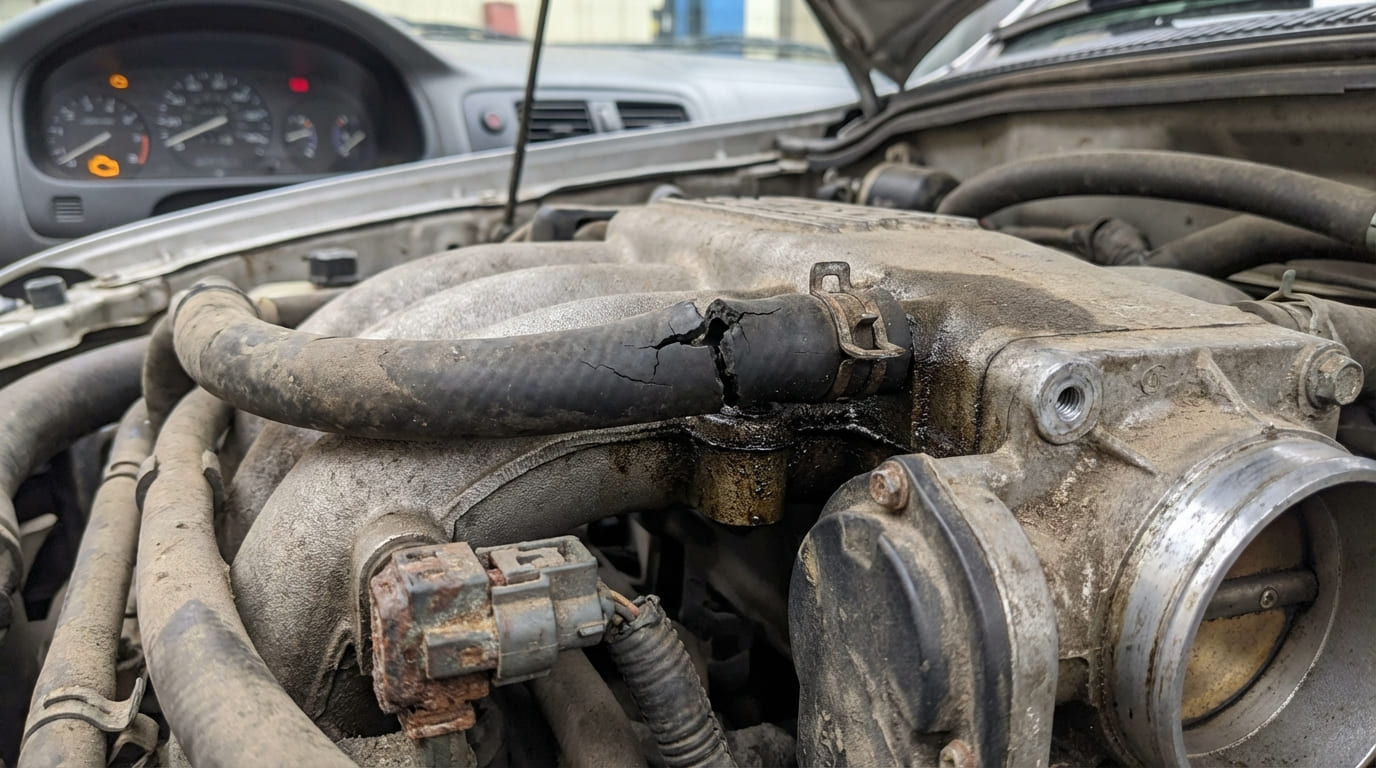
Start with a visual inspection: look for cracked hoses, disconnected lines, or brittle PCV hoses. Then perform one of these tests:
- Smoke Test: Most reliable method. Use a professional smoke machine or DIY setup with mineral oil. Watch for smoke escaping at joints, gaskets, or hoses.
- Propane or Throttle Body Cleaner Test: With engine idling, spray around suspected areas. If RPM increases when you hit the leak, you’ve found it. Use non-flammable cleaner near hot components to avoid fire risk.
- Brake Booster Check: Unplug the vacuum line at the brake booster. If idle stabilizes, suspect a torn diaphragm. Replace the booster—don’t attempt a repair.
Common leak points: intake manifold gaskets, EVAP lines, PCV valve, power brake booster, and vacuum reservoirs.
In my shop, we always test the brake booster last—but it’s been the culprit in 1 out of every 10 surging idle cases. Don’t skip it just because it’s not under the hood.
Idle Air Control (IAC) Valve and Throttle Body Concerns
On older vehicles with throttle cables, the IAC valve manages idle speed by bypassing air around the throttle plate. Carbon buildup can bind the pintle, causing erratic idle. In drive-by-wire systems, the throttle body itself controls idle, and carbon buildup can prevent full closure—tricking the ECU into raising RPM.
How to Test and Clean
For vehicles with a separate IAC valve:
- Unplug the valve. If idle drops dramatically or stalls, it’s likely functional.
- Check resistance with a multimeter. Compare to factory specs (typically 5–20 ohms). Open or shorted windings mean replacement.
- Clean the pintle and bore with non-chlorinated carb cleaner. Reinstall and monitor IAC step counts via scan tool.
For drive-by-wire throttle bodies:
- Remove and clean carbon from the bore and back of the throttle plate using throttle body cleaner and a soft brush.
- Reinstall and perform an OEM-specific relearn procedure—critical. Skipping this can cause idle issues even after cleaning.
Cost to replace IAC valve: $80–$200 (DIY-friendly). Throttle body replacement: $250–$600 (labor-intensive).
I’ve seen techs clean a throttle body and send the car back—only to have it return a week later. The fix? A 30-second relearn procedure. Always check service manual steps before calling it done.
Mass Air Flow (MAF) Sensor: Metering Mistakes
A dirty or failing MAF sensor delivers incorrect airflow data, causing fuel trim swings and idle instability. It’s often misdiagnosed as a fuel or ignition issue.
How to Diagnose
Use live data to check MAF readings at idle:
- Typical idle MAF flow: 2–4 grams/second on a 2.0L engine (varies by displacement).
- Erratic or stuck readings indicate a problem.
- Check for MAF-related codes (P0100–P0103, P0171/P0174).
Clean the sensor with MAF-safe cleaner—never touch the wires. If readings don’t stabilize, suspect:
- Downstream air leaks (e.g., split intake boot)
- Damaged intake tract causing turbulence
- Failing sensor (replace with OEM-grade)
Cost: $120–$300 for replacement. Cleaning is free—always try it first.
On a 2015 Ford F-150 EcoBoost, I chased a P0101 code for days. Replaced the MAF—no fix. Found a split in the silicone coupler after the sensor. Lesson: turbulence distorts MAF readings just like a dirty sensor.
Oxygen Sensors: Feedback Loop Failures
Upstream O2 sensors help the ECU adjust fuel trims in real time. A lazy or stuck sensor causes overcorrection—leading to rhythmic surging every 2–4 seconds.
How to Test
Monitor upstream O2 sensor voltage at idle:
- Should switch rapidly between 0.1V and 0.9V (1–3 times per second).
- Flatlined voltage (e.g., stuck at 0.2V) indicates failure.
- Check for P0130–P0167 codes.
But don’t replace the sensor yet. Rule out:
- Exhaust leaks before the sensor (causes false lean readings)
- Vacuum leaks (same effect)
- Fuel delivery issues
Cost: $150–$300 per sensor (labor adds $80–$150). Use OEM or NTK/NGK—cheap sensors often fail within a year.
Fuel System: Pressure, Volume, and Consistency
Fuel pressure must be stable at idle. A failing fuel pressure regulator (FPR) or weak fuel pump can cause fluctuations.
How to Test
Connect a fuel pressure gauge to the rail (or test port):
- Typical port injection: 40–60 psi
- Direct injection: 50–70+ psi
- Pressure should hold steady—not bounce
Check for:
- FPR with ruptured diaphragm: inspect vacuum line for fuel
- Weak fuel pump: pressure drops under load
- Clogged fuel filter: reduced volume (perform volume test)
Cost: Fuel pump $200–$600 (tank removal adds labor). FPR replacement: $80–$200.
Ignition System: Misfires in Disguise
Intermittent misfires may not trigger a P030x code immediately. Weak coils or fouled plugs can misfire at idle, causing surging.
How to Diagnose
Use live data to check misfire counters. If present, perform a swap test:
- Swap coil or plug with another cylinder.
- If misfire moves, replace the swapped part.
Inspect spark plugs:
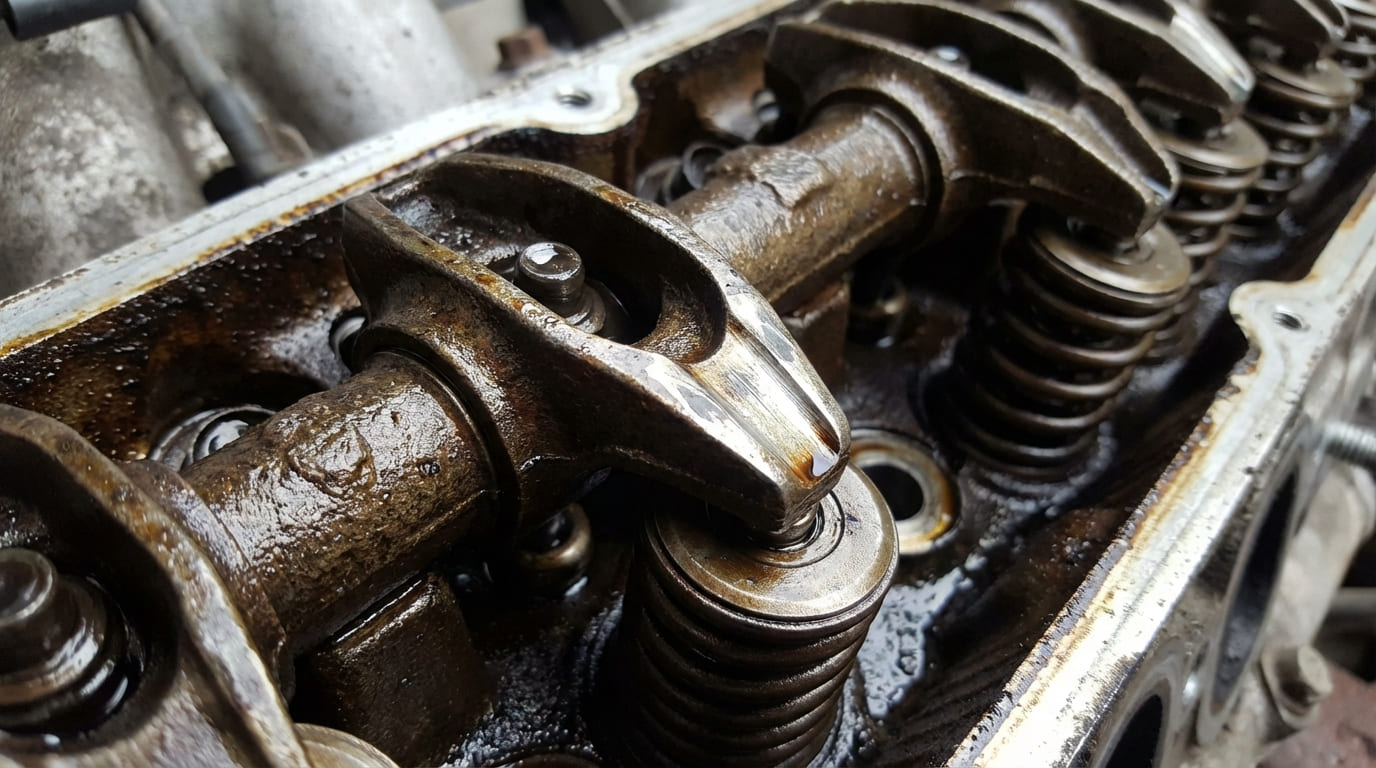
- Oil fouling: worn valve seals or piston rings
- Carbon buildup: rich mixture or short trips
- Always verify gap: 0.7–0.9mm typical, but check manual. A 0.1mm error can cause idle issues.
Cost: Plugs $100–$200 (set). Coils $80–$150 each. DIY-friendly on most engines.
Exhaust Leaks: The Mimicker
A leak before the upstream O2 sensor lets oxygen into the exhaust, causing a false lean signal. The ECU adds fuel—leading to rich misfires or unstable idle.
How to Check
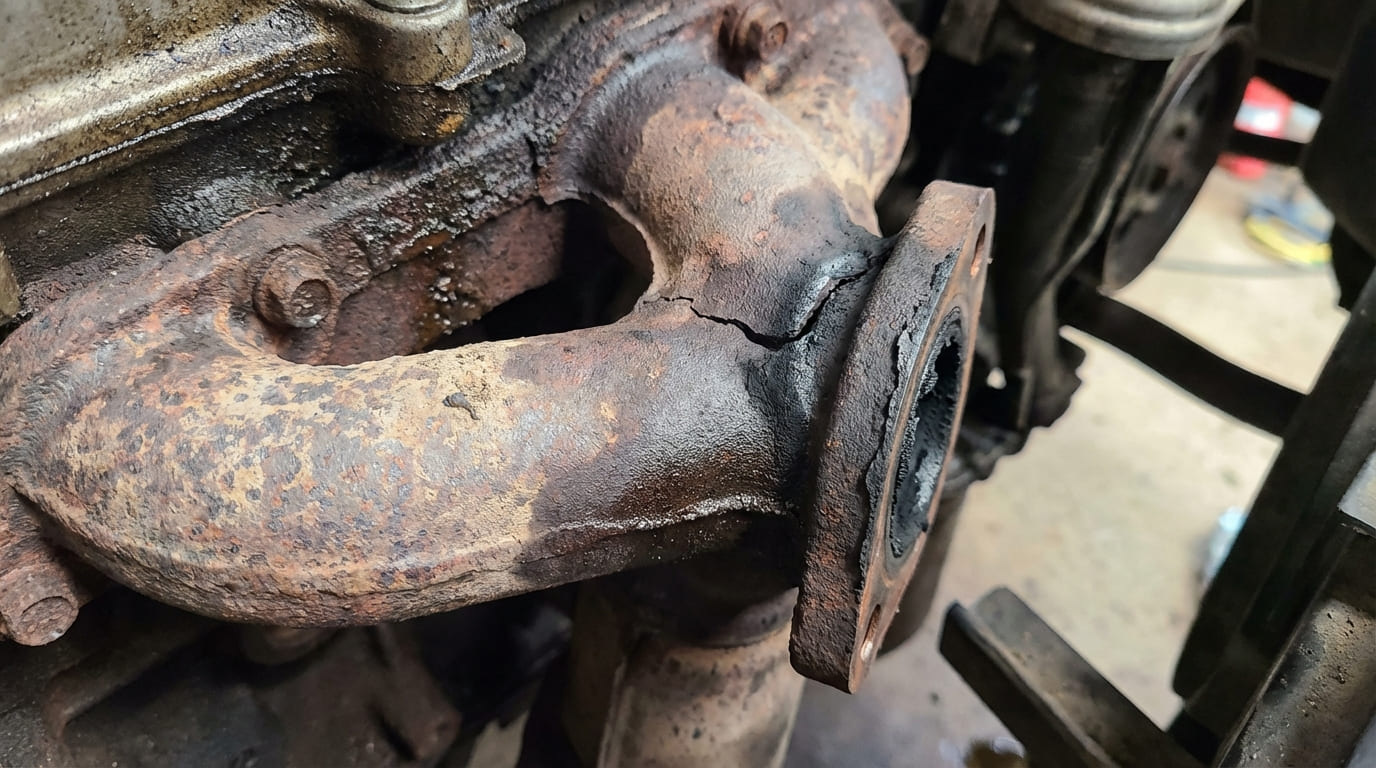
Inspect for soot stains, cracked manifolds, or loose studs. Use a mechanic’s stethoscope or rubber hose to listen for ticking or hissing near joints.
- Aluminum heads expand more than iron—leaks may only appear when hot.
- Test when engine is fully warmed up.
Cost: Gasket repair $150–$400. Manifold replacement $500–$1,200 (labor-heavy).
I once replaced an O2 sensor twice on a Camry before realizing the exhaust manifold had a hairline crack. Always check for leaks—especially on high-mileage aluminum-block engines.
Common Causes and Likelihoods
| Condition | Typical Symptoms | Diagnostic Confidence | Repair Complexity |
|---|---|---|---|
| Vacuum Leak | Elevated then fluctuating idle, lean trims | High (with smoke test) | Low to Moderate |
| Dirty IAC or Throttle Body | Sticky idle, no response to loads | Moderate (requires cleaning + relearn) | Low |
| Failing MAF Sensor | Rough idle, erratic fuel trims | Moderate (data-dependent) | Low |
| Exhaust Leak (pre-O2) | Lean codes, ticking noise | Moderate (heat-sensitive) | Moderate to High |
| Ignition Misfire (intermittent) | Surging, occasional misfire counters | Variable (depends on consistency) | Low to Moderate |
Best Practices: What to Do and What to Avoid
- ✅ Recommended: Clean intake air passages and throttle bore during every major service—carbon buildup is cumulative and often ignored until it causes issues.
- ✅ Recommended: Use OEM or equivalent quality gaskets and sensors—aftermarket MAFs or O2 sensors sometimes calibrate differently, leading to subtle trim issues.
- ✅ Recommended: Clean threads with a tap before installing bolts into aluminum heads—prevents galling and ensures accurate torque.
- ⚠️ Avoid: Reusing torque-to-yield (TTY) head or main bolts unless explicitly permitted by the manufacturer—these are designed to stretch once.
- ⚠️ Avoid: Assuming a code points directly to a failed part—P0171 could be a vacuum leak, dirty MAF, or even a clogged fuel filter.
- ⚠️ Avoid: Skipping fuel trim analysis in favor of part replacement—it’s faster and cheaper to monitor STFT and LTFT before buying sensors.
Situation: A 2012 Honda Accord came in with surging idle and a P0171 code. The shop before mine replaced the upstream O2 sensor and air filter, but the issue returned.
Discovery: After checking fuel trims, I noticed STFT was pegged at +18%. Smoke test revealed nothing. Then I unplugged the brake booster check valve—idle smoothed out instantly. A closer look showed a tiny crack in the booster diaphragm.
Nuanced Lesson Learned: Not all vacuum leaks are under the hood—booster leaks can be subtle and intermittent, especially if they only appear under specific vacuum loads. Always test the entire vacuum system, not just visible hoses.
Situation: A 2008 Toyota Camry had a fluctuating idle between 600 and 900 RPM. No codes, but the owner complained of stalling at stoplights.
Discovery: IAC counts were erratic. After cleaning the IAC valve, the problem persisted. Then I checked the throttle body—carbon had built up just behind the plate, preventing full closure. Cleaning restored proper idle.
Nuanced Lesson Learned: Even if the IAC is functioning, physical blockage can mimic its failure. Always verify mechanical clearance before blaming electronics.
Situation: A 2015 Ford F-150 with a 3.5L EcoBoost had rough idle and occasional surges. P0101 (MAF performance) was stored.
Discovery: MAF readings were erratic, so I cleaned the sensor. No improvement. Then I inspected the intake tract and found a split in the silicone coupler after the MAF. Replacing the coupler fixed the issue.
Nuanced Lesson Learned: MAF codes don’t always mean the sensor is bad—airflow turbulence from downstream leaks can distort readings just as much as a dirty element.
Stable idle depends on a delicate balance of inputs and feedback. While some technicians lean on scan tools alone, I’ve found that combining live data with physical inspection and a methodical process yields the best results. There’s no single test that catches everything, and no single part that’s always to blame. What matters is understanding how systems interact—and knowing when to step back and reevaluate the evidence.
Always consult the specific service manual for your vehicle’s tolerances and procedures—what’s typical for one engine may not apply to another.