In my shop, when a diesel comes in with hard starts, power loss, or a stored P0087 code, the high-pressure fuel pump often ends up on the suspect list. But before tearing into it, I’ve learned to step back and assess the whole system. Over two decades, I’ve seen more than a few pumps replaced unnecessarily because the real culprit was upstream. Let me walk you through what these pumps actually do, how they fail, and how to diagnose them without jumping to conclusions.
What the High-Pressure Fuel Pump Does
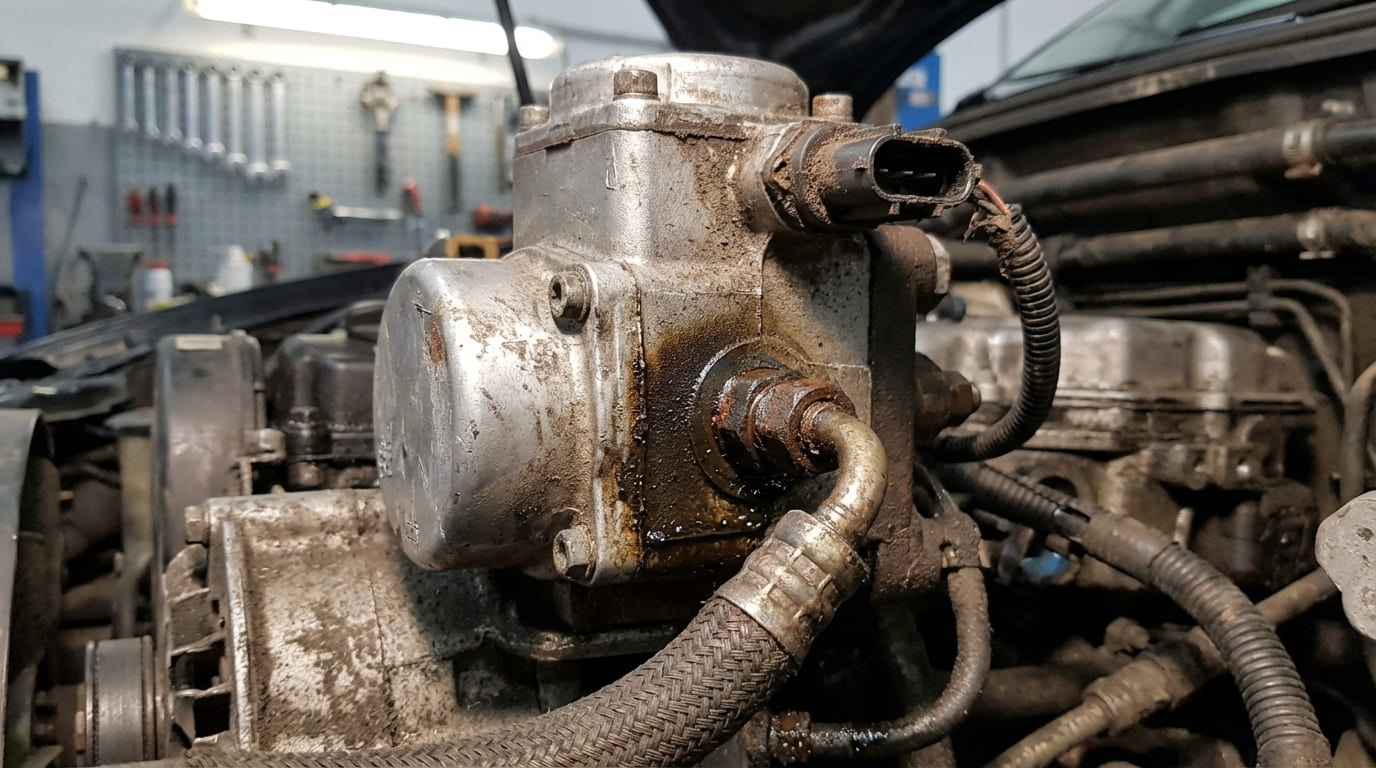
The high-pressure fuel pump is responsible for boosting fuel pressure from 4–10 bar on the low-pressure side to over 2,500 bar in modern common rail systems. This extreme pressure ensures fine fuel atomization, which is critical for clean and efficient combustion. Unlike the lift pump, which feeds fuel to the engine, the high-pressure pump generates the force needed for injection.
Key Difference: High-Pressure Pump vs. Lift Pump
The lift pump (or transfer pump) pulls fuel from the tank, pushes it through the filter, and delivers it to the high-pressure pump at 4–6 bar. It’s the “feeder” system. The high-pressure pump is the “booster.” If the lift pump is weak or the fuel filter is clogged, the high-pressure pump can’t function properly—even if it’s mechanically sound. I’ve replaced more lift pumps than high-pressure units for this exact reason.
In my shop, we always test lift pump output before touching the high-pressure side. Use a mechanical gauge on the filter outlet—most systems require at least 4.5 bar at idle. If it’s below spec, fix the supply first.
How to Diagnose a Failing High-Pressure Pump
Never assume the pump is bad based on symptoms alone. Many issues mimic pump failure. Follow a systematic approach to avoid costly mistakes.
Step 1: Scan Tool Analysis
Connect a scan tool with live data. Monitor:
- Desired vs. actual rail pressure
- Rail pressure sensor readings
- Injection metering valve (IMV) duty cycle
If actual pressure consistently falls more than 10% below desired—especially under load—the pump may be failing. But first, rule out other causes.
Step 2: Check Low-Pressure Fuel System
Restrictions or air leaks upstream can starve the pump. Perform these checks:
- Inspect fuel filter and housing for clogs or swollen seals.
- Check for air in the return line using clear vinyl hose.
- Test lift pump pressure at the filter outlet—should be 4–6 bar.
- Verify fuel tank pickup isn’t drawing sediment.
I once diagnosed a P0087 code on a 2012 Ram 3500. Owner had replaced the rail sensor and filter. Live data showed pressure lagging. I checked supply pressure—only 3.2 bar. Pulled the filter housing and found a collapsed O-ring blocking flow. Fixed in 20 minutes. No pump replacement needed.
Step 3: Test High-Pressure Output (Shop-Only)
Use a common rail test kit with blanking plugs to isolate the pump. Measure output pressure and volume at specified RPMs. For example:
| Pump Type | Test Condition | Minimum Output |
|---|---|---|
| Bosch CP3 | 1500 RPM, 30 sec | 400 ml |
| Bosch CP4 | 1000 RPM, 30 sec | 350 ml |
Low output indicates internal wear. But first, confirm the IMV is receiving proper command signal.
Step 4: Inspect Fuel Quality
Poor fuel is a leading cause of premature failure. Pull a sample and check for:
- Water (use a water-finding paste or test strip)
- Dirt or rust particles
- Wrong fuel type (e.g., gasoline contamination)
Ultra-low sulfur diesel (ULSD) lacks natural lubricity. If you’re running ULSD, use a lubricity additive—especially with CP4 pumps.
After a CP4 failure, always inspect the old pump for metal shavings. If present, flush the entire fuel system and replace the filter. Metal fines can destroy a new pump in days.
Common Failure Modes and Root Causes
Symptoms often overlap with other issues. Use this guide to narrow the cause:
| Symptom | Most Likely Causes | Less Common But Possible Causes |
|---|---|---|
| Hard starting, extended cranking | Worn plungers, failing metering valve, low supply pressure | Air in fuel, weak lift pump, faulty rail pressure sensor |
| Rough idle, surging | Erratic metering valve, internal leakage | Injector dribble, ECU calibration, fuel contamination |
| Loss of power under load | Pump can’t maintain pressure, drive mechanism wear | Boost leak, EGR fault, turbo issue |
| No-start, zero rail pressure | Drive shaft failure, broken cam lobe, seized pump | Electrical fault in IMV, ECU disable, blown fuse |
Situation: 2006 Duramax with fluctuating rail pressure.
Assumption: Bad IMV on CP3.
Discovery: IMV tested fine. Voltage drops in harness traced to corroded ECM connector.
Lesson: Always check electrical signals before replacing mechanical parts.
Types of High-Pressure Pumps and Real-World Reliability
Know what you’re working on—each type has different failure patterns.
- Radial Piston (Bosch CP1, CP3): Found in 2003–2010 diesels. CP3 is robust but hates water. CP1 had early wear issues in some VWs.
- Axial Piston (Bosch CP4): Used in newer Power Strokes and Duramaxes. Capable of 2,900 bar but sensitive to contamination. One tank of bad fuel can ruin it.
- Inline Plunger (Bosch P-type): Older mechanical pumps. Durable but timing-critical. Adjust with shims or eccentric bolts.
- Rotary Distributor (Bosch VE): Common in 80s–90s diesels. Prone to governor wear. Rebuild kits exist, but I recommend a professional reman.
CP4 pumps are expensive—$800–$1,500 new. Some shops replace them preemptively during fuel system work. I only do so if testing confirms failure. A proper diagnosis can save the customer over a thousand dollars.
Repair vs. Replace: Cost and Viability
Most high-pressure pumps are not user-serviceable. Internal wear requires replacement or professional rebuild. Here’s what to expect:
| Pump Type | New Cost | Rebuilt Cost | Repair Viability |
|---|---|---|---|
| Bosch CP3 | $700–$1,100 | $400–$600 | Replace or use reputable reman |
| Bosch CP4 | $900–$1,500 | $500–$700 | Replace only; avoid cheap remans |
| Bosch VE | $300–$500 | $200–$300 | Rebuild possible with proper tools |
Rebuilt units vary in quality. I stick to OEM or reputable suppliers like Bosch, AC Delco, or Denso. Avoid no-name brands—undersized plungers or worn housings lead to early failure.
Best Practices: Do’s and Don’ts
- ✅ Replace fuel filter and inspect housing seals every time you open the system.
- ✅ Clean pump mounting area and inlet port—metal debris can re-enter the system.
- ✅ Prime the low-pressure side before startup. Use a scan tool to run the lift pump.
- ⚠️ Never reuse high-pressure line O-rings or copper washers—they won’t reseal.
- ⚠️ Never crank the engine without verifying fuel supply. Dry-starting can score plungers in seconds.
- ⚠️ Don’t assume a reman pump is reliable. Some use worn components. I’ve seen remans fail in under 10,000 miles.
Situation: Rebuilt CP4 failed at 8,000 miles.
Assumption: Bad rebuild.
Discovery: Metal shavings in old pump. Tank had rust; pickup was sucking debris.
Lesson: Replace the pump without fixing the contamination, and you’ll replace it again.
Final Diagnostic Reminder
The high-pressure pump includes the housing, drive shaft, plungers, barrels, cam, and integrated metering valve. It does not include the rail, rail pressure sensor, injectors, or ECU. Misdiagnosing these can cost hundreds unnecessarily. Always consult the factory service manual for test specs and procedures—what works for a CP3 may not apply to a CP4.
In my experience, the most successful repairs come from methodical testing, not guesswork. Measure twice, replace once.