As a master mechanic with over 20 years in the bay, I’ve seen thousands of EGR-related misdiagnoses. Too many shops replace the valve on hunches—costing customers hundreds for no fix. This guide cuts through the noise. You’ll learn the real symptoms, how to test like a pro, and what to fix—so you don’t waste time or money.
How the EGR Valve Fails—and What It Feels Like
The EGR (Exhaust Gas Recirculation) valve reduces NOx emissions by routing inert exhaust gases back into the intake. When it fails, combustion stability suffers. But failure isn’t binary. The valve can stick open, stick closed, or respond poorly due to sensor or control issues. Each causes distinct symptoms.
Key Symptoms and How to Check Them
Don’t guess—verify. Here’s what to look for and how to confirm it.
Rough Idle or Stalling
This is classic for a valve stuck open. Exhaust gas dilutes the air/fuel mixture at idle, causing misfires or stalling—especially on cold starts.
How to Check: With the engine idling, unplug the EGR valve electrical connector (if electronic) or block the vacuum line (if vacuum-operated). If idle smooths out, the valve is likely leaking open. But don’t assume it’s dead—test further.
In my shop, we never replace a valve based on idle quality alone. We see this symptom with vacuum leaks and bad IAC valves too. Always rule those out first.
Engine Knocking or Pinging Under Light Load
If the valve is stuck closed, combustion temperatures rise, causing pre-ignition. Drivers often think they need higher-octane fuel—but the real issue is missing EGR flow.
How to Check: Use a scan tool to monitor knock sensor activity and timing retard. Under light-to-moderate load (30–50 mph cruise), if the ECU is pulling timing and you hear pinging, check EGR flow. Command the valve open with bi-directional control and watch for knock reduction.
Hesitation or Power Loss During Acceleration
Two causes: If the valve is stuck open, exhaust gas dilutes the charge when you need power. If stuck closed, the ECU may retard timing to prevent knock, causing sluggishness.
How to Check: Monitor actual vs. desired EGR position in live data during a road test. If the valve doesn’t respond to commands, the issue could be mechanical, electrical, or carbon-blocked.
Failed Emissions Test (High NOx)
A stuck-closed valve is the most common cause of high NOx. Without exhaust gas dilution, combustion temps soar.
How to Check: If your state tests emissions, a high NOx reading points straight to EGR. But don’t assume the valve is bad—check flow with a scan tool or vacuum test first.
Check Engine Light with EGR Codes
Common codes include:
- P0400: EGR Flow Malfunction
- P0401: Insufficient EGR Flow
- P0402: Excessive EGR Flow
- P0403–P0406: Electrical circuit faults
How to Check: Pull the code, then go to live data. Don’t replace parts yet. Monitor EGR position, solenoid duty cycle, and sensor readings. If the code says “insufficient flow” but the valve moves freely, the issue may be a clogged passage or bad DPFE sensor.
I’ve replaced exactly zero EGR valves based on a P0401 alone. In 60% of cases, it’s a clogged passage or failed sensor. Test before you spend.
How to Diagnose the Real Problem
Before removing a single bolt, run these checks. They’ll save you hours and hundreds.
Visual and Physical Inspection
Start simple:
- Inspect vacuum lines for cracks, leaks, or disconnections.
- Check the electrical connector for corrosion or bent pins.
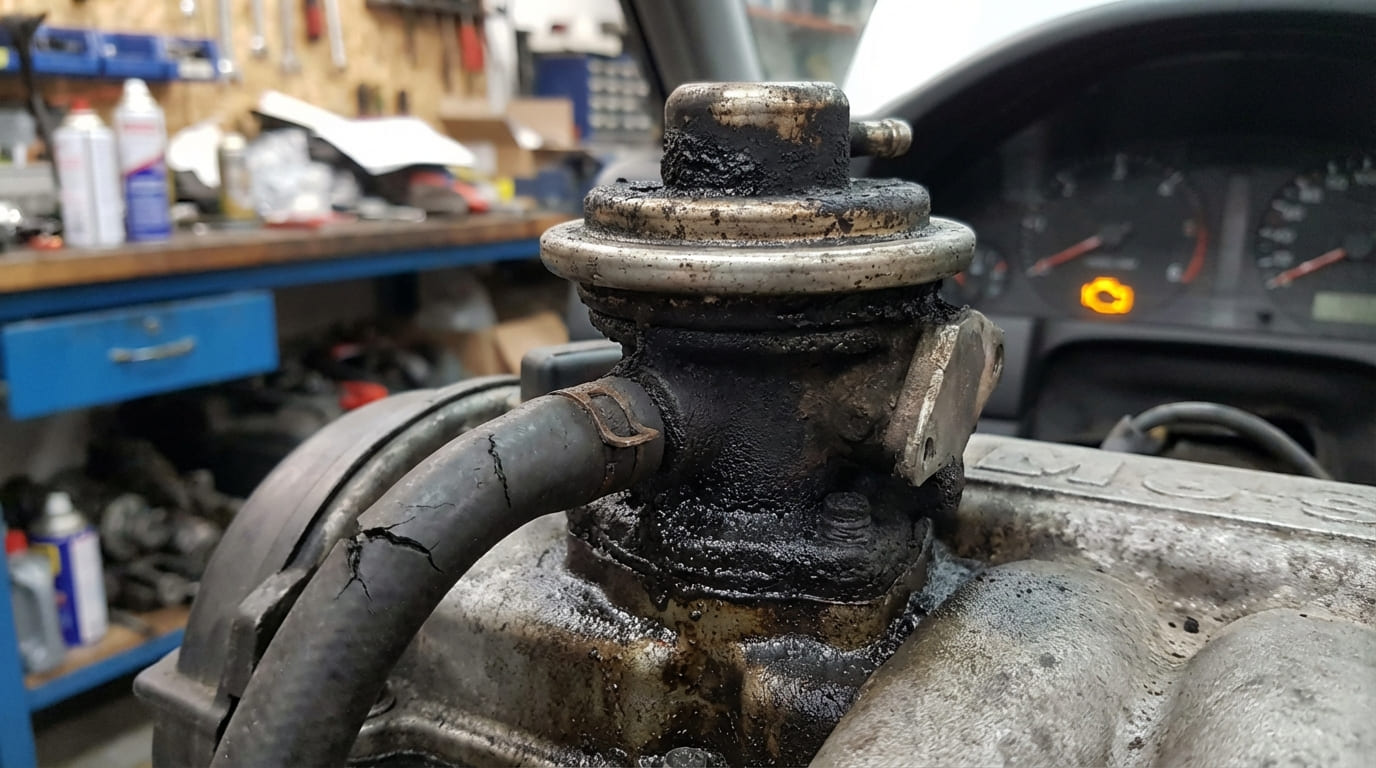
- Remove the valve (if accessible) and look for heavy carbon buildup on the pintle or in the port.
Carbon doesn’t always mean failure—but if the pintle can’t move freely, cleaning or replacement is needed.
Functional Test (Engine Off)
For Vacuum-Operated Valves: Use a handheld vacuum pump. Apply 10–15 inHg. The pintle should lift smoothly and hold vacuum for at least 30 seconds. A quick drop indicates a torn diaphragm.
For Electronic Valves: Use a scan tool with bi-directional control. Command the valve open and closed. Listen for clicks or motor noise. Watch the position sensor feedback—if it doesn’t move, the actuator or linkage is likely faulty.
Functional Test (Engine Running)
Live data is your best friend. Monitor:
- Desired vs. actual EGR position
- DPFE sensor voltage (should change with flow)
- Solenoid duty cycle
If desired and actual don’t match, the system isn’t responding. Could be carbon, weak actuator, or bad sensor.
On a Ford with P0401, I once found perfect valve movement—but zero flow. The EGR passage in the intake was 90% clogged. Clean the port, not just the valve.
What Else Could Be Causing These Symptoms?
Many systems mimic EGR failure. Rule these out before touching the valve:
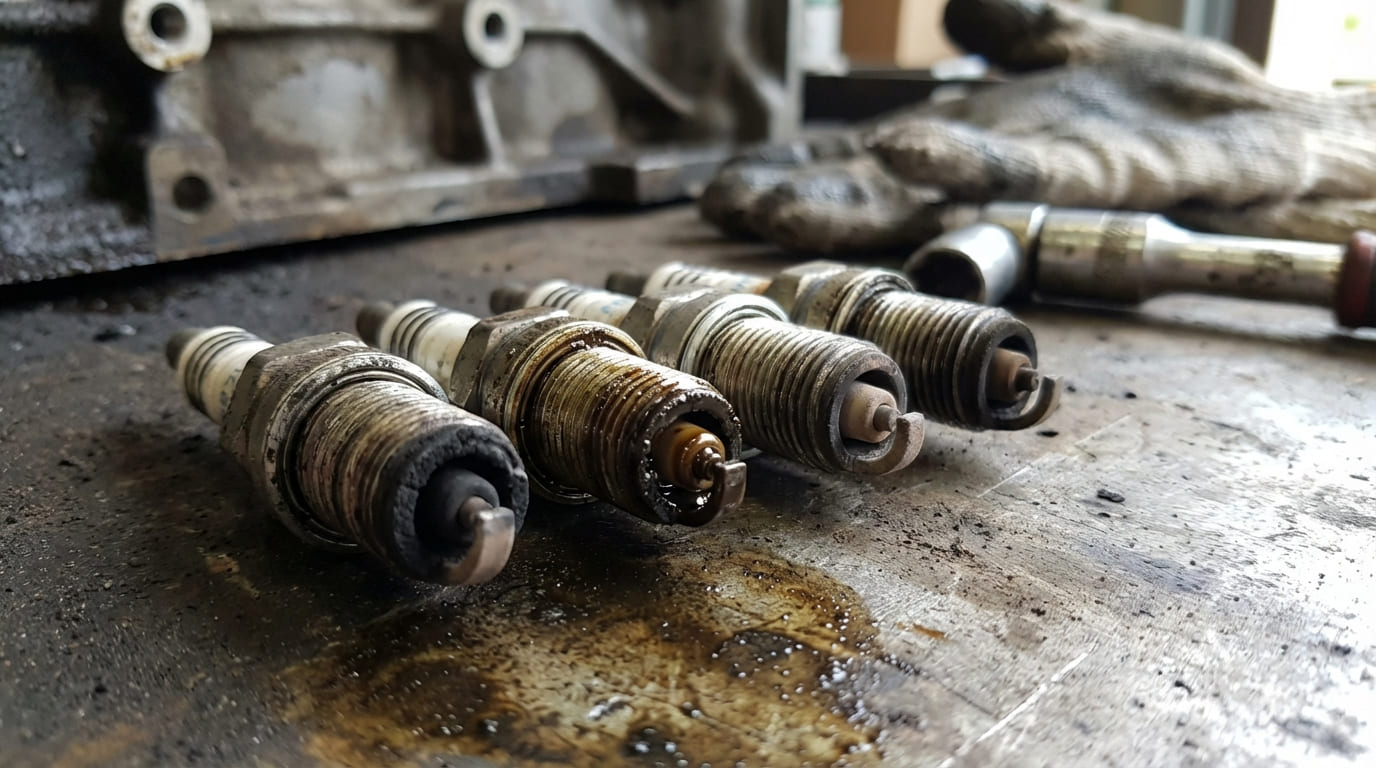
- Ignition system: Worn spark plugs or failing coils cause misfires.
- Fuel delivery: Clogged injectors or weak fuel pump cause hesitation.
- Vacuum leaks: Lean condition mimics a stuck-open EGR.
- MAF sensor: Contamination skews air readings, affecting EGR timing.
- O2 sensors: Faulty readings trick the ECU into adjusting EGR incorrectly.
- Throttle position sensor: Drift affects load calculation and EGR scheduling.
- Catalytic converter: Restriction causes backpressure and power loss.
Repair vs. Replace: Cost and Viability
Before buying a new valve, consider:
- Can it be cleaned? On many vehicles, a $10 can of carb cleaner and 30 minutes of labor restores function. I’ve extended EGR life over 30,000 miles this way.
- Is the problem electrical? A failed solenoid or DPFE sensor costs $50–$150. A new EGR valve? $250–$600.
- Is there a software fix? Some manufacturers release TSBs with ECU recalibrations that fix EGR behavior. Check for updates before replacing parts.
Replacement is only justified if:
- The diaphragm won’t hold vacuum.
- The motor or linkage is seized.
- Cleaning and system checks didn’t resolve the issue.
Avoid cheap aftermarket EGR valves. I’ve tested units that opened 20% less than OEM spec. Stick with OEM or known brands like Denso, Bosch, or Cardone reman.
What You’ll Pay: Real-World Costs
| Repair | Part Cost | Labor (Avg) |
|---|---|---|
| EGR Valve Cleaning | $0–$20 (cleaner) | 0.5–1 hour |
| DPFE Sensor Replacement | $50–$120 | 0.5 hour |
| EGR Solenoid Replacement | $40–$100 | 0.5 hour |
| EGR Valve Replacement | $250–$600 | 1.5–3 hours |
If you’re doing it yourself, factor in time and tools. A scan tool with bi-directional control is worth every dollar. Consider renting one from your local auto parts store.
Case Studies: What the Manual Doesn’t Tell You
Situation: 2012 Ford F-150 with P0401 and pinging. Previous shop replaced the EGR valve twice.
Discovery: Valve moved fine. But the EGR passage in the intake manifold was clogged with carbon. No flow, even with a new valve.
Fix: Removed intake, cleaned passage with drill bits and carb cleaner. No parts replaced. Cost: $0. Fixed.
Situation: 2008 Honda Accord with rough idle and P0402. Valve cleaned twice, came back.
Discovery: Vacuum test passed. But solenoid wasn’t cycling. Multimeter showed open circuit. Replaced solenoid—$65 part.
Fix: Problem solved. No need for a $300 valve.
Situation: 2015 Chevy Silverado with P0400. New EGR valve installed—code returned.
Discovery: DPFE sensor readings were erratic. Replaced sensor—code cleared, performance restored.
Fix: Diagnosed the system, not the symptom. Saved the customer $400.
Final Checklist: Don’t Skip These Steps
- ✅ Read live data before replacing anything. Watch EGR position, flow, and sensor feedback.
- ✅ Test the control circuit—solenoid, wiring, sensor—not just the valve.
- ✅ Clean the EGR port in the intake. Carbon buildup is the silent killer.
- ✅ Check for TSBs or software updates—some EGR issues are fixed with a flash.
- ⚠️ Never replace the EGR valve without testing—it’s often not the root cause.
- ⚠️ Don’t ignore intake carbon—especially on direct-injected engines. It restricts flow even with a new valve.
- ⚠️ Avoid no-name aftermarket valves—poor calibration leads to repeat issues.
EGR problems are system-wide. The valve is just one piece. Diagnose with data, not assumptions. Clean before you replace. Test the circuit, not just the component. And remember: what works on a Ram might not work on a Camry. Always consult the service manual for specs and procedures.