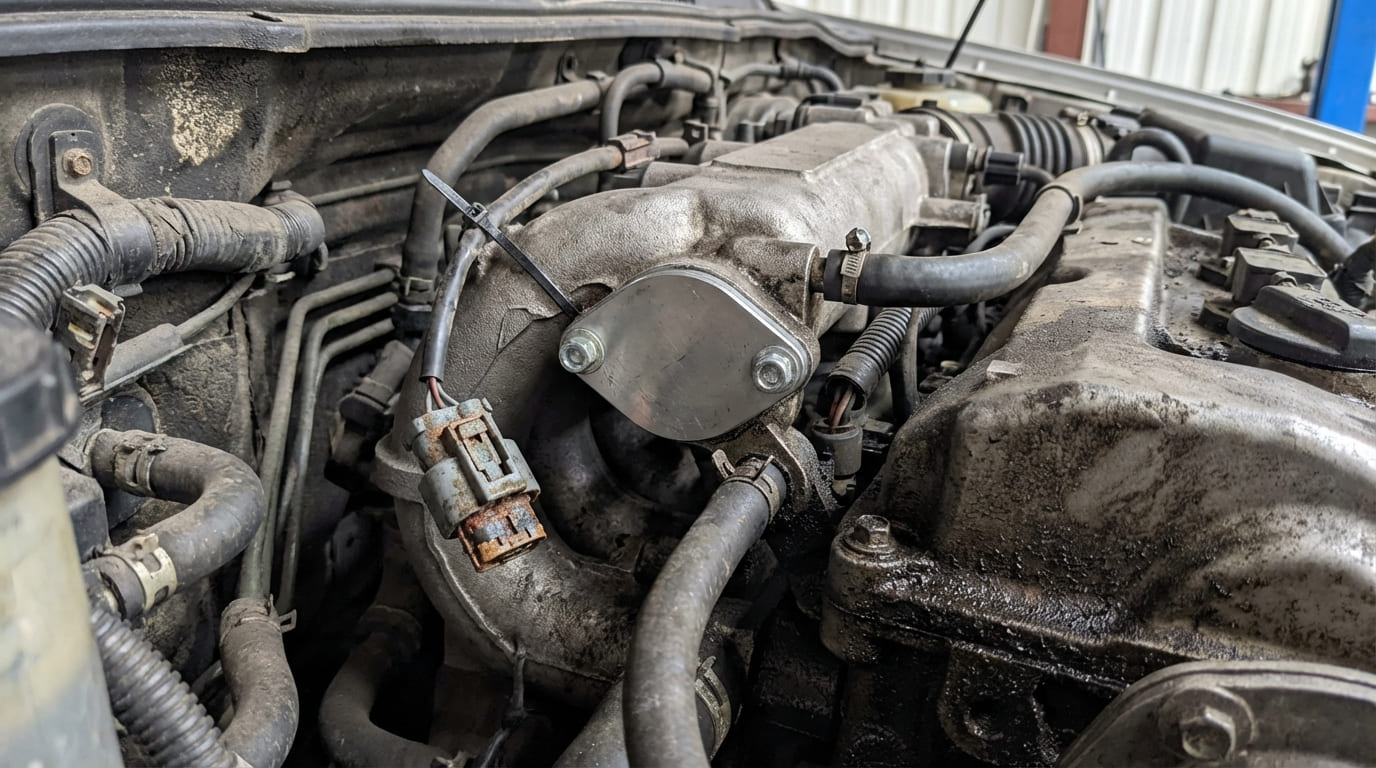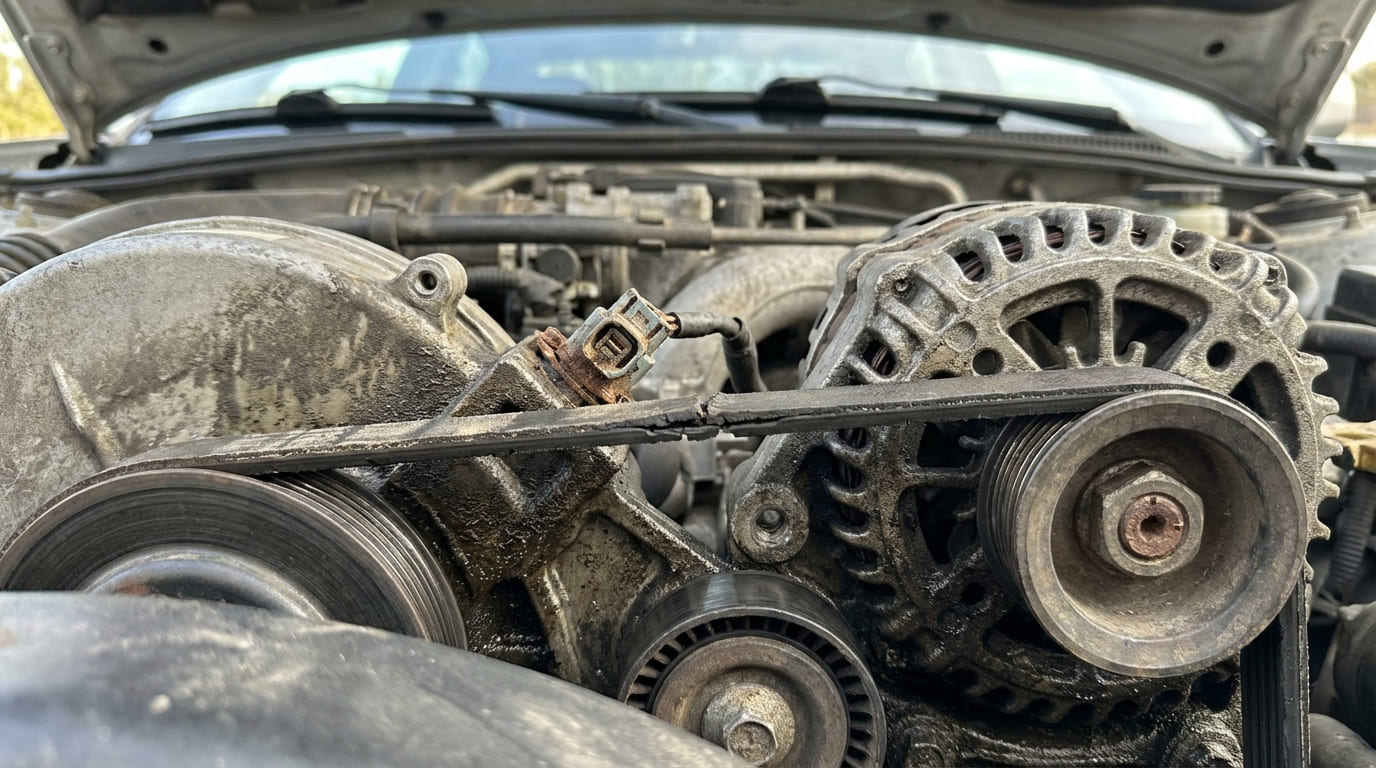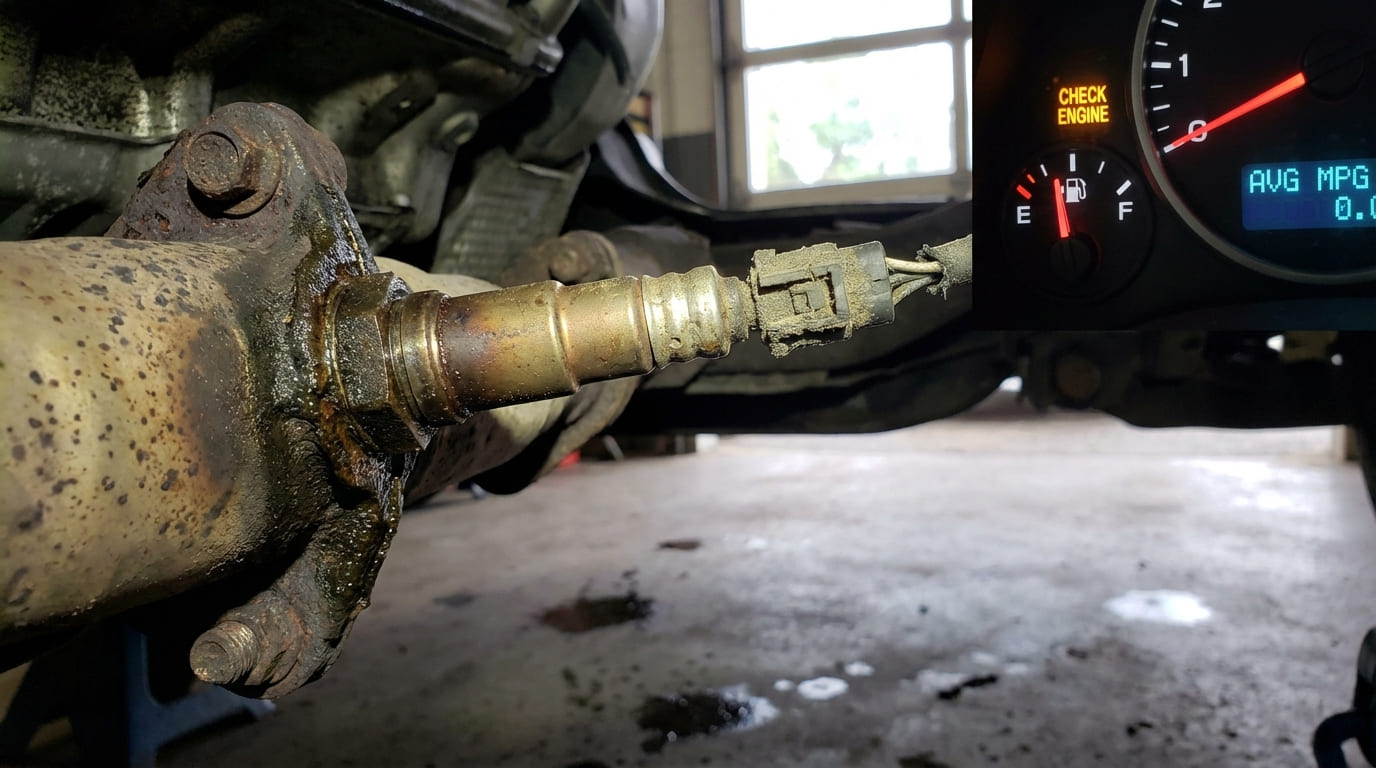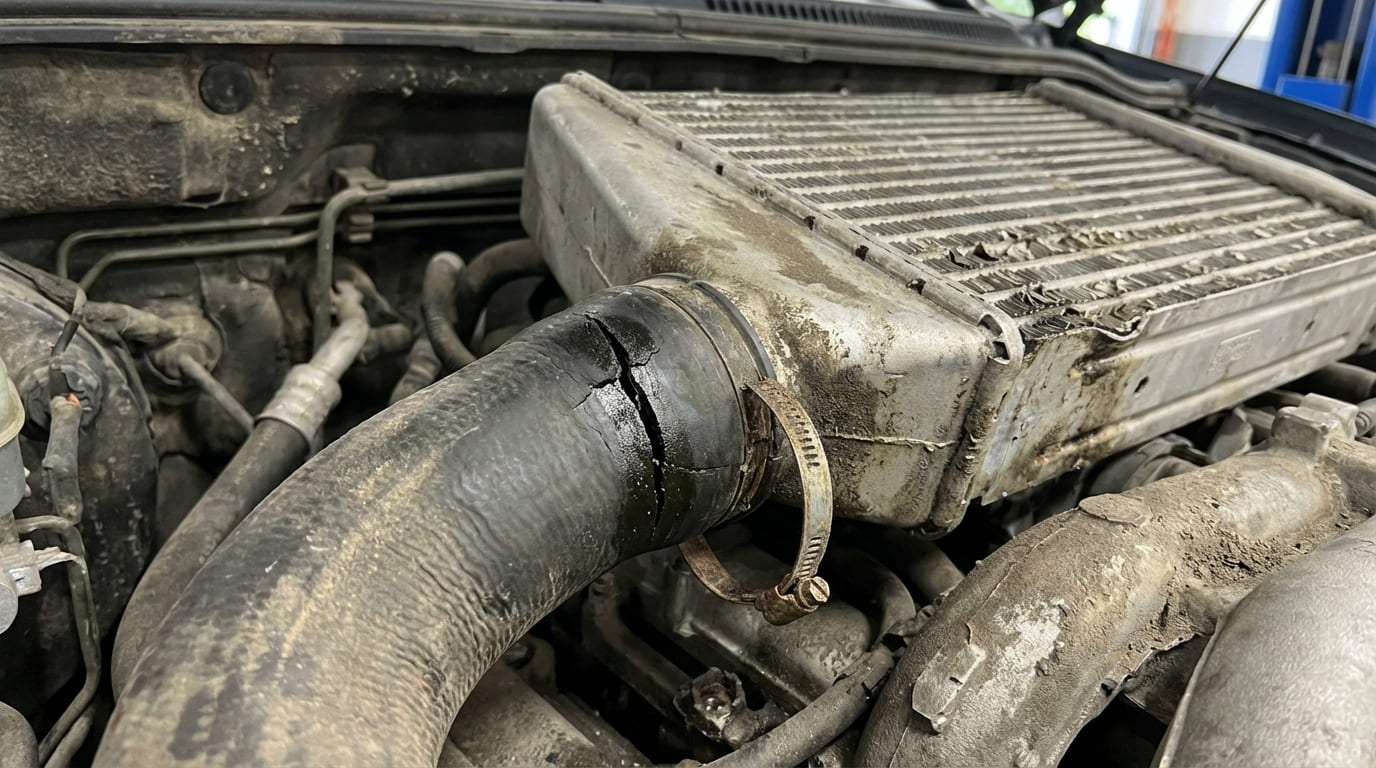
Intercooler problems often masquerade as turbo, fuel, or sensor failures. As a master mechanic, I’ve seen too many shops replace expensive components without checking the charge air path. This guide cuts through the noise with real-world diagnostics, verification steps, and field-tested tips to help you accurately identify and resolve intercooler issues—whether you’re a DIYer or guiding your technician.
Key Symptoms and How to Diagnose Them
Performance and Driveability Issues
When the intercooler fails, the engine can’t burn fuel efficiently. These symptoms are your first clues.
Reduced horsepower and torque—especially above 3,000 RPM—means the intake charge isn’t dense enough. Heat-soaked or leaking air loses oxygen density, reducing combustion power. If your turbocharged vehicle feels flat despite normal boost readings, suspect poor cooling or a restriction.
Increased turbo lag and sluggish throttle response often point to boost leakage. The turbo has to rebuild pressure lost through cracks or loose couplers, delaying spool-up. This isn’t just a “tuning” issue—check the system integrity first.
Hesitation or stumbling under load can mimic fuel starvation. But if it happens during hard acceleration and you’re pulling lean codes (P0171/P0174), inspect the charge air system. A cracked intercooler end tank or split hose is a common culprit.
Poor fuel economy under normal driving may result from the ECU adding fuel to compensate for unmetered air entering post-MAF. Even then, combustion is inefficient due to lower air density, so MPG drops despite extra fuel.
Check Engine Light and Diagnostic Trouble Codes
Modern ECUs detect airflow and pressure anomalies, but codes are starting points—not final diagnoses.
P0299 (Turbo Underboost) is the most common. It often means a boost leak, but could also stem from EGR or VGT issues. Don’t assume the intercooler is at fault—verify with a smoke test.
P0101 (MAF Performance) can appear if airflow is turbulent due to a partially blocked intercooler or collapsed hose. The MAF sensor reads inconsistently, confusing the ECU.
P0171/P0174 (System Too Lean) frequently results from air entering post-MAF—like through a cracked intercooler hose. But don’t ignore exhaust leaks or fuel pressure issues as alternate causes.
P00BD/P00BE (MAF Circuit Range) may indicate fluctuating pressure from internal leaks or restrictions. Intermittent signals often trace back to physical damage in the charge path.
P00C6 (Fuel Rail Pressure) can be an indirect effect. The ECU dumps fuel trying to correct a lean condition caused by poor charge cooling or leaks.
P00AA/P00AB (IAT Sensor) matters most on air-to-liquid systems. If coolant flow is restricted, intake temps rise, triggering these codes.
In my shop, we never replace a turbo or MAF sensor without first ruling out intercooler and charge air system faults. Over 30% of “turbo failures” I see are actually boost leaks or restrictions.
Audible and Visual Clues
Your ears and eyes are powerful diagnostic tools. Use them before scanning.
A hissing or whooshing sound under acceleration usually means a boost leak. Focus on hose connections, couplers, and intercooler end tanks. The noise increases with throttle input—listen near the throttle body and intercooler.
A high-pitched whine may indicate the turbo is over-speeding to meet boost targets due to downstream leakage. This isn’t a turbo noise—it’s a system failure symptom.
Oil residue inside the intercooler or on hoses is normal in small amounts. But pooled oil suggests failing turbo seals or PCV system overpressure. Check crankcase pressure if oil volume is excessive.
Coolant leaks on air-to-liquid intercoolers are serious. Even a slow seep reduces cooling efficiency and risks engine damage. Inspect coolant lines, end tanks, and fittings.
Physical damage—crushed fins, dents, or cracks—is common on front-mounted units. Road debris can bend fins, blocking airflow. A 30% blockage can raise intake temps by 50°F on a hot day.
Black soot or carbon around connections often means boost leaks are pulling in crankcase vapors or EGR gases. This contaminates sensors and combustion.
Underlying Causes and How to Verify Them
Most intercooler issues fall into five categories. Here’s how to test each.
Boost Leakage
Cracked end tanks, split hoses, or loose clamps cause pressurized air to escape. Plastic end tanks fail from thermal stress; rubber hoses crack over time.
How to check: Perform a smoke test at 0.5–2.0 PSI (never exceed max boost). Use a regulated smoke machine. Watch for smoke at seams, hoses, and the core. Test with the engine warm—some leaks only appear when components expand.
Cost note: Smoke tests at shops run $75–$150. DIY kits cost $50–$100. Replacing hoses and clamps: $40–$120. Intercooler replacement: $300–$1,200 depending on vehicle.
Internal Obstruction
Dust, oil sludge, or debris can clog internal passages, especially in trucks used off-road or in dirty environments. Oil from turbo seal wear coats fins, reducing heat transfer.
How to check: Perform a pressure drop test. Use two pressure gauges—one before and one after the intercooler. At wide-open throttle, a drop over 1.0 PSI suggests blockage. Compare to OEM specs if available.
On a 6.7L Cummins I worked on, the intercooler looked clean externally but had 2.5 PSI drop. Disassembly revealed a thick oil-sand sludge coating 60% of the core. Cleaning restored 90% of performance.
External Obstruction
Leaves, bugs, or mud clogging the fins reduce airflow. Common on off-road or rural vehicles.
How to check: Shine a flashlight across the fins at an angle. Shadows indicate blockage. If more than 10–15% of the surface is restricted, clean or replace.
How to clean: Use a radiator brush or low-pressure washer. Never use high-pressure water—it bends fins. Straighten bent fins with a fin comb for best results.
Air-to-Liquid Intercooler Failures
These systems use coolant to cool intake air. Failures can occur in the core, pump, or lines.
How to check:
- Coolant pressure test: Pressurize the coolant side to 15 PSI. Hold for 15 minutes. Any drop indicates a leak.
- Coolant flow test: Flow should be 3–5 gallons per minute under operation. Use an inline flow meter if possible.
- Pump check: Verify 12V at the connector and listen for operation. A pump may spin but not move coolant if the impeller is damaged.
Repair vs replace: Small pinhole leaks in the core require replacement. Coolant pumps: $120–$300. Complete intercooler assemblies: $600–$1,800.
Oil Contamination
Excessive oil inside the intercooler harms performance and can cause detonation.
How to check: Use a borescope to inspect the interior. If oil coats more than 40% of the surface, investigate turbo seals or PCV system. Perform a crankcase pressure test to confirm PCV issues.
On turbo engines, a little oil mist is normal. But if you’re pulling quart every 3,000 miles and the intercooler is full, the turbo is on its way out. Address it before it fails catastrophically.
Best Practices: What to Do and What to Avoid
- ✅ Do: Smoke test the charge air system with the engine warm. Thermal expansion can reveal hidden leaks.
- ✅ Do: Replace rubber couplers and clamps during service. Old hoses crack under boost even if they look fine.
- ✅ Do: Clean fins with a radiator brush and straighten bends with a fin comb. Proper airflow is critical.
- ⚠️ Avoid: High-pressure water on aluminum fins. It ruins heat exchange efficiency.
- ⚠️ Avoid: Assuming a DTC points directly to the intercooler. P0171 could be a vacuum leak, bad fuel pump, or exhaust leak.
- ⚠️ Avoid: Reassembling hoses without checking for twists. A twisted boot can restrict flow or leak under boost.
Diagnostic Decision Table: Symptoms and Likely Causes
| Symptom | Most Likely Causes | Less Common but Possible | Verification Method |
|---|---|---|---|
| White smoke, coolant loss | Air-to-liquid intercooler core leak | Head gasket, water pump seal, heater core | Pressure test coolant side; check for glycol in intake tract |
| P0299 + hissing sound | Boost leak (hose, intercooler crack) | VGT solenoid fault, EGR stuck open | Smoke test under low pressure |
| Elevated IAT, reduced power | External debris blockage, pump failure (liquid-cooled) | MAF miscalibration, ECU limping | Visual inspection, temp gun at inlet/outlet |
| Oil in intercooler, no external leak | Turbo seal wear, PCV overpressure | Incorrect oil level, wrong oil viscosity | Borescope, crankcase pressure test |
| P0171/P0174, no visible leaks | Small boost leak post-MAF | Exhaust leak pre-oxygen sensor, fuel pressure drop | Smoke test, fuel pressure decay test |
Situation: A 2018 Ford F-150 with a 3.5L EcoBoost came in with P0299 and sluggish acceleration. The owner had replaced the turbo actuator with no fix.
Discovery: Smoke test showed no leaks. Live data revealed a sudden MAF g/s drop during acceleration. I disconnected the intercooler inlet and found a twisted silicone boot—restricting flow.
Lesson: Not all flow restrictions show up as pressure drops. Inspect the entire charge path, including hose geometry.
Situation: A Subaru WRX had rising intake temps and power loss. No codes, no leaks.
Discovery: Pressure drop was only 0.3 PSI. Thermal imaging showed uneven cooling. The core had been damaged by aggressive fin comb use—creating airflow channels.
Lesson: Physical damage can cause thermal inefficiency even if flow tests pass. Visual integrity is critical.
Situation: A Ram 1500 Cummins had coolant in the intake. Shop suspected cracked block.
Discovery: Intercooler coolant side failed pressure test. Pinhole leak in core—common in older units with corrosive coolant.
Lesson: Coolant in the intake doesn’t always mean engine failure. Test the entire charge air cooling system first.
Diagnosing intercooler issues requires more than scan tools. Combine visual inspection, functional testing, and system knowledge. Always refer to your vehicle’s service manual for specific tolerances. When in doubt, test before you replace—your wallet will thank you.